


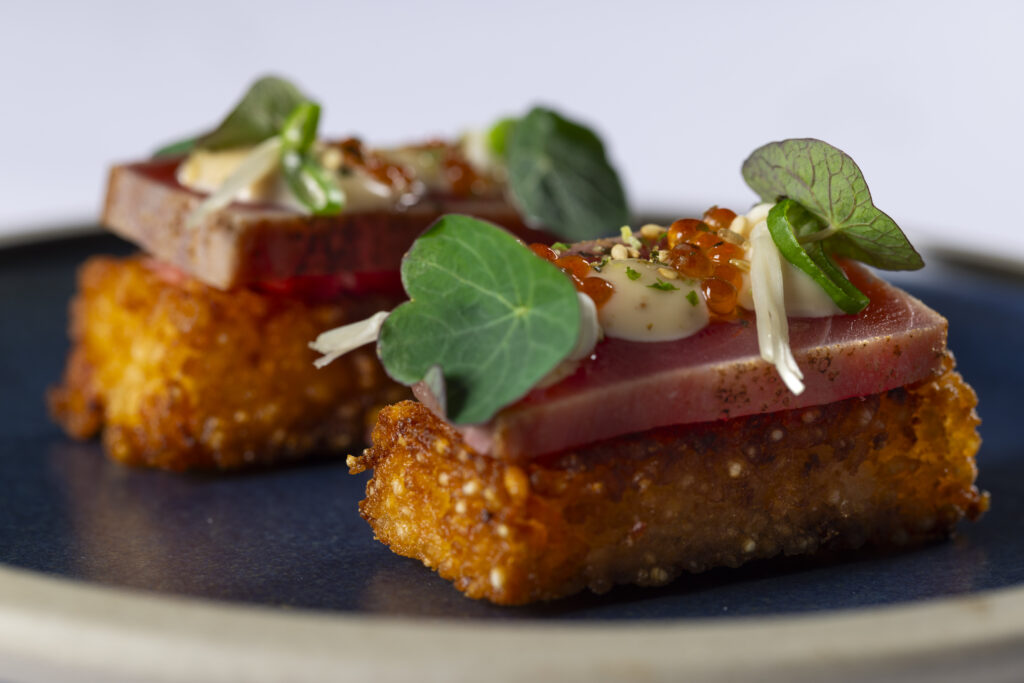
Amsterdam has a vibrant restaurant scene, but not every restaurant that presents itself as refined truly qualifies as fine dining. Whether you’re planning a special dinner, organizing a business lunch, or simply want to enjoy the very best the city has to offer, it pays to know what to look for. In this article, we answer the most frequently asked questions about fine dining in Amsterdam, so you can make a well-informed choice.
From the definition of fine dining to recognizing genuine freshness on the plate, we walk you through everything you need to know before booking a table.
What exactly is fine dining and what does it involve?
Fine dining is a complete culinary experience in which the quality of the food, the service, the atmosphere, and the presentation all come together at the highest level. It’s not just about expensive food — it’s about attention to every detail: from the origin of the ingredients to the way a dish is explained at the table.
Fine dining is defined by deliberate choices. The chef works with seasonal produce, composes dishes with technical refinement, and offers guests a multi-course menu built like a story. The service is trained, attentive, and discreet, and the wine selection is carefully curated to complement the dishes. Fine dining also asks something of the guest: you take your time, allow yourself to be surprised, and savor the experience as a whole.
What are the hallmarks of a genuine fine dining restaurant?
A genuine fine dining restaurant can be recognized by a combination of factors: a thoughtfully composed and regularly changing menu, professional and personalized service, high-quality ingredients, a carefully considered interior, and a reservation system that reflects how seriously the restaurant takes its craft.
Specific characteristics to look for include:
- A menu that changes with the seasons and is updated regularly
- Dishes explained by the serving staff
- Optional wine pairing with the menu
- Daily use of fresh, traceable ingredients
- An interior deliberately designed to enhance the atmosphere
- Reservations are required, not optional
Consistency is also an important indicator. A fine dining restaurant delivers the same high quality evening after evening, regardless of whether it’s quiet or busy. That requires a strong kitchen team and a clear vision from the chef.
What is the difference between fine dining and a brasserie?
The key difference between fine dining and a brasserie lies in the atmosphere, the service, and the structure of the menu. Fine dining is more formal, featuring multi-course menus and attentive table service. A brasserie is more accessible and relaxed, with an à la carte offering and a more casual ambiance — without compromising on quality.
A brasserie gives guests more freedom: you choose what you want to eat, you can order just a main course, and the evening has a less structured flow. That makes a brasserie ideal for a spontaneous dinner or an informal business meeting. Fine dining requires more preparation and time, but also offers a deeper culinary experience.
Interestingly, both concepts can coexist within a single restaurant. Some restaurants offer both an à la carte, brasserie-style experience and a more elaborate chef’s menu, allowing guests to choose the depth of their own experience. That way, you get the best of both worlds: the accessibility of a brasserie combined with the refinement of fine dining.
How can you tell whether the fish or meat at a restaurant is truly fresh?
You can recognize genuine freshness by a menu that changes regularly, dishes that depend on the season, and staff who can tell you where and when the produce was sourced. A restaurant that serves fresh fish daily adjusts its offering based on what is available that day.
Practical signs of freshness include:
- A daily special or rotating dish that signals the chef is working with whatever is fresh that day
- Service staff who can inform you about the origin of the fish or meat
- A concise menu — a large menu with dozens of dishes makes daily fresh sourcing logistically near impossible
- Seasonal ingredients that align with the time of year
With fish, aroma and texture on the plate are also clear indicators. Fresh fish has a delicate, clean flavor and holds together well. If a restaurant takes pride in its fish offering, it will communicate that — both on the menu and verbally through the service staff.
Where can you find good fine dining seafood restaurants in Amsterdam?
Good fine dining seafood restaurants in Amsterdam are spread throughout the city, but the most acclaimed addresses tend to be found in the southern and central neighborhoods. The Rivierenbuurt in Amsterdam South is known as an area with high-quality restaurants that serve a loyal, discerning clientele.
When searching for a good seafood restaurant in Amsterdam, these are the criteria that truly matter:
- A demonstrable focus on daily fresh fish and seasonal produce
- A menu featuring oysters, lobster, and other fruits de mer as serious centerpieces of the offering
- A long-standing reputation and a loyal, returning customer base
- The option to choose between à la carte and a multi-course menu
- A wine list specifically curated to pair with fish
Location also plays a role. A restaurant near a convention center or in a lively neighborhood attracts both local food enthusiasts and international visitors, which is often an indication of a consistently high standard.
When is a reservation required at a fine dining restaurant?
At most fine dining restaurants in Amsterdam, a reservation is not only required but strongly recommended. Popular restaurants operate at fixed capacity and often have waiting lists, especially on weekends and public holidays. Without a reservation, you risk not getting a table at all.
Always book in advance when:
- You are coming with a group of three or more people
- You are celebrating a special occasion, such as a birthday or anniversary
- You want to dine on a Friday or Saturday evening
- The restaurant is known to be popular or has a loyal regular clientele
- You have specific requests, such as dietary preferences or a particular table location
Making a reservation also gives the restaurant the opportunity to prepare for your visit properly. In fine dining, that preparation is part of the experience: the staff knows who is coming, what the occasion is, and how to make the evening as enjoyable as possible.
How we contribute to a genuine fine dining experience in Amsterdam
At Visaandeschelde, we bring together everything that makes fine dining in Amsterdam special. For over 25 years, we have been welcoming guests to our atmospheric brasserie on Scheldeplein in the Rivierenbuurt, with a passion for daily fresh fish and seasonal produce. Here is what we offer:
- A monthly rotating chef’s menu, composed by our kitchen team, with optional wine pairing
- The à la carte signature offering “Vis Exclusief,” which changes continuously based on what is freshly available
- Fresh oysters, lobster, and fruits de mer as permanent features of our menu
- A welcoming brasserie atmosphere that combines the refinement of fine dining with warmth and hospitality
- Dishes for fish lovers, vegetarians, and meat lovers alike, so everyone at the table finds something they enjoy
- A terrace for outdoor dining, opposite the RAI convention center
Want to see what’s currently on the menu? Browse our current menu and discover which dishes we’re serving this season. Due to our popularity, we recommend booking a table well in advance so we can prepare your evening to the fullest.
Veelgestelde vragen
How far in advance should I reserve a table at a fine dining restaurant in Amsterdam?
For a weekday evening, booking one to two weeks ahead is generally sufficient. If you want to dine on a Friday or Saturday evening, celebrate a holiday, or are coming with a larger group, reserve at least two to four weeks in advance. At very popular restaurants with a loyal clientele, such as well-regarded seafood restaurants in Amsterdam South, the wait may be even longer. Contact the restaurant directly by phone or email for the most up-to-date availability.
What should I wear to a fine dining restaurant — is there a dress code?
Most fine dining restaurants in Amsterdam do not enforce a strict dress code, but a neat, polished appearance is appreciated. Think smart casual: tailored trousers or a skirt, a blouse or dress shirt, and smart shoes. Sportswear, sandals, or an overly casual look don’t quite fit the atmosphere that a fine dining experience offers. Not sure? Check the restaurant’s website or give them a quick call beforehand for clarification.
What if I have a food allergy or dietary requirement — can I notify a fine dining restaurant?
Absolutely, and it is strongly encouraged. Always mention allergies, intolerances, or dietary preferences when making your reservation, so the kitchen team can accommodate them as well as possible. A professional fine dining restaurant is happy to adapt its menu accordingly without compromising the quality or creativity of the dishes. Be sure to mention it again upon arrival so the service staff can inform the kitchen in good time.
Is wine pairing mandatory, or can I order a multi-course menu without it?
Wine pairing is almost always optional and never mandatory. With a multi-course menu, you can simply choose individual glasses of wine, a bottle of your choice from the wine list, or non-alcoholic beverages only. That said, wine pairing is highly recommended if you want the full fine dining experience: the sommelier or service staff selects a wine for each course that enhances the flavors of the dish, which significantly enriches the overall experience.
How long does a typical fine dining dinner usually take?
For a full multi-course menu at a fine dining restaurant, plan for an evening of two to three hours, depending on the number of courses and the pace you and your dining companions prefer. Fine dining is intentionally unhurried: there is time between courses so you can fully appreciate each dish. If you are planning a business dinner or a special occasion, factor in this time commitment and book the evening with plenty of room.
What is the difference between a chef's menu and à la carte, and which should I choose?
With a chef’s menu, the chef selects a fixed sequence of courses for you, often based on the best and freshest produce available at that moment. This offers the most complete and cohesive culinary experience. À la carte gives you the freedom to choose which dishes you have and in what order. Choose the chef’s menu if you want to be fully surprised and experience the chef’s vision; choose à la carte if you have a specific dish in mind or prefer more control over your evening.
How do I recognize a fine dining restaurant that is truly consistent in quality, and not just highly rated on review sites?
Consistency can be recognized by a number of reliable signals: a long-standing reputation with a loyal, returning customer base, a stable kitchen team led by an experienced chef, and positive reviews that span multiple years rather than a brief peak. Ask within your network for personal recommendations, as word of mouth remains the most reliable mark of quality in the world of fine dining. Restaurants that have maintained the same standard for decades prove that their quality is no accident.
Gerelateerde artikelen
- Is een visrestaurant in Amsterdam geschikt voor een zakelijke lunch?
- Hoe herken je een echt goed visrestaurant in Amsterdam?
- 5 tips om het beste visrestaurant in Amsterdam te kiezen
- Kun je zonnig borrelen met schaal- en schelpdieren?
- Is fine dining in Amsterdam geschikt voor internationale congressbezoekers?