


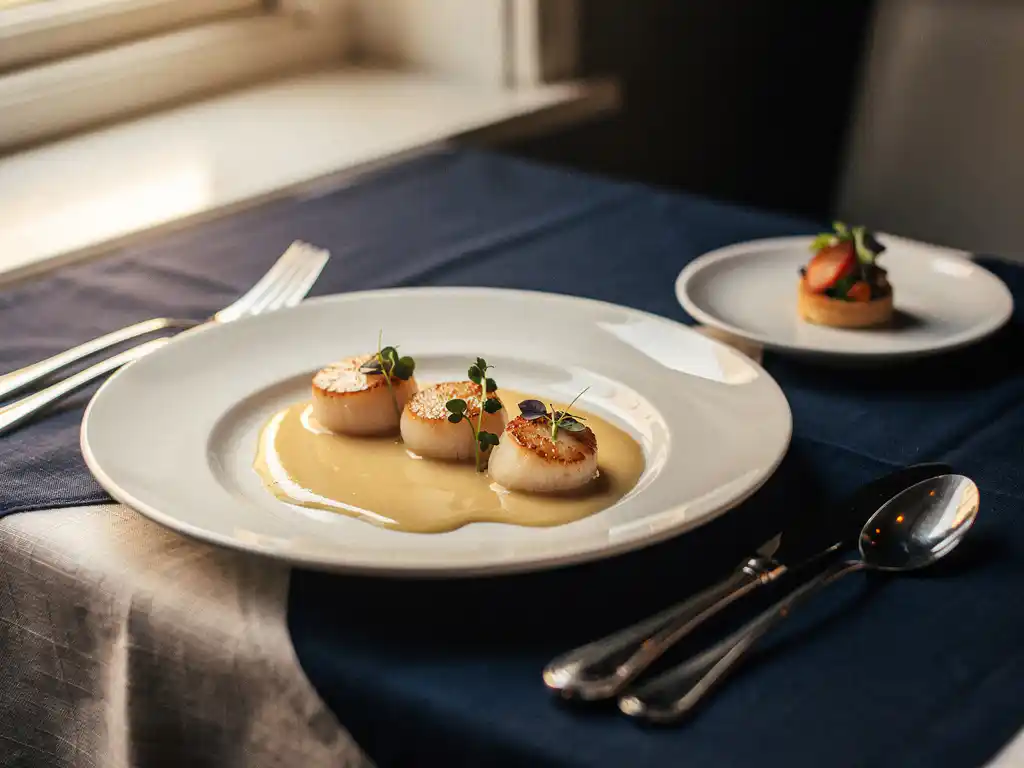
If you’re planning a special night out in Amsterdam, you’ll quickly come across terms like tasting menu and chef’s menu. Both sound appealing, but what exactly is the difference? And which option is the best fit for your evening? Whether you’re a seasoned food enthusiast or simply looking for a wonderful dinner at one of the fine dining restaurants in Amsterdam, this article has all the answers.
The two terms are sometimes used interchangeably in the restaurant world, but there are genuine and clear distinctions between them. Below, we break everything down — from definitions to practical tips for making your choice.
What exactly is a tasting menu?
A tasting menu is a multi-course meal in which guests are served a series of small dishes that together form a culinary journey. The menu is entirely determined by the chef and offers little to no freedom of choice. The focus is on experience, technique, and storytelling, with each course building on the one before it.
Tasting menus typically consist of between five and twelve courses, sometimes even more. The portions are deliberately small so that guests can work through the full sequence without feeling overfull. Each dish is carefully composed as part of a larger whole. Wine pairing is almost always available as an optional addition, with the sommelier selecting a suitable wine for each course.
This type of menu is most commonly found at restaurants with a strong emphasis on creativity and craftsmanship. It is a format that gives the chef the freedom to fully express their vision, without making concessions to individual preferences.
What is a chef’s menu and how does it work?
A chef’s menu is a multi-course menu curated by the chef that changes regularly — often monthly or with the seasons. The difference from a tasting menu is that a chef’s menu tends to be more approachable: fewer courses, larger portions, and a broader connection to traditional dining culture.
The chef’s menu offers guests a culinary experience that goes beyond à la carte, but without the elaborate ceremony of a full tasting menu. The chef selects dishes that showcase the best of what’s available at that moment, based on seasonal produce, fresh deliveries, and culinary inspiration.
In practice, it works like this: you consciously opt for the set menu rather than individual dishes. Sometimes there is a limited choice per course; sometimes the menu is entirely fixed. Wine pairing is often available as an option. It’s an excellent way to experience a restaurant at its best, without having to think about which combinations to choose yourself.
What is the difference between a tasting menu and a chef’s menu?
The most important difference lies in the intensity of the experience. A tasting menu is an extensive, multi-hour culinary journey with many small courses and a strong narrative character. A chef’s menu is more compact, more accessible, and oriented toward a refined yet relaxed dining experience.
Here are the key distinguishing points at a glance:
- Number of courses: a tasting menu typically has more (five to twelve or more), while a chef’s menu is more concise (three to five courses)
- Portion size: tasting menu portions are small and tasting-oriented, while chef’s menu portions are more meal-sized
- Freedom of choice: both offer limited choice, but a chef’s menu sometimes allows a limited selection per course
- Frequency of change: a chef’s menu often changes monthly or seasonally, while a tasting menu may remain on the menu for a longer period
- Duration: a tasting menu takes more time, while a chef’s menu fits more comfortably into an evening of two to three hours
In short: a tasting menu is an event in itself, while a chef’s menu is a refined but more everyday dining format.
When should you choose a chef’s menu instead of à la carte?
A chef’s menu is the better choice when you want to enjoy the best a restaurant has to offer at that moment, without having to puzzle over the menu yourself. It’s also ideal when visiting a restaurant for the first time and wanting to get a good sense of the kitchen and the chef’s style.
À la carte gives you more control: you choose exactly what you want and can compose your meal entirely according to your own preferences. But that also means missing out on combinations the chef has deliberately put together. With a chef’s menu, you consciously let go of those choices and trust in the expertise of the kitchen.
Practical situations where a chef’s menu is an excellent fit:
- A romantic dinner or special occasion
- A first visit to a restaurant you want to get to know
- An evening when you don’t want to spend too long thinking about what to order
- When you want to enjoy seasonal produce at its peak
Are tasting menus and chef’s menus suitable for everyone?
Not everyone is equally charmed by a fully set menu. Tasting menus require patience, an open mind toward unfamiliar flavors, and a willingness to relinquish control. For guests with specific allergies or dietary requirements, it’s important to notify the restaurant in advance so the kitchen can accommodate them.
Chef’s menus are generally more accessible to a broader audience. Because the menu changes regularly and is often based on seasonal produce, there is room for variety. Good restaurants will adapt the menu to dietary needs or allergies when you indicate this at the time of booking.
For groups with varying preferences — such as meat lovers, vegetarians, and seafood enthusiasts — it’s wise to check in advance whether the restaurant can be flexible. Many restaurants with a strongly seasonal kitchen offer several variations of their menu.
Where can you enjoy a great chef’s menu in Amsterdam South?
Amsterdam South has a rich restaurant scene, with numerous addresses where you can enjoy a refined meal. The Rivierenbuurt is a neighborhood within it known for its atmospheric and high-quality dining options — ideal for a special night out.
How Visaandeschelde makes your evening unforgettable
At Visaandeschelde, we offer exactly what a great chef’s menu should be: a monthly changing menu, put together by our kitchen team and based on the freshest fish and seasonal ingredients. Our approach is concrete and full of flavor:
- A monthly changing chef’s menu, composed from the finest produce of the moment
- Daily fresh fish and seasonal ingredients as the foundation of every dish
- Optional wine pairing for a complete dining experience
- A choice of à la carte or a multi-course menu, including options for vegetarians and meat lovers
- A welcoming brasserie in the Rivierenbuurt, with a terrace opposite the RAI Convention Centre
Whether you’re joining us for the first time or you’re a regular guest, we make sure every visit is a special experience. View our current chef’s menu and reserve your table — an evening at Visaandeschelde fills up quickly.
Veelgestelde vragen
Do I always need to book a tasting menu or chef's menu in advance?
Yes, a reservation is strongly recommended, and for tasting menus it is often required. Restaurants that work with a set menu prepare ingredients precisely for the number of guests that evening, which means last-minute spots are rarely available. At popular restaurants in Amsterdam, such as those in Amsterdam South, the wait for a table can sometimes stretch to several weeks, so be sure to book well in advance.
How do I communicate allergies or dietary requirements when ordering a chef's menu?
The best approach is to mention your allergies or dietary requirements at the time of booking, so the kitchen can accommodate them as well as possible. Good restaurants will adapt the menu without compromising the quality or coherence of the meal. Be sure to confirm your needs again upon arrival with the host or hostess, to avoid any misunderstandings during dinner.
Is wine pairing mandatory with a tasting menu or chef's menu?
No, wine pairing is almost always optional and never mandatory. You can also choose to order individual wines, a bottle of your choice, or even non-alcoholic alternatives. Many restaurants now offer a non-alcoholic pairing featuring juices, teas, or other beverages selected per course — ideal if you don't drink alcohol but still want the full experience.
What is the price difference between a tasting menu and a chef's menu?
A tasting menu is generally more expensive than a chef's menu, due to the greater number of courses, the more intensive preparation time, and the higher level of craftsmanship and creativity involved. Chef's menus often offer excellent value for money: you enjoy the chef's culinary vision at a more accessible price point. Exact prices vary considerably between restaurants, so it's worth checking the menu online beforehand.
How long does a dinner with a chef's menu typically take?
For a chef's menu, plan for an evening of around two to three hours on average, depending on the number of courses and the pace of the restaurant. This makes it an excellent choice for a special night out that doesn't need to last all evening. A tasting menu can take considerably longer — sometimes three to five hours — which is something to factor into your plans.
Can a couple with different preferences (for example, one vegetarian and one seafood lover) still order a chef's menu?
Yes, many restaurants offer multiple versions of their chef's menu, such as a fish version, a meat version, and a vegetarian version. It is advisable to mention this at the time of booking, so the kitchen can coordinate both menus in terms of timing and presentation. Restaurants with a strongly seasonal kitchen, such as Visaandeschelde, are generally flexible in this regard.
Is a chef's menu suitable for a business dinner?
Absolutely — a chef's menu is in fact particularly well suited to a business dinner. It removes the stress of choosing, ensures an equal experience for all guests at the table, and naturally provides conversation topics thanks to the variety of courses. It also makes a professional and thoughtful impression when, as the host, you deliberately choose a carefully curated menu.