


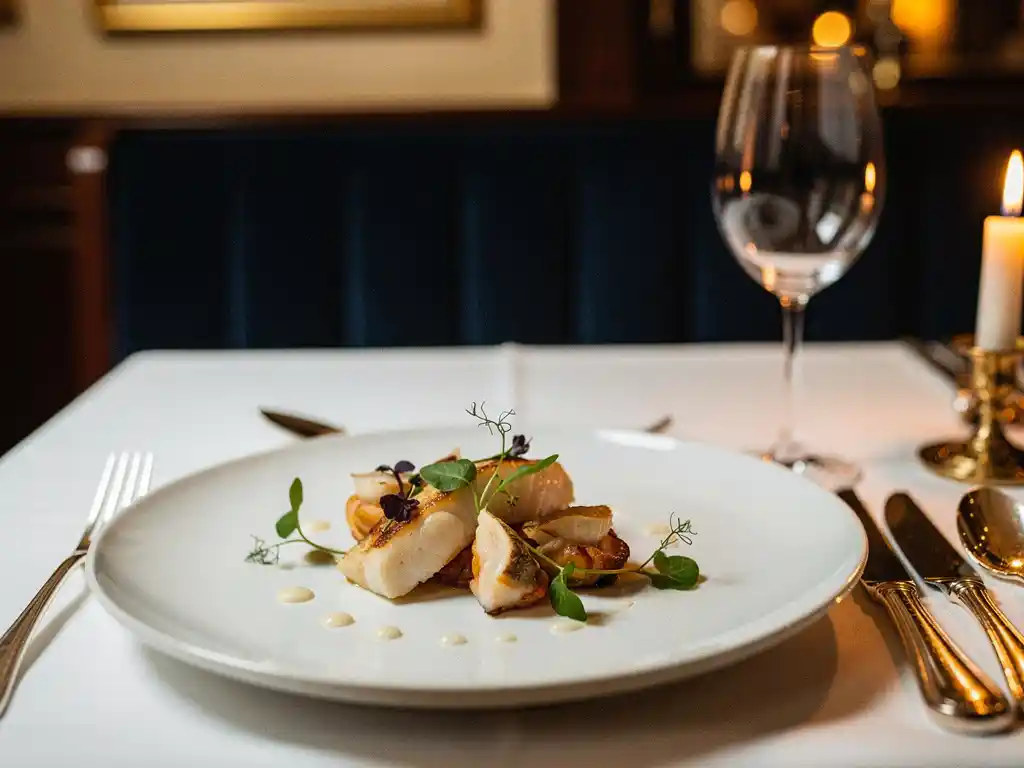
A night out at a fine dining restaurant in Amsterdam is an experience that goes far beyond simply eating well. You are paying for a complete experience: the quality of the ingredients, the skill in the kitchen, the attentiveness of the staff, and the atmosphere of the space. But how do you know in advance whether a restaurant will truly live up to that expectation? On our about page you can read what we mean by hospitality and quality. In this article, we give you the tools to evaluate fine dining restaurants in Amsterdam yourself — before you make a reservation and during your visit.
What is fine dining and what sets it apart from regular restaurants?
Fine dining is a restaurant experience in which high standards are applied to every aspect of the visit: the quality of the dishes, the presentation, the service, and the ambiance. It differs from regular restaurants in that everything is composed with great care, from the menu to the table setting.
Where an average restaurant focuses on accessibility and speed, fine dining is all about attention and detail. Think of seasonally driven menus that change regularly, ingredients sourced fresh every day, and a team that is fully knowledgeable about every dish. It is not about luxury as an end in itself, but about a deliberate commitment to quality at every level. Fine dining restaurants in Amsterdam therefore offer a completely different experience from the average bistro or casual eatery.
How do you recognize fresh fish and seafood in a restaurant?
Fresh fish and seafood can be identified by a number of concrete signs: the smell is neutral and clean, the flesh is firm in texture, and oysters or shellfish are kept alive until the moment of preparation. A restaurant that truly works with fresh produce will be able to tell you where and when the fish was caught or delivered.
When visiting a seafood restaurant, pay attention to how the menu is structured. Does the selection change regularly? That is a good sign. A fixed menu that stays the same all year suggests that no consideration is given to the season or the availability of fresh products. Feel free to ask the staff what came in fresh that day. A good restaurant will always give you a specific answer. The preparation method also speaks volumes: fresh fish needs very little and is not excessively seasoned or masked with heavy sauces.
How do you evaluate service quality in a fine dining restaurant?
Service quality in a fine dining restaurant is assessed on three factors: expertise, attentiveness, and timing. The staff must be able to speak knowledgeably about the dishes, proactively anticipate the needs of guests, and strike the right balance between being present and giving space.
A well-trained front-of-house team knows the menu inside and out. They can explain how a dish is prepared, which allergens it contains, and which wine pairs well with it. At the same time, they allow you to eat in peace without constant interruptions. Pay attention to the small details too: are glasses refilled without you having to ask, is your coat taken when you arrive, and does the team accommodate the pace at which you and your dining companions eat? That kind of attentiveness is what makes the difference between good and exceptional service.
What does the menu composition tell you about the quality of a restaurant?
The menu composition of a fine dining restaurant reveals a great deal about the philosophy and craftsmanship of the kitchen. A well-composed menu is limited in scope, seasonally driven, and reflects a clear culinary vision, rather than offering a broad selection aimed at pleasing everyone.
Seasonality as a quality indicator
Restaurants that adapt their menu to the season are, by definition, working with products at their peak of flavor and freshness. A summer menu featuring different dishes from a winter menu shows that the kitchen is actively thinking about what is available and at its best at any given time. This requires more effort than a fixed menu, but the result on the plate is correspondingly better.
Freedom of choice and structure
A good fine dining menu offers structure without being restrictive. Think of an à la carte option alongside a multi-course menu, so guests can choose how extensive a meal they want. A thoughtfully designed menu with rotating dishes and a chef’s menu that changes monthly is a sign that the kitchen is constantly evolving and not running on autopilot.
What role does ambiance play in evaluating a fine dining restaurant?
Ambiance is more than decoration. In a fine dining restaurant, the interior contributes to the overall experience: the lighting, the noise level, the table setting, and the visual identity of the space must work together to create an atmosphere that complements the culinary offering.
A restaurant that pays attention to its interior shows that it takes its guests seriously. Soft lighting, sufficient space between tables, and a consistent theme all help you feel at ease. At the same time, the atmosphere must be authentic: a forced luxury interior with no substance tends to have the opposite effect. The best restaurants have a character of their own that you recognize the moment you walk in — whether that is maritime, industrial, or classic French.
How do you use online reviews to evaluate a restaurant in Amsterdam?
Online reviews are useful when read critically. Do not just look at the average rating — analyze the content: are the positive reviews specific about dishes, service, and atmosphere, or are they vague? Are the negative reviews isolated incidents or recurring complaints?
Platforms such as Google, TripAdvisor, and TheFork give a good overall picture when you combine multiple sources. Pay attention to how recent the reviews are, as a restaurant’s quality can change over time. Also look for responses from the restaurant owner or management to critical reviews: how a restaurant handles feedback says a great deal about its professional attitude. For fine dining restaurants in Amsterdam, food blogs and culinary magazines often provide more detailed and reliable information than anonymous ratings.
How Visaandeschelde sets the bar for seafood dining in Amsterdam
Want to experience firsthand what quality fine dining in Amsterdam looks like? At Visaandeschelde, we bring together everything that sets a great restaurant apart from an ordinary one:
- Daily fresh fish and seasonal produce as the foundation of every dish
- A rotating à la carte menu featuring the signature dish Vis Exclusief and fresh fruits de mer
- A monthly changing chef’s menu, composed by our kitchen team
- Optional wine pairing with the multi-course menu
- An authentic maritime ambiance in the Rivierenbuurt neighborhood in Amsterdam South
- An experienced front-of-house team that will fully inform you about every dish
We are located on Scheldeplein, opposite the RAI convention center, and have a terrace for outdoor dining. As we have many regular guests, we recommend booking a table well in advance. Find out who we are and what drives us and reserve your table via our website for an unforgettable seafood experience in Amsterdam.
Veelgestelde vragen
How far in advance should I make a reservation at a fine dining restaurant in Amsterdam?
For popular fine dining restaurants in Amsterdam, it is advisable to book at least one to two weeks in advance, especially for weekend evenings or special occasions. At restaurants with a chef’s menu or a limited number of tables, such as Visaandeschelde, availability can fill up even faster. If you are booking for a special date such as a birthday or anniversary, reserve as early as possible to avoid disappointment.
What is the difference between an à la carte menu and a multi-course menu, and which should I choose?
With an à la carte menu, you compose your own meal by choosing individual dishes, while a multi-course menu offers a fixed sequence of dishes curated by the chef. The multi-course menu provides the most complete culinary experience, as it reflects the kitchen’s overall vision and the dishes are designed to complement one another. Choose à la carte if you prefer more freedom of choice or a lighter meal.
How do I handle dietary requirements or allergies at a fine dining restaurant?
Always communicate dietary requirements or allergies at the time of booking, not upon arrival at the restaurant. A good fine dining restaurant can then make timely adjustments in the kitchen without compromising the quality or creativity of the dishes. Also mention less obvious intolerances, such as an aversion to certain textures or flavors, so that the front-of-house team can guide you as well as possible.
What are common mistakes when choosing a fine dining restaurant in Amsterdam?
A common mistake is relying solely on the average rating of online reviews without reading the content critically. Many people also underestimate the importance of a rotating menu: a restaurant with a fixed menu that never changes rarely works with the freshest or most seasonal ingredients. Finally, people sometimes forget to check whether the restaurant suits the occasion, as atmosphere and concept are just as important as the quality of the food.
Is a wine pairing always worth it with a multi-course menu?
A wine pairing adds considerable value if you want to fully immerse yourself in the culinary experience, as each wine is carefully chosen to enhance or complement the flavors of the accompanying dish. It is also an excellent way to discover new wines under the guidance of a sommelier or experienced member of the serving staff. If you would rather not drink alcohol or have a limited budget, ask whether a non-alcoholic pairing with special juices or teas is available.
How do I know whether the fish at a restaurant is truly fresh daily and not frozen?
The most reliable method is simply to ask: a restaurant that works with daily fresh fish will be able to tell you which supplier the fish comes from and when it was delivered. Fresh fish also has a neutral, clean smell and a firm texture, whereas thawed fish tends to be waterier in structure and falls apart more easily on the plate. Pay attention to the menu as well: if the fish selection changes daily or weekly, that is a strong indicator of genuine freshness.
What should I do if the experience does not meet my expectations during the visit?
Raise it directly and politely with the front-of-house team, as a good fine dining restaurant appreciates feedback given while something can still be done about it. Do not wait until the end of the evening or until leaving an online review afterward, as by then the restaurant no longer has the opportunity to make it right. A professional team will take your comment seriously and actively seek a solution — which in itself is a sign of the restaurant’s quality.
Gerelateerde artikelen
- Waar kun je zonnig borrelen met verse vis?
- Hoe herken je een echt goed visrestaurant in Amsterdam?
- Wat zijn de meest exclusieve fine dining restaurants in Amsterdam?
- Is fine dining in Amsterdam geschikt voor internationale congressbezoekers?
- Hoe combineer je fine dining met een culturele avond in Amsterdam?