


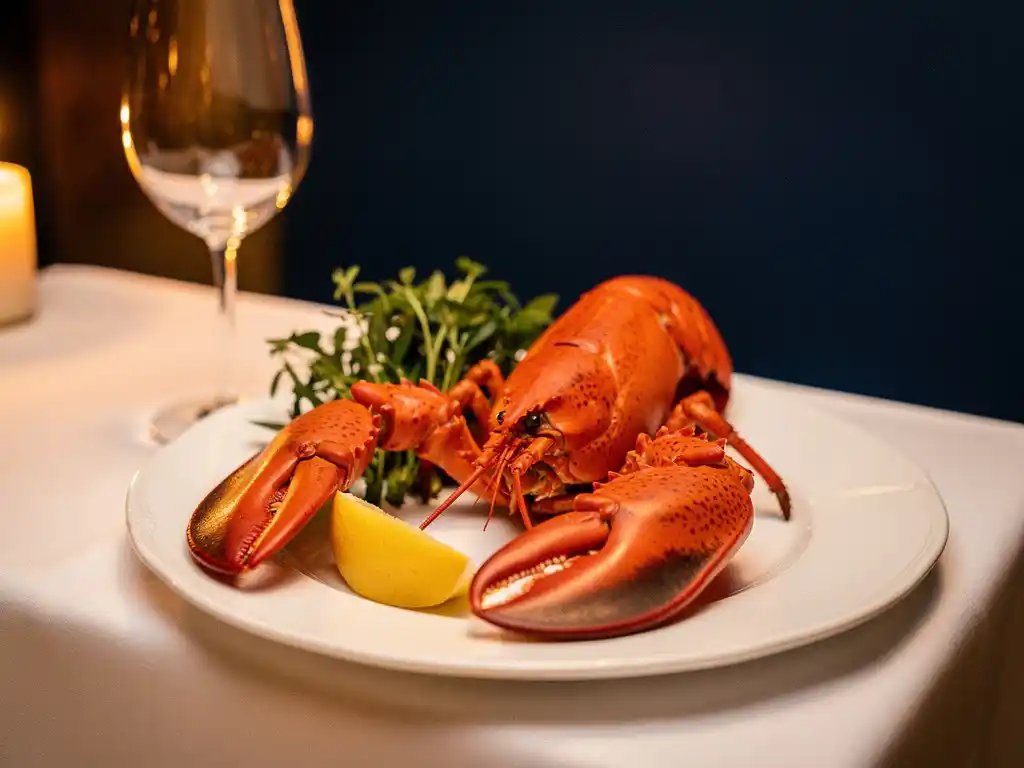
Lobster has been celebrated as one of the world’s most coveted delicacies for centuries. In the world of fine dining in Amsterdam, lobster holds a special place: it is a dish guests expect as part of a refined dining experience, and restaurants that prepare it well set themselves apart from the rest. But what exactly makes lobster so popular, and why does it remain a staple on the city’s finest menus? In this article, we answer the most frequently asked questions about lobster in fine dining.
Whether you are a seasoned lobster enthusiast or considering ordering this iconic crustacean for the first time, you will find everything you need to know right here — from flavor and preparation to the best season and the differences between lobster species. Read more about our background and passion for fresh fish if you want to understand how we approach this exceptional ingredient.
Why is lobster considered a luxury dish?
Lobster is considered a luxury dish because of the combination of scarcity, labor-intensive harvesting, limited shelf life, and the considerable effort required to bring it to the table fresh. Unlike fish, lobster cannot be farmed or processed in large quantities, which keeps prices high and availability limited.
Historically, lobster was actually cheap food for the poor, but as demand grew and catches declined, that perception shifted entirely. Today, lobster in fine dining symbolizes care for the product — from sea to plate. It takes real skill to bring out the best in lobster, and serving it well is a statement of quality.
The experience itself also plays a major role. A lobster on the table draws attention, invites a shared ritual, and gives a dinner a celebratory feel. That makes it a popular choice for special occasions such as birthdays, anniversaries, and business dinners.
What makes lobster so distinctive in flavor and texture?
Lobster has a unique flavor that is both subtly sweet and lightly briny, with a richness that no other shellfish can match. The texture of the meat is firm yet tender, with a slight springiness that is characteristic of freshly prepared lobster. That combination of flavor and bite makes it a product that shines both on its own and paired with sauces and garnishes.
The tail meat is the most prized for its size and consistency, but the claw meat has its own slightly more intense flavor. The roe and coral, found in female lobsters, are considered a true delicacy by connoisseurs. In fine dining, all of these elements are used deliberately to make a dish as complete and flavorful as possible.
Freshness is decisive here. Lobster that has not been processed live or is not extremely fresh quickly loses its delicate flavor and develops a rubbery texture. That is precisely why top restaurants place such importance on direct sourcing and daily delivery.
How do fine dining restaurants prepare lobster?
Fine dining restaurants prepare lobster in several ways, depending on the desired result. The most common techniques are butter poaching, grilling, steaming, and the à l’américaine (thermidor) preparation. Each method highlights different aspects of flavor and texture, and the choice depends on the season, the garnishes, and the chef’s vision.
Butter poaching
In butter poaching, the lobster meat is gently cooked in melted, clarified butter at a low temperature. This produces an incredibly tender result with a rich, creamy flavor. It is a technique widely used in modern French cuisine that brings out the very softest qualities of lobster.
Grilling and thermidor
Grilling gives lobster a lightly smoky character and a beautiful color, while locking the juices into the meat. The classic thermidor preparation combines grilled lobster with a rich sauce of cream, mustard, and herbs, gratinéed in the shell. This is an iconic dish in the fine dining tradition that remains popular for its intensity and spectacle.
Steaming and raw preparations
Steaming is a more subtle method that preserves the pure flavor of the lobster. Some avant-garde restaurants also serve lobster raw or lightly cured, similar to a carpaccio or tartare. This requires an exceptional quality of product and a chef with great confidence in their ingredients.
When is the best season to eat lobster?
The best season for lobster is summer, roughly from May through September. During this period, lobsters are most active, have fuller meat, and supply is at its greatest. For European lobster, quality peaks during the summer months, while Canadian lobster is available year-round but also peaks in spring and early summer.
Outside of season, lobster is still available, but quality can be more variable and prices are generally higher. Restaurants that work seasonally deliberately choose lobster when the product is at its best. That makes it all the more special when you see lobster appear on the menu — it is a sign that the chef takes the ingredient seriously.
Oysters and lobster often go hand in hand in the culinary world as symbols of seasonal luxury. Restaurants that offer both demonstrate a respect for the rhythms of the sea and a commitment to giving their guests the finest of the moment.
What is the difference between European and Canadian lobster?
The most significant difference between European and Canadian lobster lies in flavor, texture, and availability. European lobster has darker, firmer meat with a more intense, complex flavor. Canadian lobster is milder in flavor, lighter in color, and softer in texture, and is available in larger quantities throughout the year.
The European lobster, also known as Homarus gammarus, is caught along the coasts of the Atlantic Ocean and the North Sea. It is smaller than its Canadian counterpart but is considered superior by many chefs for its pronounced flavor profile. The Canadian lobster, Homarus americanus, is larger and less expensive, making it popular for dishes that require generous quantities of meat.
Both varieties appear in fine dining restaurants, sometimes side by side on the menu. The choice depends on the dish, the season, and the chef’s preference. European lobster is more often used as the centerpiece of a dish, while Canadian lobster also features in bisques, sauces, and garnishes.
Where can you eat lobster in a fine dining setting in Amsterdam?
Amsterdam has a vibrant selection of restaurants where lobster takes center stage in a fine dining context. The best addresses can be found in neighborhoods such as the Jordaan, Oud-Zuid, and the Rivierenbuurt, combining fresh sourcing with skilled preparation and an inviting atmosphere. Lobster appears here on both à la carte menus and multi-course tasting menus.
When choosing a restaurant for lobster in Amsterdam, it is worth paying attention to the freshness of the offering, a regularly changing seasonal menu, and the expertise of the kitchen team. Restaurants that source fresh fish daily and adapt their menu to the season generally offer the finest lobster experience.
How Visaandeschelde makes your lobster experience complete
We are a seafood restaurant in Amsterdam South with more than 25 years of experience preparing daily-fresh fish and shellfish. At our restaurant, lobster is not an afterthought — it is a dish we approach with full dedication. Here is what you can expect from us:
- Daily fresh lobster, sourced seasonally for the best possible quality
- Rotating preparations on the à la carte menu and the Chef’s menu
- Optional wine pairing to complement the flavor of the lobster perfectly
- A warm, maritime atmosphere in the Rivierenbuurt, opposite the RAI Convention Centre
- Choice of multi-course menus for a complete fine dining experience
Whether you are celebrating a special evening, hosting a business relation, or simply want to enjoy the very best the sea has to offer — we will make it an unforgettable experience. View our menu for current lobster dishes and seasonal offerings, and be sure to reserve in advance, as our tables fill up quickly.
Veelgestelde vragen
How do I choose the right wine to pair with a lobster dish at a fine dining restaurant?
A classic choice with lobster is a full-bodied, dry white wine such as a Burgundy Chardonnay or a Chablis Premier Cru, which beautifully balances the sweet richness of the lobster meat. With grilled lobster or thermidor, you might also opt for a light, structured white Bordeaux or a dry Champagne. Feel free to ask the sommelier team for advice — a well-chosen wine pairing takes the flavor experience of lobster to an entirely different level.
Is lobster at a fine dining restaurant always very expensive, and what exactly am I paying for?
The price of lobster in fine dining reflects several factors: the high cost of sourcing live, daily-fresh lobster, the skill involved in its preparation, and the overall restaurant experience. You are not just paying for the product itself, but also for the chef’s expertise, the careful selection of seasonal offerings, and the service that makes the experience complete. Think of it as an investment in a culinary experience you simply cannot replicate at home.
What should I do if I have a lobster allergy or want to avoid shellfish — are there good alternatives on a fine dining menu?
Most fine dining restaurants offer flexible menu options and are accustomed to accommodating allergies and dietary requirements. Always inform the restaurant of a shellfish allergy when making your reservation, so the kitchen team can prepare a suitable alternative. Quality seafood restaurants typically offer excellent fish and other seafood dishes that provide the same level of refinement and attention as a lobster course.
How can I tell whether the lobster I am served at a restaurant is truly fresh and not previously frozen?
Fresh lobster can be identified by its firm, springy texture, a clean sweet aroma, and a vibrant color after cooking. Frozen lobster often has a waterier texture and a less pronounced flavor. You are perfectly entitled to ask the restaurant where and how their lobster is sourced; serious fine dining restaurants are transparent about this and sometimes even list the origin on the menu.
Can I plan a fine dining lobster experience as part of a business dinner or group booking?
Absolutely — lobster lends itself beautifully to business dinners and group bookings, precisely because it is a natural conversation starter and gives a dinner a distinctive character. Many fine dining restaurants offer special arrangements for groups, including multi-course menus with lobster as the main course and optional wine pairing. Be sure to reserve well in advance, especially for larger parties, so the restaurant can align its fresh sourcing accordingly.
What is the difference between ordering à la carte and choosing a multi-course menu when I want to eat lobster?
With à la carte, you order lobster as a standalone dish, which offers more flexibility but less context for the overall flavor experience. A multi-course menu is structured as a culinary journey, with the lobster served at a carefully chosen moment and the surrounding courses enhancing and complementing its flavor. If you want to enjoy the full fine dining experience, a multi-course menu featuring lobster is almost always the most rewarding choice.
Are there etiquette rules I should be aware of when eating lobster at a fine dining restaurant?
In most fine dining restaurants, lobster is already portioned by the kitchen before it is served, so you will not need to crack a whole animal at the table. If you are served a whole lobster, the staff will typically offer assistance or the appropriate tools — do not hesitate to ask. It is perfectly normal to use your fingers for certain parts, and good restaurants will always provide a finger bowl with lemon water and plenty of napkins.