

A great dinner experience begins long before the food reaches the table. The wine you choose largely determines how you experience the flavors of your dishes. Especially at fine dining in Amsterdam, you want to make that choice thoughtfully, so that every sip makes the next bite even more enjoyable. Whether you’re a seasoned wine lover or simply looking forward to a wonderful evening, the right knowledge sets the tone for an unforgettable dinner.
In this article, we answer the most frequently asked questions about wine pairing with a fine dining menu. From the basic principles to the most common mistakes — by the time you finish reading, you’ll know exactly how to make your next wine choice with confidence.
What is wine pairing and why does it matter in fine dining?
Wine pairing is the deliberate matching of a wine with a dish so that the flavors of both enhance each other. In fine dining, this is especially important because the dishes are complex and carefully constructed, and the right wine brings out their nuances rather than overpowering them.
A good pairing is all about balance. Fat, salt, acidity, and sweetness in a dish each call for a different response from the wine. A rich, buttery sauce calls for a wine with enough body and acidity to cut through the fat. A light, delicate dish, on the other hand, calls for a subtle, crisp wine that doesn’t dominate. In fine dining, where every element on the plate is a deliberate choice, the wine deserves the same level of attention.
Wine pairing is also a way to deepen the tasting experience. When a wine and a dish complement each other well, entirely new flavors can emerge that you wouldn’t taste in either one alone. That is precisely what makes a fine dining experience so special.
Which wines pair best with fish and seafood?
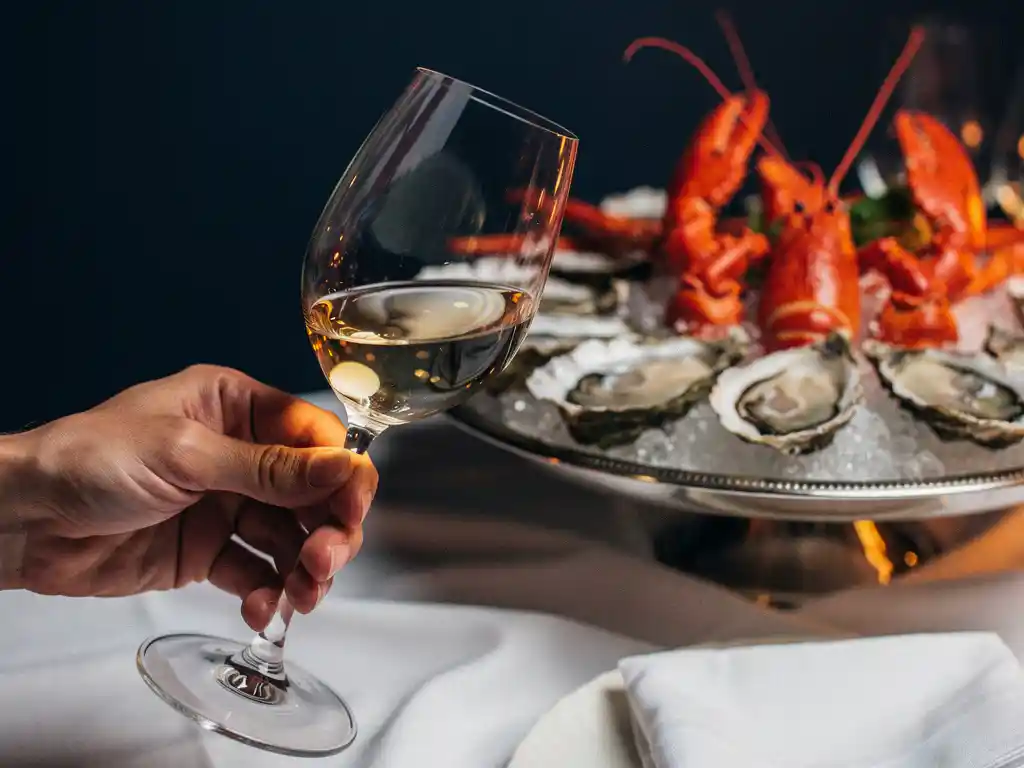
With fish and seafood, white wines with good acidity are the preferred choice — such as Chablis, Muscadet, Albariño, or a dry Riesling. The freshness and minerality of these wines complement the delicate, briny flavors of fish and shellfish without overwhelming them.
The specific choice depends on the preparation. Raw oysters and lightly prepared fish call for a very dry, mineral wine with little oak influence. A Chablis or a Muscadet sur lie are classic choices that have been paired with oysters for centuries. Richer preparations, such as fish with a creamy sauce or lobster with butter, can handle a slightly fuller wine, such as a white Burgundy or a light Viognier.
What if you prefer red wine?
Red wine with fish isn’t necessarily wrong, but it does require care. In that case, opt for a light, low-tannin red wine, such as a Pinot Noir or a Beaujolais. Heavy, tannic red wines react chemically with the fatty acids in fish and can leave an unpleasant, metallic aftertaste.
How do you choose between à la carte and a tasting menu with wine pairing?
A tasting menu with wine pairing is the best choice if you want to hand over the wine selection entirely and enjoy a cohesive tasting experience. With à la carte dining, you have more freedom to choose for yourself, but it requires more knowledge to make the right combinations.
With a tasting menu and wine pairing, the sommelier or kitchen team selects a suitable wine for each course. This creates a consistent thread throughout the entire dinner. It’s also an excellent way to discover new wines you might not have chosen on your own. If you’re celebrating a special occasion or simply want to enjoy the evening without worrying about the details, a wine pairing is a smart and luxurious choice.
If you opt for à la carte, it’s wise to consult with the staff for each dish. A good fine dining restaurant will always have team members who can guide you through the wine list, even if you’re not an expert.
What is the difference between white, rosé, and sparkling wine with seafood?
White wine is the most versatile choice with seafood and works well with virtually any preparation. Rosé offers a middle ground with slightly more body and fruitiness, making it ideal with grilled fish or light shellfish. Sparkling wine, such as Champagne or Crémant, is particularly well-suited to oysters, raw preparations, and light starters, thanks to its freshness and the palate-cleansing effect of the bubbles.
Rosé is often underestimated with seafood, but a dry Provençal rosé works beautifully with grilled sea bass or prawns. The wine has enough character to hold its own while remaining light enough not to overpower the fish. Sparkling wines such as Champagne, Cava, or a dry Prosecco are not only festive but also functional — the carbonation cleanses the palate and prepares you for the next bite.
How do you order wine confidently at a fine dining restaurant?
Order wine confidently by being honest about your preferences and budget. Tell the sommelier or server what you’re eating, which flavors you enjoy, and what you’d like to spend. A good sommelier will use that information to suggest the best option for you, without any judgment.
You don’t need to be a wine expert to make a good choice. A few simple phrases go a long way:
- Indicate whether you prefer dry or something slightly fruitier.
- Mention whether you’d like a lighter or fuller-bodied wine.
- Point to a price range on the wine list without saying the amount out loud.
- Don’t hesitate to ask for a recommendation to go with a specific dish.
A fine dining restaurant exists to guide its guests, not to judge them. The staff are happy to help, so don’t be afraid to ask questions.
What common mistakes should you avoid when choosing wine?
The most common mistakes when choosing wine are: automatically ordering the cheapest option, pairing a heavy red wine with delicate fish, and choosing wines based on the label rather than what’s inside. Ignoring the sommelier or server is also a missed opportunity.
Another frequent mistake is ordering the same wine for the entire menu. In a multi-course dinner, the flavors change considerably from course to course, and a wine that pairs perfectly with the starter can completely overpower the main course. Consider ordering a glass per course, or consciously opt for a wine pairing.
Finally, don’t be swayed by well-known brands or popular grape varieties if they don’t suit what you’re eating. An unfamiliar wine that pairs beautifully with your dish will give you far more pleasure than a famous name that doesn’t deliver on the combination.
How Visaandeschelde helps with wine pairing at fine dining
At our restaurant, you never have to figure out wine pairing on your own. Every day, we combine fresh fish and seasonal dishes with a carefully curated wine list, so that every pairing works. Our menu offers concrete opportunities to enjoy a complete wine experience:
- A monthly rotating chef’s menu with optional wine pairing per course.
- Expert advice from our staff with every à la carte choice.
- A varied wine list, tailored to fish, shellfish, and seasonal dishes.
- Attention to guests with specific preferences, such as lighter or organic wines.
Whether you’re joining us for a romantic dinner, a business lunch, or a celebratory meal, we make sure the wine is just as good as the food. Reserve your table through our website and let us take care of the rest.
Veelgestelde vragen
How far in advance should I think about wine pairing when making a fine dining reservation?
It’s a good idea to mention your interest in a wine pairing when you make your reservation. This allows the restaurant to take your preferences into account and potentially seat you with a sommelier who can provide extra guidance. If you’re planning to order à la carte, it’s fine to discuss your options with the staff on the night, but for a special chef’s menu or themed evening, getting in touch beforehand is always an advantage.
What if I don't drink alcohol — are there good non-alcoholic alternatives for wine pairing at fine dining?
Absolutely. Many fine dining restaurants now offer a non-alcoholic pairing featuring carefully selected juices, tea infusions, kombucha, or mocktails specifically crafted to complement the flavors of each course. Ask about the options when you make your reservation or when you arrive. A good restaurant adapts its hospitality to your wishes, not the other way around.
How do I know if a wine is being served too cold or too warm, and is it okay to say something?
White wines are best served between 8–12°C, sparkling wines around 6–8°C, and red wines between 14–18°C depending on the style. If you notice that a wine is too cold (little aroma) or too warm (alcoholic and flat), you are absolutely welcome to mention it politely to the staff. In a fine dining restaurant, this will be handled professionally and without judgment — it’s actually a sign that you’re engaged with your tasting experience.
Can I send a wine back if I don't enjoy it with my dish?
If a wine is corked (a musty, cardboard-like smell caused by a damaged cork) or clearly spoiled, you can always send it back, and a good restaurant will resolve this without any discussion. If you simply don’t enjoy the wine with your dish, it’s better to discuss this honestly with the sommelier or server. They can advise you on a better-suited alternative, and in most cases a solution will be found together.
What is the difference between a wine pairing by the glass and a full wine pairing package, and which is right for me?
With a wine pairing by the glass, you pay per course for a specifically selected glass of wine, while a full wine pairing package is a set arrangement in which all the course wines are pre-selected and included in the price. Choose the package if you want to sit back and enjoy without making decisions throughout the meal and if you’re open to surprising discoveries. Choose by the glass if you want more control, prefer to skip a wine with one course, or want to keep your budget more flexible.
Are there grape varieties or wine styles that beginners can always safely choose with a fish or seafood menu?
For beginners, Sauvignon Blanc, Pinot Grigio, and Chablis are reliable choices that work well with virtually any fish or seafood dish, thanks to their crisp acidity and light body. Champagne or a dry Crémant is a festive yet functionally safe choice with oysters and light starters. These styles are widely available, relatively affordable in the mid-range, and are frequently recommended by sommeliers as an accessible starting point for wine pairing.
How can I practice wine pairing at home before visiting a fine dining restaurant?
Start at home with simple tasting experiments: pair the same dish with two different wines and pay attention to how the flavors change. Apps like Vivino or Delectable help you scan wines and read pairing recommendations. You can also attend wine tastings or cooking classes with wine guidance to train your palate. The more deliberately you taste and experiment with combinations, the more confident you’ll feel making choices in a fine dining setting.