


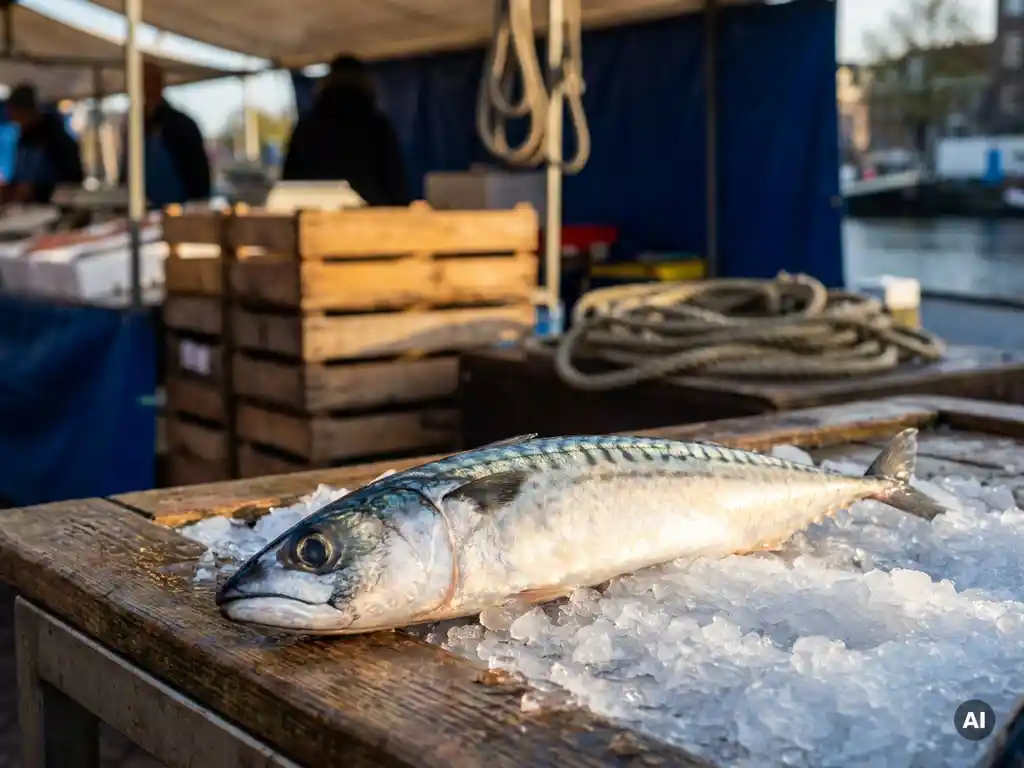
A fish restaurant in Amsterdam truly serves fresh fish when it purchases daily from regular suppliers and adjusts its menu based on what is available that day. Freshness is not a marketing term — it is a practice that shows in how a restaurant composes its menu, presents its products, and trains its staff. In this article, we answer the most frequently asked questions about freshness, origin, and quality of fish at a fish restaurant in Amsterdam.
How can you tell whether a fish restaurant truly serves fresh fish every day?
A fish restaurant genuinely serves fresh fish daily when its menu changes regularly, staff can name the origin of the fish, and the menu depends on what is available that day. Restaurants that always offer exactly the same dishes are almost certainly working with frozen or long-shelf-life products.
There are a few concrete signs that can help you assess this:
- A rotating daily menu: If the menu changes daily or weekly, that is a strong indication that the kitchen works with whatever is fresh and available.
- Limited choices on certain days: True freshness sometimes means a particular species is temporarily unavailable. That is not a weakness — it is a sign of integrity.
- Seasonal offerings: Restaurants that serve lobster and summer species in the middle of winter as if it were nothing are not working with seasonally fresh produce.
- Staff who know the story: Servers who can tell you where the fish comes from and how it is prepared work in a kitchen that takes pride in its sourcing.
A simple litmus test is to ask: “What is fresh today?” If the answer is vague or always the same, that tells you everything you need to know.
Where does the fish at an Amsterdam fish restaurant come from?
The fish at an Amsterdam fish restaurant comes from regular suppliers who deliver daily — often through Dutch fish auctions such as those in IJmuiden or Scheveningen — supplemented by imports from European coastal regions for specific species such as oysters, lobster, or Mediterranean fish.
Dutch fisheries provide a strong foundation: sole, plaice, cod, and herring are typical North Sea species that move quickly from the coastal auction to the wholesaler. For specialty items such as Breton oysters, Norwegian lobster, or Atlantic sea bass, restaurants work with specialist importers who deliver daily from European coastal areas.
Quality starts with the supplier relationship. Restaurants that have worked with the same fishmonger for years gain access to the best catch of the day. That kind of partnership cannot simply be replicated — and it is precisely what determines the freshness on your plate.
What does “seasonal fish” mean on a restaurant menu?
Seasonal fish on a restaurant menu means the kitchen works exclusively with species that are at their best at that particular time — both in terms of flavor and availability. Just like vegetables and fruit, fish has a season during which quality peaks and harvesting is responsible.
Herring, for example, is at its finest in early summer, oysters are most flavorful during the colder months, and lobster is a classic autumn highlight. A menu that follows this rhythm not only guarantees better flavor but also reflects a deliberate commitment to sustainable sourcing.
Working seasonally also has a practical benefit for the guest: you eat what tastes best at that moment. A restaurant that updates its menu monthly in line with the seasons offers a different experience every time, keeping visits interesting even after multiple trips.
How does fresh fish differ from frozen fish in a restaurant?
Fresh fish and frozen fish differ in texture, flavor, and preparation. Fresh fish has a firmer structure, a cleaner taste, and lends itself to a wider range of preparation methods, whereas frozen fish becomes softer after thawing and has fewer flavor nuances.
What you taste on the plate
With fresh fish, the flavor is more direct and clean. A fresh sole or sea bass has a subtle sweetness that is largely lost during freezing and thawing. The texture of fresh fish is also firmer — something you notice both when cutting and when eating.
What you see in the kitchen
Frozen fish releases more moisture when thawed, which complicates preparation. A chef working with fresh fish can opt for lighter cooking methods such as steaming, poaching, or a quick sear, without the product falling apart. This gives the kitchen greater freedom and ultimately delivers a better result on the plate.
That said, freezing is not inherently bad: some species, such as wild salmon or certain tropical fish, are frozen immediately after the catch on board the vessel, preserving a high level of quality. What matters is whether the restaurant is transparent about which fish is fresh and which is frozen.
What questions can you ask to assess the freshness of fish at a restaurant?
You can assess the freshness of fish at a restaurant by asking the serving staff targeted questions about origin, supplier, and daily availability. A restaurant that is proud of its product will answer those questions willingly and specifically.
Ask these questions if you want to know whether you are dealing with a restaurant that genuinely works with fresh fish every day:
- “What came in fresh today?” Good serving staff will know the answer and share it with enthusiasm.
- “Where do you source your fish?” Concrete answers — such as a specific auction or supplier — inspire confidence.
- “Is the fish fresh or frozen?” An honest restaurant makes this distinction clear, even when part of the menu is frozen.
- “Does the menu change often?” Frequent changes are a sign of seasonal working and daily sourcing.
- “Can you recommend something based on what’s best today?” A restaurant that works with fresh fish daily will always have a recommendation ready.
If the staff remains vague in response to these questions or simply refers you to a fixed menu without explanation, that is a warning sign. Transparency about ingredients is a hallmark of a restaurant that takes its craft seriously.
How Visaandeschelde approaches freshness and quality
At Visaandeschelde, we have been working on the basis of daily fresh sourcing for over 25 years. Freshness is not an afterthought for us — it is the foundation of everything we do. That translates into concrete working practices:
- We adapt our menu daily based on what is available in terms of fresh fish and seasonal produce.
- Our rotating dish Vis Exclusief is always based on the fresh catch of the moment.
- Our monthly changing Chef’s menu follows the rhythm of the seasons, including fresh oysters and lobster.
- Our staff can always tell you what is fresh that day and what we recommend.
- Alongside fish, we also offer dishes for vegetarians and meat lovers, so there is something for everyone.
Want to experience for yourself what fresh fish tastes like at a restaurant that goes the extra mile every single day? View our menu and reserve a table. Due to our popularity, we recommend booking in advance so we can guarantee you an unforgettable evening.
Veelgestelde vragen
Do I need to book in advance at a fish restaurant that works with daily fresh produce?
Yes, booking in advance is strongly recommended at fish restaurants that work with daily fresh sourcing. Because the offering depends on what is available that day, the most popular dishes can sell out quickly. Making a reservation also gives the restaurant the opportunity to accommodate any dietary requirements or allergies, allowing the kitchen to prepare accordingly.
What if I have an allergy to certain types of fish — how should I handle that at a fish restaurant?
Always inform the restaurant of your allergy when making your reservation, and mention it again upon arrival. A reputable fish restaurant with well-trained staff will be able to tell you which dishes are safe and can, in many cases, offer alternatives. Ask specifically about cross-contamination in the kitchen, as this is a genuine concern in an environment where fish is handled extensively.
How can I tell at home whether the fish I buy at a shop or market is truly fresh?
You can recognize fresh fish by several clear signs: the eyes are bright and rounded (not sunken or cloudy), the gills are a vivid red color, the flesh springs back when gently pressed, and the smell is fresh and sea-like — never strong or ammonia-like. Always ask your fishmonger when the fish arrived and whether it was delivered fresh that day.
Is sustainable fish automatically fresh fish, and how can I recognize that on a menu?
Sustainable fish and fresh fish are two distinct concepts that can overlap, but they do not always go hand in hand. Sustainable fish refers to responsible catching or farming practices, while freshness relates to how quickly the fish reaches your plate after being caught. On a menu, certifications such as MSC (Marine Stewardship Council) or ASC indicate sustainability, while descriptions such as ‘daily catch’ or ‘seasonal’ point more to freshness. The ideal is a restaurant that combines both.
What are the most common mistakes when preparing fresh fish at home, and how can I avoid them?
The most common mistake is cooking fresh fish for too long and at too high a temperature, causing the delicate texture and flavor to be lost. Fresh fish requires very little cooking: a few minutes in a hot pan with butter or oil is often all it takes. Other frequent errors include taking the fish out of the refrigerator too early (causing it to cook unevenly) and using too many seasonings that overpower the natural flavor. Let the quality of the product speak for itself.
How do I know which fish species are currently in season and therefore at their best?
A useful rule of thumb is to think in quarters: herring is at its best in early summer (May–June), oysters are wonderful from September through April, sole and plaice peak in spring and summer, and lobster is a classic autumn highlight. Websites of Dutch fish auction organizations and the Seafood Guide published by the World Wildlife Fund offer up-to-date and reliable overviews of which species are both in season and sustainably caught.
Can I visit a specialist fish restaurant even if I don't eat fish?
Absolutely — most specialist fish restaurants, including Visaandeschelde, also offer dishes for vegetarians and meat lovers. A good restaurant ensures that every guest at the table has a full and satisfying experience, regardless of their preferences. If you are unsure, you can always inquire about options for non-fish eaters when making your reservation, so you can book your table with complete peace of mind.