


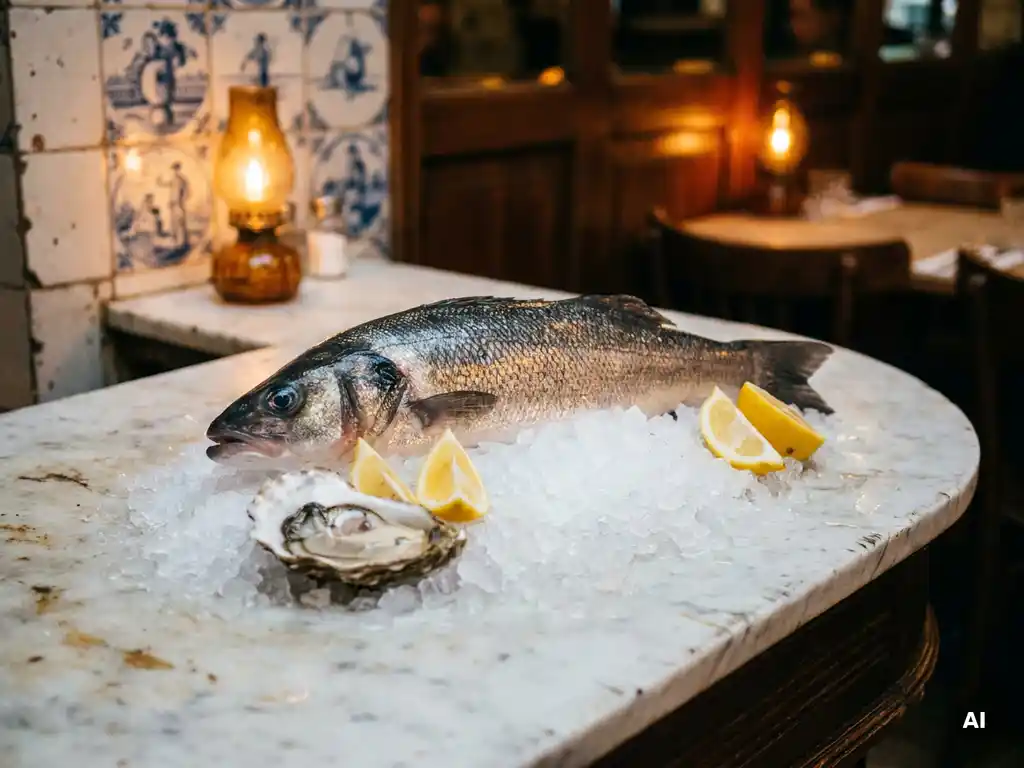
A truly great fish restaurant in Amsterdam can be recognized by three core elements: fresh fish delivered daily, an honest seasonal menu, and a team that works with genuine expertise. Restaurants that meet this standard show it in everything — from the menu to the atmosphere and the advice of their staff. In this article, we answer the most frequently asked questions about choosing a quality fish restaurant, so you can make the right choice for your next dinner out. If you’d like to learn more about our approach and philosophy, you’ll find it on our page.
What should you look for when assessing the freshness of fish at a restaurant?
You can recognize fresh fish by clear eyes, a clean smell, and firm flesh — but in a restaurant, it goes beyond that. Fresh fish has no overpowering fishy odor, is sourced daily, and rarely appears on a fixed menu week after week. A reliable fish restaurant adjusts its offerings based on what the market has available that day.
Concrete signs to look for when you arrive:
- Daily specials on a chalkboard or separate insert: this points to a flexible sourcing and kitchen process
- A limited but rotating selection: an enormous fixed menu with dozens of fish varieties is rarely a good sign
- Staff who know the provenance: ask where the fish comes from — a good restaurant can answer that immediately
- No overpowering smell: a fresh, neutral scent in the dining room is a positive sign
Freshness is not a marketing term — it is a daily commitment that requires investment in logistics, suppliers, and kitchen planning. Restaurants that take this seriously make it visible in their communication and presentation.
What does a seasonal menu say about the quality of a fish restaurant?
A seasonal menu is one of the strongest quality indicators of a fish restaurant. It means the kitchen works with what is at its best at that moment, rather than serving the same dishes year-round. That requires culinary flexibility and a direct relationship with reliable suppliers.
Seasonal cooking has clear benefits for the guest:
- Fish and shellfish are at their most flavorful during their natural season
- Ingredients don’t need to travel as far, which benefits freshness
- The menu stays surprising, even for regular guests who return frequently
- Dishes are paired with the full seasonal offering, including vegetables and herbs
In practice, you’ll see this reflected in restaurants that, for example, prominently feature lobster and oysters during the winter months, while highlighting different varieties in the summer. A restaurant that keeps the same menu all year is choosing convenience over quality.
How does a good fish restaurant distinguish itself through atmosphere and interior?
A good fish restaurant creates an atmosphere that complements the kitchen: maritime without being kitschy, warm without being overdone. The interior enhances the experience without becoming a distraction. Think of materials, lighting, and details that evoke the sea and the craft of fishing, without falling into clichés.
Atmosphere in a restaurant is more than decoration. It comes down to a combination of:
- Acoustics: a comfortable noise level that allows conversation without raising your voice
- Lighting: warm, subdued light contributes to a relaxed dining experience
- Detail: authentic touches — such as the use of natural materials or graphic elements referencing the sea — give the space character
- Service style: friendly, knowledgeable, and unobtrusive staff are inseparable from the overall atmosphere
A terrace is an added bonus, especially during the summer months. Dining outside at a good fish restaurant in Amsterdam adds an extra dimension to the evening, provided the location lends itself to it. The combination of a great location, a thoughtfully designed interior, and genuinely hospitable staff makes the difference between a meal and a true experience.
What is the difference between à la carte and a set multi-course menu at a fish restaurant?
With à la carte, you choose which dishes to order and in what order, while a multi-course menu offers a curated journey in which the kitchen sets the direction. Both options have their own advantages, depending on what you’re looking for in a dinner.
À la carte: freedom and personal choice
À la carte is ideal when you want to make specific choices — for example, because you want to try a particular dish or prefer a lighter meal. You pay per dish and have full control over how your dinner is composed. At a quality fish restaurant, you’ll also find rotating specials here, such as a “Fish Exclusive” dish that changes daily or weekly based on availability.
Multi-course menu: the kitchen as your guide
A multi-course menu lets the kitchen tell the story. You put yourself in the hands of the chef and experience a cohesive sequence of dishes that complement one another. This is ideally suited for a special evening, a business dinner, or when you truly want to get to know the restaurant and its philosophy. Many restaurants also offer an optional wine pairing, where each course is matched with a carefully selected wine. Browse our menu to get a sense of both options and the current selection.
Why is making a reservation at a popular fish restaurant in Amsterdam so important?
At a popular fish restaurant in Amsterdam, a reservation is almost always essential — especially on weekends or around public holidays. Good restaurants work with a limited number of covers to ensure the quality of both the service and the kitchen. Arriving without a reservation risks disappointment.
There are several reasons why reserving at this type of restaurant matters so much:
- Limited capacity: a quality restaurant deliberately keeps the number of tables manageable
- Tailored daily sourcing: the kitchen purchases fresh produce each day based on the expected number of guests
- Special requests: a reservation gives you the opportunity to communicate dietary needs or special occasions in advance
- Peak times: Friday and Saturday evenings at many Amsterdam fish restaurants are fully booked weeks in advance
Making a reservation is also a sign of mutual respect: the restaurant can prepare properly, and you can be confident that a table will be waiting for you.
How Visaandeschelde sets itself apart as a fish restaurant in Amsterdam
We have been a fixture in the Rivierenbuurt neighborhood in Amsterdam South for over 25 years, and everything described above is not theory for us — it is our daily practice. At our restaurant on Scheldeplein, we work exclusively with daily-fresh fish and seasonal produce, curated by restaurateur Michiel Deenik and his team.
What sets us apart as a fish restaurant in Amsterdam:
- A menu that moves with the seasons, including rotating oysters, lobster, and the ever-surprising “Fish Exclusive” dish
- A choice between à la carte and a monthly-changing Chef’s Menu with an optional wine pairing
- An authentic maritime interior with a terrace, located opposite the RAI convention center
- Attentiveness to guests with specific dietary needs, such as vegetarians or those eating gluten-free
- A warm, welcoming atmosphere suited to both a romantic dinner and a business lunch
Due to our popularity, we always recommend booking a table in advance. Feel free to get in touch with us or reserve directly through our website, so we can prepare properly for your visit.
Veelgestelde vragen
How far in advance should I reserve a table at a popular fish restaurant in Amsterdam?
For weekday evenings, a reservation two to three days in advance is usually sufficient, but for Friday and Saturday evenings or public holidays, we recommend planning at least one to two weeks ahead. During special periods such as Christmas, New Year’s Eve, or Valentine’s Day, popular fish restaurants can be fully booked weeks or even months in advance. If you’re reserving for a group or a special occasion, let the restaurant know right away so they can make the necessary arrangements.
What are common mistakes when choosing a fish restaurant?
One of the most common mistakes is taking a large, extensive menu as a sign of quality, when in fact a limited and rotating selection is what points to daily-fresh sourcing and craftsmanship. Many guests also forget to ask about the provenance of the fish, or fail to notice warning signs such as a strong fishy smell or the absence of daily specials. Finally, people often underestimate how important it is to communicate special dietary needs or occasions in advance, so the restaurant can prepare accordingly.
Is a fish restaurant also suitable for guests who don't eat fish?
A good fish restaurant always takes into account guests who don’t eat fish or have specific dietary needs, such as vegetarians or those who eat gluten-free. Quality restaurants generally offer alternatives and adapt dishes where possible upon request. It is advisable to mention dietary requirements when making your reservation, so the kitchen can respond as well as possible and ensure you have a complete dining experience.
What is a wine pairing and is it worth it with a multi-course menu?
A wine pairing means that with each course of the menu, a specifically selected wine is served that complements and enhances the flavors of the dish. For guests who truly want to experience the restaurant and its kitchen, a wine pairing adds an extra dimension to the dinner and removes the pressure of choosing. It is, however, a personal choice: those who prefer to select their own bottle of wine, or who don’t drink alcohol, can of course enjoy the multi-course menu without a pairing.
How do I know whether the fish on the menu is truly sustainably caught or farmed?
Ask the staff directly about the provenance and fishing method of the fish — a good fish restaurant can answer these questions openly and transparently. Also look for certifications such as the MSC label (for wild-caught fish) or the ASC label (for farmed fish), and check whether the restaurant works with seasonal species rather than offering the same fish varieties throughout the entire year. Restaurants that take sustainability seriously communicate this actively through their menu, website, or staff.
What is the difference between a business dinner and a romantic dinner at a fish restaurant, and how do I prepare?
The most important difference lies in the atmosphere and pace: for a romantic dinner, you’ll want to opt for a quiet table, a multi-course menu, and a relaxed evening, while a business dinner often calls for slightly more attentive service and a setting that allows for easy conversation. When making your reservation, let the restaurant know the occasion so they can offer you the best table and service. Also consider practical details such as parking options, the desired duration of the dinner, and any drink preferences of your guests.
Can I also visit a quality fish restaurant in Amsterdam for lunch, or is it only suitable for dinner?
Many quality fish restaurants in Amsterdam also offer a lunch menu, which is generally more compact and slightly more accessibly priced than the dinner menu, but with the same attention to freshness and quality. Having lunch at a good fish restaurant is an excellent way to get to know the restaurant for the first time without the full commitment of a multi-course dinner. Check the opening hours and lunch offerings on the website in advance, or get in touch, as not every restaurant is open for lunch every day.
Gerelateerde artikelen
- Wat kost een diner bij een visrestaurant in Amsterdam gemiddeld?
- Hoe onderscheidt een brasserie-visrestaurant zich van andere eetgelegenheden in Amsterdam?
- Hoe reserveer je een tafel bij een visrestaurant in Amsterdam?
- Is fine dining in Amsterdam geschikt voor internationale congressbezoekers?
- Wat is het verschil tussen à la carte en een chef's menu bij fine dining?