


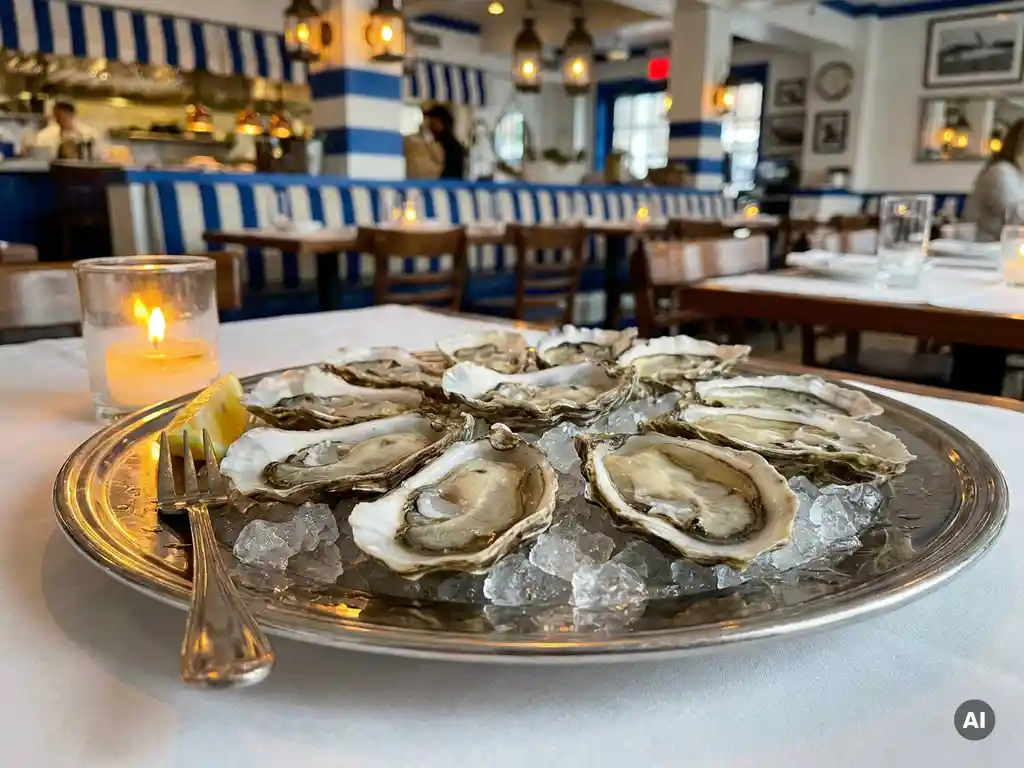
When ordering oysters at a restaurant in Amsterdam, it helps to know which varieties are available, how to read the menu, and how many to order per person. Oysters are a delicacy best enjoyed when you know what you’re choosing and how to eat them. In this article, we answer the most frequently asked questions about ordering oysters so you can sit down at the table fully prepared. Whether you’re trying oysters for the first time or you’re a seasoned enthusiast, there’s always something new to discover at a good fish restaurant in Amsterdam.
What types of oysters appear on a restaurant menu?
A restaurant menu typically features two main types of oysters: the flat oyster and the cupped oyster. The flat oyster, also known as the European oyster or Ostrea edulis, has a milder, nuttier flavor and is seasonal. The cupped oyster, such as the Creuse or Spéciale, is available year-round and has a fuller, saltier taste.
Within these two categories, there are countless varieties, often named after their place of origin. Well-known examples include:
- Zeeuwse flat oyster: a Dutch classic with a soft, creamy flavor
- Fine de Claire: a French cupped oyster, raised in special basins for added refinement
- Spéciale de Claire: aged longer than the Fine de Claire, with a fuller, more complex aroma
- Gillardeau: a premium cupped oyster from France, known for its firm texture and rich flavor
- Belon: a flat oyster from the Breton coast with a pronounced, mineral-forward taste
Restaurants often select their offerings based on the season and availability. A good fish restaurant works with daily fresh oysters and rotates its selection regularly.
How do you read an oyster menu at a restaurant?
Reading an oyster menu comes down to three elements: the variety, the origin, and the size grading. Size numbers work in reverse — a lower number means a larger oyster. A size 1 is therefore larger than a size 4. The origin tells you a great deal about the flavor, as oysters absorb the minerals and salinity of their environment.
When reading the menu, also look out for the following terms:
- Fine: a leaner, lighter oyster with a delicate flavor
- Spéciale: a plumper, meatier oyster that has been aged longer
- Pousse en Claire: an extra-long-aged oyster with a distinctive, pronounced character
If you’re unsure, don’t hesitate to ask the staff for advice. At a good restaurant, they know every oyster on the menu inside and out and are happy to help you find a choice that suits your taste preferences.
How many oysters should you order per person at a restaurant?
As a starter, six oysters per person is the standard order. If you want oysters as a main course or as part of an elaborate Fruits de Mer platter, a dozen — twelve pieces — is a typical portion. For a light introduction or as a snack alongside a drink, three to six oysters is plenty.
The quantity also depends on the type of oyster and the rest of your meal. Large, meaty oysters like a Gillardeau size 1 are more substantial than a small Fine de Claire. If you’re ordering multiple courses, six oysters as a starter is more than enough. If you’re going all-in on oysters, feel free to order more and try different varieties side by side to experience the differences in flavor.
When is oyster season in the Netherlands?
The classic oyster season in the Netherlands runs from September through April — the months containing the letter R. This rule of thumb applies mainly to flat oysters, which spawn during the summer months and are less flavorful at that time. Cupped oysters, such as the Creuse, are available year-round and maintain consistent quality.
In 2026, the selection of seasonal oysters in Dutch restaurants is at its largest in autumn and winter. The flat Zeeuwse oyster is at its finest during this period: firm, full of flavor, and wonderfully fresh. Restaurants that work with seasonal produce adjust their oyster menu accordingly and often offer a richer, more varied selection during the winter months.
Which drinks pair well with oysters at a restaurant?
The classic pairing for oysters is a dry, crisp white wine or champagne. The acidity and minerality of these drinks enhance the briny, iodine-rich flavor of the oyster without overpowering it. Excellent choices include a Chablis, Muscadet, Sancerre, or a brut champagne.
Beyond wine, there are other options that work beautifully:
- Dry sparkling wine: Crémant or Prosecco brut pair well with lighter, more delicate oysters
- Stout beer: a classic Irish pairing in which the roasted notes of the beer contrast nicely with the briny oyster
- Sake: dry Japanese sake pairs surprisingly well with oysters thanks to its umami richness
- Sparkling water: for those who don’t drink alcohol, chilled, carbonated mineral water is a neutral yet fitting choice
Avoid sweet wines or fruit juices, as these clash with the salty flavor of the oyster and make the pairing feel heavy on the palate.
What are the etiquette rules for eating oysters?
There are a few unwritten rules when eating oysters at a restaurant. You eat an oyster in one motion: tilt the shell toward your mouth and let the oyster slide in along with its liquid. Chew lightly to fully experience the flavor, but don’t swallow immediately. Use the small fork placed beside the shell to loosen the oyster from the shell if needed.
Additional etiquette tips to keep in mind:
- Add condiments such as lemon, shallot vinegar, or Tabasco sparingly, so the oyster’s natural flavor is not lost
- Smell the oyster before eating it — a fresh oyster smells of the sea, clean and pleasant, not strong or off-putting
- Place the empty shell upside down on the plate so the staff knows you have finished
- Eat oysters as soon as they are served, as they are at their best when cold and fresh
In informal settings, it is also perfectly acceptable to drink the oyster directly from the shell without cutlery. In a brasserie or a casual fish restaurant, this is entirely normal and is even considered the most authentic way to enjoy them.
How Visaandeschelde helps you discover oysters
At Visaandeschelde, we have been a fixture in Amsterdam South for over 25 years when it comes to fresh fish and seasonal seafood. Oysters are an important part of our offering, and we do everything we can to make your oyster experience truly complete. Here is what you can expect from us:
- Daily fresh oysters, rotating with the season and availability
- A knowledgeable team to help you choose the right variety and size
- An extensive wine list with guidance on the perfect pairing
- Fresh Fruits de Mer as part of our à la carte menu
- A seasonal chef’s menu in which oysters play a prominent role
Whether you’re trying oysters for the first time or you’re a seasoned enthusiast, you’ll always find a selection that matches the season and your taste. Browse our menu for the current oyster offering and book your table in good time — our seats fill up quickly.
Veelgestelde vragen
Can I order oysters if I've never eaten them before — where do I start?
Start with a mild, approachable variety such as the Fine de Claire or a Zeeuwse flat oyster in size 3 or 4. These are smaller, more delicate oysters with a gentle flavor that are ideal for first-timers. Order a portion of three to six and ask the staff for a brief explanation of the flavor profiles, so you know what to expect before you try your first oyster.
How do I know whether an oyster at the restaurant is fresh?
A fresh oyster smells of the sea — clean, briny, and faintly of iodine. When the shell is opened or the oyster is served, there should still be liquid (known as the oyster liquor) present in the shell. Decline any oyster that smells strong or unpleasant, as a restaurant of any quality serves only oysters delivered that same day.
What if I have a shellfish allergy — does that apply to oysters too?
Oysters are mollusks and fall into a different allergy category than crustacean shellfish such as shrimp or lobster. That said, people with a seafood allergy may still react to oysters. If you are unsure about a possible allergy, always consult your doctor in advance and inform the staff when making your reservation or at the table, so the restaurant team can advise you properly.
Is it acceptable to add condiments like lemon or sauce, or is that a mistake?
Adding a small squeeze of lemon juice, a drop of Tabasco, or a spoonful of shallot vinegar is entirely common and certainly not a mistake. It is, however, advisable to do so in moderation so that the oyster’s own unique flavor remains the star. With premium oysters such as a Gillardeau or a Belon, it is even recommended to taste the first oyster plain before adding any condiments.
Can I combine oysters with other dishes in a multi-course menu?
Absolutely — oysters work beautifully as a cold starter in a multi-course menu, ideally before warm or rich dishes. Their fresh, briny flavor prepares the palate for the meal ahead. Avoid following them immediately with heavily spiced or fatty dishes; instead, pair them with a light intermediate course or a fish dish for a harmonious progression of flavors throughout the meal.
What is the difference between a size 1 and a size 4 oyster, and which should I choose?
Oyster sizing works in reverse: size 1 is the largest, size 4 the smallest. Larger oysters (size 1 or 2) are meatier, fuller in flavor, and more filling, while smaller oysters (size 3 or 4) are more subtle and refined. For beginners, a size 3 is a great starting point; enthusiasts who enjoy a bold, full flavor will want to go for a size 1 or 2.
How far in advance should I make a reservation at a fish restaurant in Amsterdam for an oyster dinner?
Especially during peak oyster season — from September through April — and on weekends, it is wise to book at least a week in advance at a popular fish restaurant in Amsterdam. If you have a specific oyster variety in mind or would like an extensive Fruits de Mer platter, mention this when reserving so the restaurant can plan its stock accordingly. On weekday evenings, there is generally more flexibility.
Gerelateerde artikelen
- 5 fouten die mensen maken bij het kiezen van een visrestaurant in Amsterdam
- Wat is een visrestaurant in Amsterdam precies?
- Welke wijnen passen bij een chef's menu in Amsterdam?
- Wat is het verschil tussen à la carte en een chef's menu bij fine dining?
- Waarom is fine dining in Amsterdam een perfecte keuze voor een zakelijk diner?