


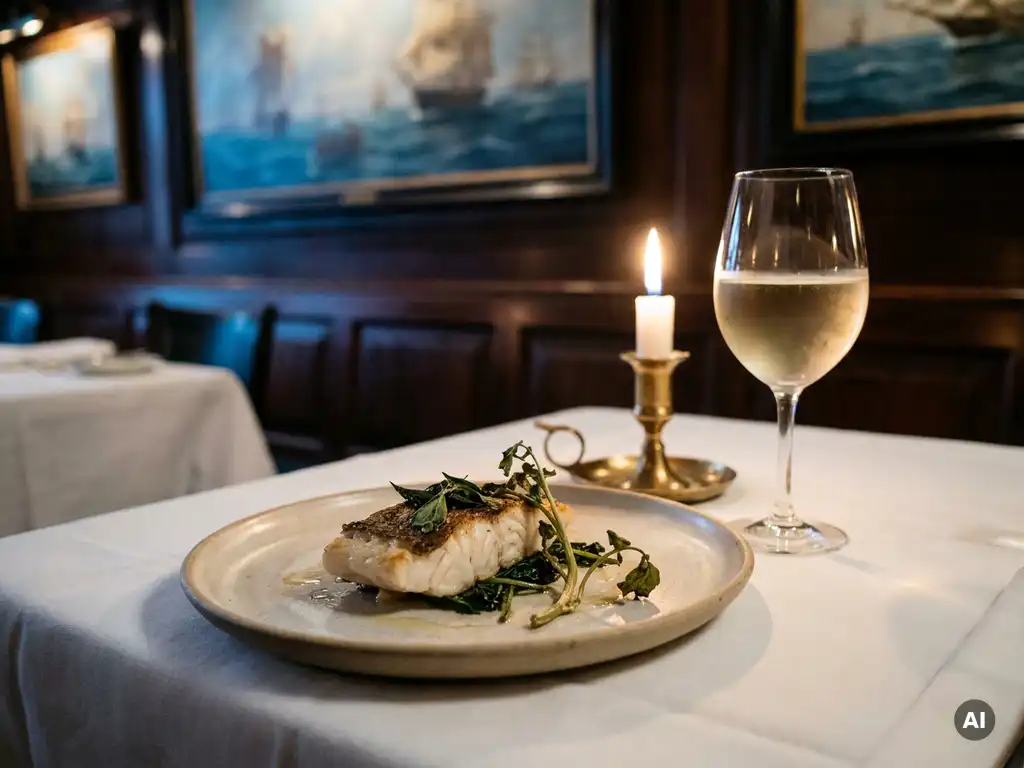
Amsterdam has dozens of restaurants with fish on the menu, but finding a truly great seafood restaurant in Amsterdam is a different story altogether. Freshness, seasonal awareness, atmosphere, and service are what separate a forgettable meal from an evening you’ll remember. Yet many people make the same mistakes when choosing a seafood restaurant. Curious about what sets a seafood restaurant apart from the rest? In this article, we outline the five most common mistakes so you know exactly what to look for next time.
How to recognize a truly great seafood restaurant in Amsterdam
A great seafood restaurant isn’t just about a beautiful storefront or a packed terrace. It comes down to the combination of freshness, craftsmanship, and a thoughtfully composed menu. Restaurants that source from reliable suppliers daily, adapt their menu to the seasons, and invest in the guest experience show that quality comes first. Once you know what to look for, you can quickly filter out the good addresses from the less impressive options.
Mistake 1: Ignoring freshness and settling for frozen
The freshness of fish is the foundation of everything. A restaurant that works with daily fresh fish delivers a flavor and texture that frozen products simply cannot match. Fresh fish has a subtle, clean taste and a firm texture. Frozen fish loses moisture and flavor during thawing, and that difference is immediately noticeable on the plate.
How can you tell whether a restaurant uses fresh fish? Pay attention to how the menu is structured. If the menu changes regularly, or if your server tells you what came in fresh that day, that’s a good sign. A fixed, extensive fish menu that remains identical throughout the year is more likely to indicate the use of frozen products.
Don’t hesitate to ask the staff where the fish comes from and when it was delivered. A restaurant that takes pride in its sourcing will be happy to answer that question. If you feel reluctant to ask, that hesitation is itself a signal.
Mistake 2: Completely ignoring the seasons
Fish is a seasonal product. Just like vegetables and fruit, not every type of fish is at its best year-round. Sole, mackerel, oysters, lobster, and other seafood each have their own season when they are at the peak of flavor and quality. A restaurant that takes this seriously adjusts its menu accordingly.
A seasonal menu isn’t just better for flavor — it’s also better for sustainability. By working with whatever is most abundantly available at any given time, overfishing is reduced and responsible fishing practices are supported. This is something an increasing number of diners consciously consider when choosing a restaurant.
Before you make a reservation, check whether the restaurant has an up-to-date menu online. Does it change regularly? If so, there’s a good chance the restaurant takes seasonal cooking seriously. A static menu that remains unchanged for months is a less promising sign.
Mistake 3: Focusing only on price, not on value
A cheap seafood restaurant may seem appealing, but price alone says little about the quality of what you’ll receive. Fresh, daily-sourced fish carries a higher cost than frozen products. A restaurant that consistently charges low prices for fish dishes has to compensate for that margin somewhere — and it often comes at the expense of ingredient quality.
Value is about the total experience: the quality of the fish, the skill of the preparation, the service, the atmosphere, and the overall experience. A multi-course menu with wine pairing at a quality restaurant can be a better investment than a cheap meal that disappoints. Think about what you want from the evening and weigh that against the price.
Don’t compare restaurants on price alone — also consider what’s on the menu, how the menu is structured, and what other guests say specifically about the quality of the fish. Reviews that address freshness and preparation are more valuable than general comments about service or décor.
Mistake 4: Skipping a reservation at popular restaurants
A seafood restaurant with a strong reputation in Amsterdam is a busy place — that’s simply the reality. Arriving without a reservation at a popular spot risks going home disappointed or being seated at an undesirable table at an inconvenient time.
Making a reservation isn’t just practical — it also shows respect for the restaurant and its team. Kitchens plan their fresh fish orders based on expected capacity. A last-minute visit without a reservation can mean that certain dishes are no longer available, simply because the fish for that day has already run out.
Make it easy on yourself and always book ahead, especially if you’re going with a group, celebrating a special occasion, or planning to dine on a Friday or Saturday evening. Many restaurants offer online reservations, making the process even more straightforward.
Mistake 5: Underestimating atmosphere and experience
A seafood meal is about more than what’s on the plate. The atmosphere of a restaurant directly contributes to how you experience the evening. An authentic maritime setting, attention to detail in the interior, and a team that talks about the dishes with genuine passion all enhance the enjoyment of every bite.
Many people choose a restaurant purely based on the menu and forget to consider the overall ambiance. But if you want to celebrate a special moment, plan a romantic dinner, or impress a business contact, the surroundings play a significant role. A restaurant that takes its atmosphere seriously also invests in the details that make an evening unforgettable.
When making your choice, look at photos of the interior, read reviews that address the overall experience, and check whether the restaurant has a clear concept. A restaurant with a strong identity — from its décor to its menu — generally offers a more consistent and satisfying experience overall.
How Visaandeschelde helps you choose the right seafood restaurant
We understand exactly what guests are looking for in a great seafood restaurant in Amsterdam. At Visaandeschelde, we have been working with daily fresh fish and seasonal produce for over 25 years — and you can taste the difference. Our approach directly addresses the mistakes we discussed above:
- We work exclusively with daily fresh fish, never using frozen products as the basis for our main courses
- Our menu changes with the seasons, including a variety of oysters and lobster at the right time of year
- We offer genuine value for quality, with a choice between à la carte and a monthly rotating Chef’s menu with optional wine pairing
- Our maritime atmosphere in the Rivierenbuurt makes every dinner a complete experience
- Reservations are strongly recommended given our popularity, and can easily be made through our website
Curious about what’s on the menu this month? Check out our current menu and reserve your table in advance. We look forward to welcoming you at Scheldeplein for a seafood meal that exceeds your every expectation.
Veelgestelde vragen
How far in advance should I make a reservation at a popular seafood restaurant in Amsterdam?
For a weekday evening, booking one to two days ahead is generally sufficient, but for Friday and Saturday evenings we recommend planning at least a week in advance. For special occasions such as birthdays, Valentine’s Day, or the holidays, it’s best to book two to three weeks ahead. Many top restaurants offer online reservations, making it easy to secure a table even outside of opening hours.
What are the best seasons to visit a seafood restaurant in Amsterdam for the most variety on the menu?
Fall and winter are the absolute highlights for seafood lovers: oysters are at their most flavorful, lobster is widely available, and wild sea bass and sole are at their finest. In spring and summer, varieties such as mackerel, sea trout, and various shellfish shine. By planning two visits a year — once during the colder months and once in summer — you’ll discover the full breadth of a seasonal menu.
How can I tell as a non-expert whether the fish on my plate is truly fresh?
Fresh fish has a mild, clean scent reminiscent of the sea — a strong or unpleasant smell is an immediate warning sign. On the plate, freshness is recognizable by a firm, non-grainy texture and a clear, natural color. With whole fish, you can also look for bright eyes and flesh that sits firmly on the bone; with fillets, the flesh should not fall apart or appear watery.
Is a more expensive seafood restaurant always better, or are there affordable alternatives with the same quality?
Price and quality often go hand in hand in the world of seafood, but that doesn’t mean you always have to choose the most expensive restaurant. Instead, look for transparency: does the restaurant share information about its suppliers, and does the menu change regularly? A restaurant in a less touristy part of the city, such as the Rivierenbuurt, sometimes offers excellent quality at fairer prices than restaurants in prime locations. A lunch menu or an early-bird deal at a quality restaurant can also be a smart way to enjoy high-quality fish at a more accessible price.
What should I do if I have a fish allergy or dietary requirement — can I still visit a seafood restaurant?
Absolutely, but communication is essential. When making your reservation, contact the restaurant to share your allergy or dietary requirement so the kitchen can prepare accordingly. A professional seafood restaurant is accustomed to questions about allergens such as shellfish, gluten, or lactose and will adjust dishes where possible. Always mention it again to your server upon arrival to avoid any miscommunication in the kitchen.
What questions should I ask the staff to gauge the quality of a seafood restaurant?
Ask targeted questions such as: ‘What fish came in fresh today?’, ‘Where do your fish and seafood come from?’ and ‘Which dish would you recommend for this season?’ A well-informed and proud team will answer these questions without hesitation and with enthusiasm. If the staff remains vague or can’t provide an answer, that says something about how the restaurant handles transparency and product quality.
How do I choose the right wine pairing with a seafood meal if I don't know much about wine?
The classic rule of thumb — white wine with fish — is a good starting point, but a sommelier or experienced server can guide you much further. Feel free to ask for advice and let them know your budget and whether you prefer dry or fruity wines. Many quality seafood restaurants offer a wine pairing with their menu, which is the easiest and often most satisfying choice: the combinations have already been carefully selected by someone who knows the dishes inside and out.