


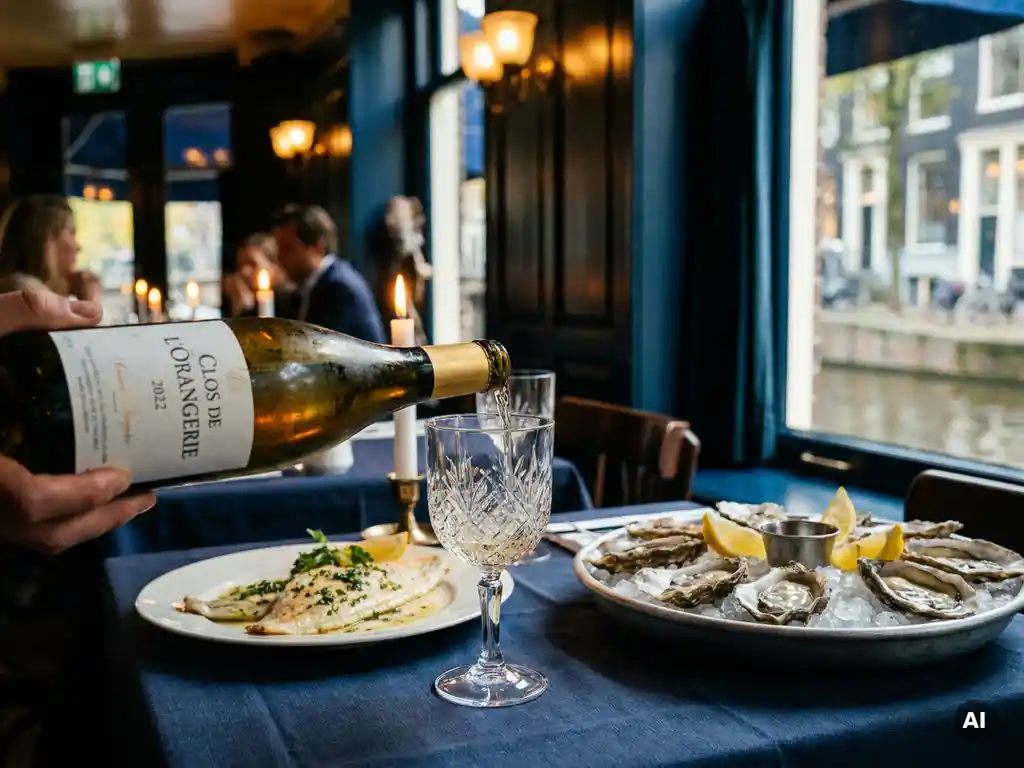
Wine pairing means deliberately combining wine with dishes so that each enhances the other’s flavor. At a fish restaurant, it’s about finding wines that support the delicate flavors of fish and seafood without overpowering them. In this article, we answer the most frequently asked questions about wine pairing with fish, from basic rules to specific combinations with oysters, lobster, and vegetarian dishes. If you’re curious about our story and culinary philosophy, that will give you immediate context for the choices we make in the kitchen and at the table.
Which wines pair best with fish and seafood?
Dry white wines pair best with fish and seafood. Think Muscadet, Chablis, Sauvignon Blanc, or a dry Riesling. These wines have enough acidity to cut through the richness of fish and to enhance the briny, fresh flavors of seafood. Light rosés are also a great choice, especially with grilled fish or lighter shellfish.
The rule of thumb “white wine with fish” holds true in most cases, but there are nuances. A firm, rich fish like tuna or swordfish can pair well with a light red wine, such as a Pinot Noir. The key is that the wine is balanced in weight and intensity with the dish. A delicate sole calls for a subtle wine, while a grilled sea bass with herbs can handle a slightly more robust white wine.
- Muscadet: a classic with oysters and mussels
- Chablis: mineral and crisp, ideal with shellfish
- Sauvignon Blanc: herbaceous and lively, great with grilled fish
- Dry Riesling: versatile and fruity, works well with lighter fish sauces
- Light Pinot Noir: for heartier fish varieties such as tuna
How does wine pairing work with a multi-course fish menu?
With a multi-course fish menu, you work from light to rich — both in dishes and in wines. You start with a fresh, light wine alongside a starter such as carpaccio or oysters, then build toward a fuller wine with a richer main course. Each course receives a wine matched to the flavor intensity of that specific dish.
Wine pairing for a multi-course menu requires more thought than pairing for a single dish. The transition between courses should feel seamless. A wine that is too heavy early in the meal dulls the palate and makes it less receptive to the more subtle dishes that follow. Conversely, a wine that is too light alongside a rich bisque or a creamy lobster sauce will fall short.
Restaurants with a chef’s menu often offer a wine pairing in which the sommelier or kitchen team has already matched the wines to the sequence and flavor progression of the menu. This is a comfortable way to discover wine pairing without having to make the choices yourself.
What is the difference between wine pairing and choosing from a wine list?
Wine pairing is a deliberate combination of a specific wine with a specific dish, designed to enhance the flavors of both. Choosing from a wine list is broader: you select a bottle or glass that you enjoy and that broadly suits the type of food you’re ordering, without any explicit flavor analysis being involved.
Wine pairing centers on synergy. The wine is chosen based on acidity, tannins, sweetness, minerality, and aromas that complement the preparation and ingredients of the dish. When choosing a wine from the list, you rely more on your own preferences and the recommendations of the staff.
Both approaches are perfectly valid. Wine pairing adds an extra dimension to the dining experience, but it is by no means obligatory. Someone who simply enjoys a good glass of wine with a delicious dish has just as enjoyable an evening. The difference lies in the conscious attention paid to the interplay between food and drink.
Why do oysters and lobster taste different with the right wine?
Oysters and lobster taste different with the right wine because wine actively influences flavor perception. The acidity of a dry white wine enhances the briny, iodine-rich flavor of oysters and makes them taste fresher. With lobster, a wine with enough body and a hint of butteriness creates a rounder, fuller flavor experience.
This is not coincidence — it’s chemistry. The acids in wine interact with the proteins and minerals in shellfish. Chablis with oysters has become such a classic pairing because the wine’s minerality effectively takes hold of the oyster’s briny flavor and amplifies it. A wine that is too sweet with oysters does the opposite: it makes the oyster taste flat and metallic.
With lobster, the preparation is the deciding factor. Lobster with butter calls for a richer white wine, such as a white Burgundy or a full-bodied Chardonnay. Lobster with citrus and herbs, on the other hand, calls for something crisper, such as a Viognier or a Verdejo. The wine mirrors the preparation and thereby enhances the overall flavor experience.
Can you pair wine with vegetarian dishes at a fish restaurant?
Vegetarian dishes on a fish restaurant’s menu are not unusual, and wine pairing works just as well with them. The choice depends on the cooking method and the dominant flavors in the dish. Creamy or cheese-rich vegetarian dishes call for a fuller white wine, while light vegetable dishes pair better with a crisp, dry white wine or a light rosé.
A mushroom risotto pairs well with a Pinot Gris or a light Chardonnay. A salad with goat’s cheese calls for a Sauvignon Blanc. Grilled vegetables with herb oil pair nicely with a Vermentino or a dry Provençal rosé. The principle remains the same: seek balance between the intensity of the wine and the depth of flavor in the dish.
Vegetarian dishes sometimes have more umami than one might expect, especially when fermented ingredients, sun-dried tomatoes, or nuts are involved. In that case, a lightly oxidative wine — such as a white Rioja or a Fino Sherry as an aperitif — can work surprisingly well.
What should you look for in wine pairing at a restaurant in Amsterdam?
When it comes to wine pairing at a restaurant in Amsterdam, look for knowledgeable staff, a well-composed wine list, and thoughtful alignment with the menu. A good fish restaurant in Amsterdam offers wine recommendations that reflect the seasonal dishes and the fresh daily produce on the menu. Always ask for a recommendation if you’re unsure.
Amsterdam has a diverse restaurant scene, but not every establishment pays equal attention to the interplay between food and wine. Look for the following:
- Wine by the glass: a good selection by the glass makes pairing more accessible
- Seasonal offerings: a menu that changes with the seasons calls for a wine list that evolves alongside it
- Knowledgeable advice: staff who actively recommend pairings add real value
- Wine pairing with a multi-course menu: an offered pairing alongside a chef’s menu is a sign of genuine culinary attention
- Transparency about provenance: restaurants that explain where their wines come from demonstrate that they source with intention
A fish restaurant in Amsterdam that takes wine pairing seriously treats the wine list as an extension of the menu — not as an afterthought.
How we approach wine pairing at Visaandeschelde
At Visaandeschelde, we see wine pairing as an integral part of the dining experience. Our approach is concrete and personal:
- We offer an optional wine pairing with our monthly rotating chef’s menu
- Our wine list is curated with the kitchen’s seasonal ingredients in mind
- Our staff actively advise on pairings, including for à-la-carte orders
- Wines by the glass make it possible to choose something different with each course
- Fish lovers, vegetarians, and meat lovers alike will find fitting combinations on our menu
Would you like to experience firsthand how the right wine elevates a dish? Take a look at our current menu and reserve a table with us in the Rivierenbuurt in Amsterdam South. We look forward to welcoming you for a complete culinary evening.
Veelgestelde vragen
Do I always have to choose white wine with fish, or are there exceptions?
The rule of thumb ‘white wine with fish’ is a good starting point, but certainly not an absolute law. Heartier fish varieties such as tuna, swordfish, or grilled mackerel can pair well with a light red wine like a Pinot Noir or a Zweigelt. The key is balance: make sure the intensity of the wine matches that of the dish, not the other way around. Not sure? Always ask the staff for advice — a good sommelier will guide you further than any rule of thumb.
What is a good wine if I don't know what I'm going to order?
If you don’t yet know what you’ll be eating, go for a versatile wine that works across a wide range of dishes. A dry Sauvignon Blanc, a Pinot Gris, or a light Provençal rosé suits a large number of fish and seafood dishes. These wines are crisp enough for lighter dishes but have enough body to hold their own alongside richer preparations as well. Order by the glass if possible, so you can switch with each course.
Can I apply wine pairing at home with dishes from a fish restaurant?
Absolutely. The principles of wine pairing are just as applicable at home as they are in a restaurant. Start with the cooking method as your guide: steamed or poached fish calls for a light, crisp wine, while grilled or pan-fried fish can handle something a little fuller. Take note of the wine recommendations you receive in a restaurant — that is the quickest way to learn how to make great pairings at home without having to experiment from scratch.
What do I do if I don't enjoy a wine with a particular dish?
That is valuable information, not a failure. Try to identify what isn’t working: is the wine too heavy, too sweet, too acidic, or are the tannins overpowering? That analysis will help you make a better choice next time. In a restaurant, you can always ask whether there is an alternative — a good restaurant welcomes this conversation and considers it part of the service.
What about sparkling wines and champagne with fish and seafood?
Sparkling wines are an excellent match for fish and seafood and are regularly underestimated as a pairing option. The fine bubbles and high acidity of a Champagne, Crémant, or Cava cleanse the palate and enhance the briny flavors of oysters, shrimp, and light fish dishes. Champagne with oysters is in fact one of the most classic combinations in French cuisine. A sparkling wine also makes a refined choice as an aperitif alongside a seafood amuse-bouche.
Is a wine pairing with a multi-course menu always more expensive than choosing from the wine list yourself?
Not necessarily. A wine pairing with a multi-course menu is often structured around smaller pours per glass, matched to each course. This means you receive a different glass with each course without needing to order a full bottle. For diners who enjoy variety and want to discover new wines, a pairing is often actually a cost-effective way to sample multiple styles. Compare the price per glass with the wine list to make an informed choice.
Which wine pairs well with a fish sauce or creamy bisque as part of a dish?
With rich sauces such as a creamy bisque, a beurre blanc, or a saffron cream sauce, your best choice is a white wine with enough body and low acidity, so the wine doesn’t overpower the sauce. A full-bodied Chardonnay, a white Burgundy, or a ripe Viognier works well here. Avoid strongly aromatic wines such as a young Gewürztraminer, as these can clash with the delicate flavor layers of a complex fish sauce.