


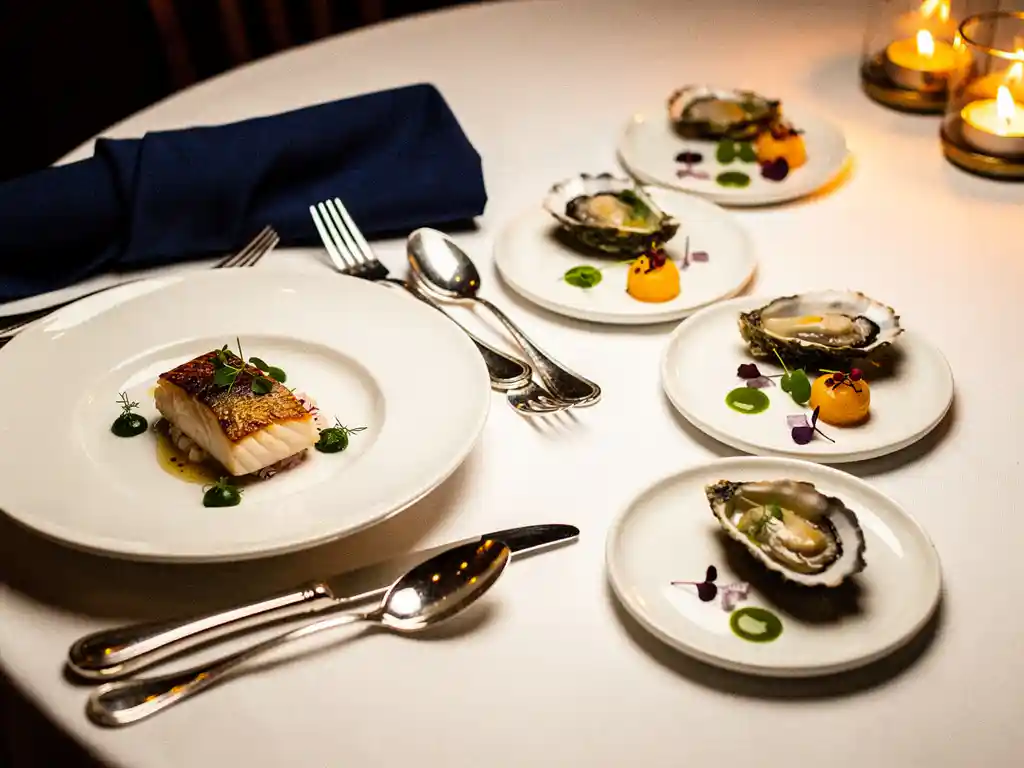
Fine dining is all about choice, experience, and the art of eating well. Whether you’re visiting a refined restaurant for the first time or have been enjoying culinary outings for years, the choice between à la carte and a chef’s menu raises questions for many guests. At Visaandeschelde, we offer both options, and we find that guests benefit from understanding the difference before they make a reservation.
In this article, we answer the most frequently asked questions about fine dining in Amsterdam, so you can sit down to dinner with confidence and make the most of your evening.
What exactly do à la carte and a chef’s menu mean?
À la carte means that you, as a guest, choose your own dishes from a fixed menu. You decide which starters, main courses, and desserts to order, putting together your meal entirely according to your own taste. A chef’s menu is a pre-composed multi-course menu conceived and assembled by the restaurant’s head chef.
With à la carte, you have complete freedom: you can order just a main course if you like, or go for four courses. Prices are listed per dish. A chef’s menu works differently. The chef determines the order, the combinations, and the theme of the meal. It is a culinary story told from start to finish by the kitchen.
Both concepts are common in fine dining restaurants, but they offer a fundamentally different experience. À la carte puts the guest in control; a chef’s menu hands the reins to the kitchen.
How does a chef’s menu work at a fine dining restaurant?
A chef’s menu at a fine dining restaurant typically consists of four to seven courses composed by the chef, based on seasonal ingredients, culinary vision, and the availability of fresh daily produce. The courses are served in a fixed order and are carefully balanced in terms of flavor, texture, and presentation.
In most fine dining restaurants, the chef’s menu changes regularly — sometimes monthly or with each season. This ensures that the dishes always reflect what is at its best at any given time. A chef’s menu at a seafood restaurant might, for example, lean heavily toward light, fresh preparations with fish and shellfish in summer, while the autumn version features richer flavors and heartier dishes.
Many chef’s menus also offer the option of a wine pairing: a complementary wine selected by the sommelier is served with each course. This significantly enhances the overall experience and is popular with guests who want to immerse themselves fully in the culinary journey.
What is the difference between à la carte and a chef’s menu?
The key difference is who is in control. With à la carte, the guest chooses; with a chef’s menu, the chef decides. This difference has implications for the price, the length of the dinner, and the overall experience.
- Freedom of choice: À la carte offers maximum flexibility; a chef’s menu is a set journey.
- Experience: A chef’s menu is more of a culinary voyage; à la carte is a personally curated meal.
- Duration: A chef’s menu typically takes longer, especially with a wine pairing. Expect two to three hours.
- Price: A chef’s menu has a fixed price per person; with à la carte, you pay per dish ordered.
- Element of surprise: A chef’s menu sometimes includes dishes you would never have chosen yourself, which makes it an adventure.
For guests who enjoy being surprised and trust the chef completely, a chef’s menu is the ideal choice. Those who prefer to stay in control of what comes to the table will opt for à la carte.
Which option suits which occasion best?
À la carte is best suited to a business lunch, a casual dinner, or a situation where people at the table have different preferences. A chef’s menu is ideal for special occasions where the experience takes center stage, such as a birthday, an anniversary, or a romantic dinner.
A chef’s menu also requires more time. If you have plans after dinner or want to keep the evening deliberately brief, à la carte is more practical. But if you want to fully immerse yourself in the evening and let the kitchen’s creativity carry you along, a chef’s menu offers something à la carte simply cannot match: a cohesive culinary narrative.
For fine dining in Amsterdam, a chef’s menu is also often an excellent way to discover the best a restaurant has to offer, especially if it’s your first visit. The chef lets you taste what the restaurant can do at its finest.
Can dietary requirements be accommodated with a chef’s menu?
Yes, most fine dining restaurants take dietary requirements into account for a chef’s menu, provided you communicate them in advance. This includes vegetarian or vegan preferences, gluten intolerance, or specific allergies. The earlier you let them know, the better the kitchen can prepare.
It is important to mention dietary requirements at the time of booking, not just upon arrival. A chef’s menu is planned in advance and the ingredients are sourced fresh that day. By sharing your needs in good time, the kitchen can devise creative alternatives that fit seamlessly with the rest of the menu.
Guests with a specific allergy are also advised to mention what they cannot eat again upon arrival. Fine dining restaurants take this seriously and are happy to work with you to make the experience as enjoyable as possible for everyone.
Do you need to book in advance for fine dining in Amsterdam?
Yes, booking in advance is strongly recommended for fine dining in Amsterdam and is necessary in most cases. Popular restaurants are frequently fully booked, especially on weekends or around public holidays. Making a reservation also lets the restaurant know how many guests to expect, allowing the kitchen to prepare at its best.
For a chef’s menu, booking is especially important, as the kitchen tailors the courses and ingredients specifically to the number of guests that evening. Without a reservation, you risk the chef’s menu not being available or finding no tables left.
For fine dining in Amsterdam, the advice is clear: book preferably several days in advance and include any dietary requirements and special occasions at the time of reservation. This allows the restaurant to make your evening as personal and perfect as possible.
How Visaandeschelde makes your fine dining experience complete
At Visaandeschelde, we offer exactly the choice that suits you. Whether you prefer the freedom of à la carte or want to surrender entirely to our monthly changing chef’s menu, we guarantee an unforgettable evening. Browse our menu and discover what we have in store for you this month. Here is what you can expect from us:
- Daily fresh fish and seasonal ingredients in every dish
- A monthly changing chef’s menu, composed by our kitchen team
- À la carte options featuring the signature dish ‘Vis Exclusief’ and fresh fruits de mer
- Optional wine pairing with the multi-course menu
- Dishes for fish lovers, vegetarians, and meat enthusiasts alike
- A welcoming brasserie in the Rivierenbuurt, with a terrace opposite the RAI
Ready to experience fine dining in Amsterdam at its best? Book your table in good time via our reservations page and include any dietary requirements or special occasions with your booking. We look forward to welcoming you to the table.
Veelgestelde vragen
How many courses does a typical chef's menu at a fine dining restaurant have, and how long does the evening last?
A chef’s menu at a fine dining restaurant typically consists of four to seven courses, depending on the restaurant and the menu option chosen. Expect an evening of approximately two to three hours, especially if you opt for a wine pairing. It is worth keeping this in mind when planning your evening, so you can enjoy it without feeling rushed.
What if I don't like something or want to skip a course partway through the chef's menu?
At a fine dining restaurant, you can always discreetly let the serving staff know. Most restaurants are flexible and can adjust or replace a course by arrangement. To avoid this kind of situation, it is advisable to mention in advance at the time of booking which ingredients you would prefer to avoid, so the kitchen can take this into account from the start.
Is a wine pairing with a chef's menu always compulsory, or can you skip it?
A wine pairing is almost always optional and never compulsory. You can also choose to order by the glass, share a bottle, or enjoy non-alcoholic alternatives such as a juice pairing or still water. Let the restaurant know your preference at the time of booking or upon arrival, so the sommelier or serving staff can advise you accordingly.
How far in advance should I communicate my dietary requirements when booking a chef's menu?
Ideally, you should share your dietary requirements at the time of making the reservation — so at least one to two days in advance. The earlier, the better: the kitchen sources ingredients fresh daily and plans the menu carefully ahead of time. For serious allergies, it is also wise to confirm what you cannot eat again upon arrival, to avoid any misunderstandings.
What is the difference between a multi-course menu and a tasting menu at a fine dining restaurant?
A multi-course menu typically consists of three to five courses in regular portions and forms the basis of most chef’s menus. A tasting menu is more extensive, featuring smaller tasting portions across six to ten or more courses, with the focus on sampling a broad spectrum of flavors and techniques. A tasting menu therefore represents the most intensive and immersive culinary experience a restaurant can offer.
Can I make a group reservation with a chef's menu at Visaandeschelde?
Yes, Visaandeschelde welcomes groups for a chef’s menu experience, but it is especially important to book well in advance and to provide all dietary requirements per person. For larger parties, the restaurant may be able to offer specific arrangements perfectly tailored to your occasion. If you have any questions, feel free to get in touch directly via the reservations page for personal advice.
How do I know if fine dining is right for me if I've never been before?
Fine dining is more accessible than many people think: it’s about enjoyment, not mastering a strict set of etiquette rules. A great first step is to choose a chef’s menu, so you get to experience the restaurant at its best without having to make any difficult decisions yourself. The staff at fine dining restaurants are always on hand to guide you and answer your questions, so feel free to simply sit back and enjoy.
Gerelateerde artikelen
- Is een visrestaurant in Amsterdam geschikt voor een zakelijke lunch?
- 7 visgerechten die je minstens één keer moet eten in Amsterdam
- Hoe plan je een romantisch diner bij een visrestaurant in Amsterdam?
- Wat zijn de beste wijnen bij vis in een restaurant in Amsterdam?
- Waar kun je zonnig borrelen vlak bij de RAI?