


If you’re dining out in Amsterdam and choosing a seafood restaurant, you want to be sure that what ends up on your plate is genuinely fresh. Fresh fish makes the difference between an ordinary meal and an unforgettable culinary experience. At fine dining in Amsterdam, everything revolves around quality — and that quality starts with the freshness of the ingredients.
Whether you’re a seafood lover, a foodie searching for the best spot in town, or simply curious about what sets a top fish restaurant apart from the rest: in this article, we answer the most frequently asked questions about fresh fish at fine dining restaurants.
How can you tell if a restaurant is serving fresh fish?
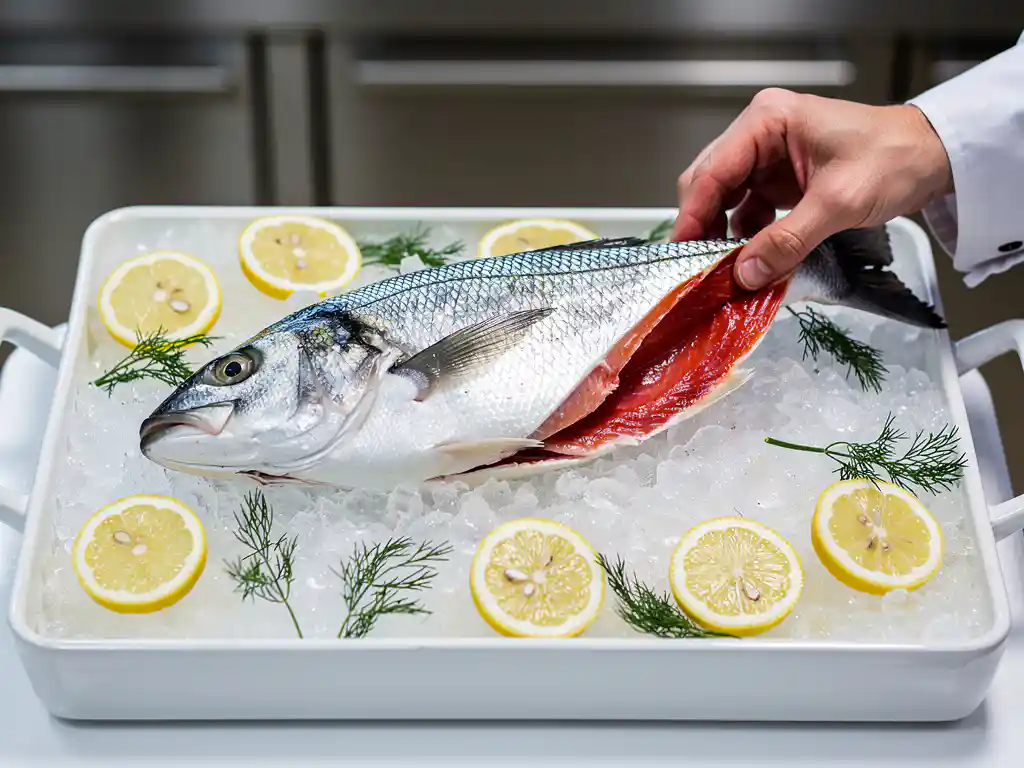
You can recognize fresh fish in a restaurant by a number of concrete signs: clear eyes and shiny scales on a whole fish, a clean sea-like smell without any hint of ammonia, a firm texture that springs back when touched, and a taste that is clean and light. If something smells or tastes too strongly of fish, that’s a sign the freshness leaves something to be desired.
With prepared dishes, the signals are slightly more subtle. Pay attention to the texture of the fish flesh: fresh fish flakes apart beautifully and is moist inside. Overripe or poorly stored fish often has a dry, crumbly texture or a pronounced, strong flavor that is difficult to mask — even with sauces or herbs.
A good way to assess freshness is also the menu itself. Does it offer a limited but focused selection, tailored to what was available that day? Then the kitchen is probably working with what the market had to offer that morning. A menu featuring dozens of fish varieties, available year-round, is more often a sign that frozen products are being used.
How can you tell whether a restaurant serves fresh fish every day?
You can find out whether a restaurant serves fresh fish daily by paying attention to how it communicates about its sourcing. Restaurants that genuinely work with daily-fresh produce will actively mention this and are transparent about their suppliers. Feel free to ask the staff where the fish comes from and when it was purchased.
Other indicators include:
- A small, rotating menu that isn’t identical every day
- A seasonal offering that shifts with what’s available
- The origin or fishing area listed on the menu
- Staff who can answer questions about that day’s fish quickly and specifically
Restaurants that work with daily-fresh fish plan their purchasing early in the morning. That means the menu may vary from day to day, or that certain dishes may be sold out. That is actually a positive sign: the restaurant adapts to availability, rather than the other way around.
What is the difference between fresh and frozen fish on a menu?
The most important difference lies in texture and depth of flavor. Fresh fish has a finer, juicier texture and a subtle, clean taste. Frozen fish loses some of its moisture during the freezing and thawing process, resulting in a slightly drier texture and a less pronounced, sometimes flatter flavor.
That’s not to say frozen fish is always inferior. Some species, such as tuna or certain deep-sea fish, are frozen immediately after being caught on board the vessel to preserve their freshness. This is known as “sashimi-grade” freezing and is even legally required for certain raw preparations. But for most classic fish dishes, the rule holds: the fresher, the better.
On a menu, you can sometimes spot the difference in the descriptions. Terms like “daily fresh,” “fresh from the market,” or “seasonal” indicate daily sourcing. If nothing is mentioned, it’s always worth asking. A confident restaurant that uses fresh produce is happy to tell you.
Which fish species are most seasonal in the Netherlands?
In the Netherlands, the most distinctly seasonal fish and seafood include herring, sole, sea bass, mackerel, oysters, and lobster. Each of these has a period when it is at its best, both in terms of flavor and sustainable harvesting.
An overview of seasonal fish in the Netherlands:
- Herring: best in summer, right after the first catch of the season (Hollandse Nieuwe)
- Sole: spring and summer are the prime months
- Oysters: traditionally at their best in months containing the letter “r,” so from September through April
- Lobster: the summer months are the season for European lobster
- Mackerel: spring and summer, when the fish is rich and full of flavor
- Sea bass: autumn and winter, when the fish is at its fattiest
Respecting these seasons is not only good for flavor, but also for sustainability. Fish caught out of season or farmed outside its optimal period often has a less pronounced taste and a higher ecological footprint.
Why is a rotating menu a sign of quality at fish restaurants?
A rotating menu at a fish restaurant is a direct indicator of quality, because it shows that the kitchen works with whatever is freshest and at its best at any given moment. A static menu that stays the same all year requires a constant supply that is virtually impossible to keep daily-fresh.
A chef who adapts the menu to the season and the daily market supply demonstrates craftsmanship and respect for the produce. It means the kitchen is flexible and puts the quality of the ingredient first — not the convenience of a fixed menu. Returning guests always discover something new and are rewarded for their loyalty.
Moreover, a rotating menu keeps the kitchen creatively engaged. Seasonal cooking demands a deep knowledge of flavors, techniques, and combinations that must be continually refined. This leads to dishes that surprise — and that you simply can’t find quite the same way anywhere else.
What should you look for when choosing a fine dining seafood restaurant in Amsterdam?
When choosing a fine dining seafood restaurant in Amsterdam, look for a combination of transparency about ingredients, a seasonal and rotating menu, knowledgeable staff who can answer questions about the fish, and an atmosphere that suits the occasion. For popular restaurants, always book in advance.
Specific things to look for:
- Does the restaurant disclose the origin of its fish?
- Does the menu change regularly — ideally monthly or even daily?
- Is there a wine pairing available that complements the dishes?
- Are there options for vegetarians or guests with dietary requirements?
- Does the restaurant have a strong reputation and a loyal regular clientele?
- Is a reservation required — a sign of popularity?
Location also plays a role. A restaurant in a vibrant neighborhood with an easily accessible terrace — such as on a square in Amsterdam South — offers a complete evening: exceptional food in a pleasant setting.
How Visaandeschelde gets the best out of fresh fish
At Visaandeschelde, we have met all of the above standards for more than 25 years. Our kitchen works exclusively with daily-fresh fish and seasonal produce, and our menu reflects that directly. Here is what you can expect from us:
- A daily rotating selection of fresh fish, tailored to the season
- The rotating à-la-carte dish “Vis Exclusief” as the culinary highlight
- A monthly rotating Chef’s Menu, composed by our kitchen team
- Fresh fruits de mer and an extensive selection of oysters and lobster
- Options for vegetarians and meat lovers, so everyone leaves satisfied
- A wine pairing that enhances the flavors of each dish
Would you like to experience for yourself what daily-fresh fish in a fine dining setting truly means? Browse our current menu and reserve your table. Because we have many regular guests, we recommend booking well in advance for an evening you won’t soon forget.
Veelgestelde vragen
How far in advance should I make a reservation at a fine dining seafood restaurant in Amsterdam?
For popular fine dining seafood restaurants in Amsterdam, it is wise to reserve at least a week in advance — and for weekends or public holidays, two to three weeks ahead. Restaurants that work with daily-fresh fish and have a loyal base of regular guests fill up quickly. Call or book online as early as possible to avoid disappointment.
Can I ask the restaurant exactly where the fish comes from?
Absolutely — and a good restaurant will actively encourage it. Transparency about the origin of the fish is a hallmark of quality: think specific fishing areas, local fish markets, or dedicated suppliers the restaurant works with on a regular basis. If the staff cannot answer these questions, that in itself is a telling indication of how the kitchen operates.
Is fresh fish at a fine dining restaurant always more expensive than at a regular restaurant?
Daily-fresh fish of high quality does indeed come with higher purchasing costs, which is reflected in the prices on the menu. But what you get in return is proportionate: a superior tasting experience, skilled preparation, and a complete concept that goes well beyond just the food. Think of it as an investment in a full culinary evening — not just a plate of fish.
What if I have an allergy or intolerance to certain fish or shellfish?
Always inform the restaurant in advance when making your reservation, and mention it again upon arrival. A professional fine dining team is accustomed to handling allergies and can adapt the menu or suggest alternatives. Be as specific as possible about your allergy so the kitchen can make the necessary adjustments in time and prevent cross-contamination.
How can I make a good choice from an extensive seafood menu as a non-expert?
Let the staff guide you: ask which fish is the freshest that day, what the chef recommends, or which dish is most popular among regular guests. Good service at a fine dining restaurant is specifically designed to help you navigate the menu. Don’t be afraid to order an unfamiliar species — that often leads to the most surprising and memorable discoveries.
Which wine pairs best with a seafood meal at a fine dining restaurant?
As a general rule, crisp, dry white wines such as Chablis, Muscadet, or a dry Riesling pair excellently with most fish dishes. For richer preparations with butter sauces or lobster, a full-bodied Chardonnay works well. The simplest approach, however, is to go with the restaurant’s wine pairing — it has been curated by sommeliers who know every dish inside and out.
What is the difference between an à-la-carte menu and a chef's menu at a fish restaurant?
With an à-la-carte menu, you choose which dishes to order and compose your own meal. A chef’s menu is a set multi-course menu composed by the chef, in which the sequence, flavor combinations, and portions are carefully balanced. For a full fine dining experience, the chef’s menu often delivers the most cohesive and surprising journey — especially at a restaurant that works seasonally.
Gerelateerde artikelen
- 7 beste visrestaurants in Amsterdam voor een bijzonder diner
- Is een visrestaurant in Amsterdam ook geschikt voor een verjaardagsdiner?
- Welk zonnig terras heeft vegetarische gerechten?
- Wat zijn de beste fine dining restaurants in Amsterdam-Zuid?
- Wat kun je verwachten van een fine dining ervaring in Amsterdam?