


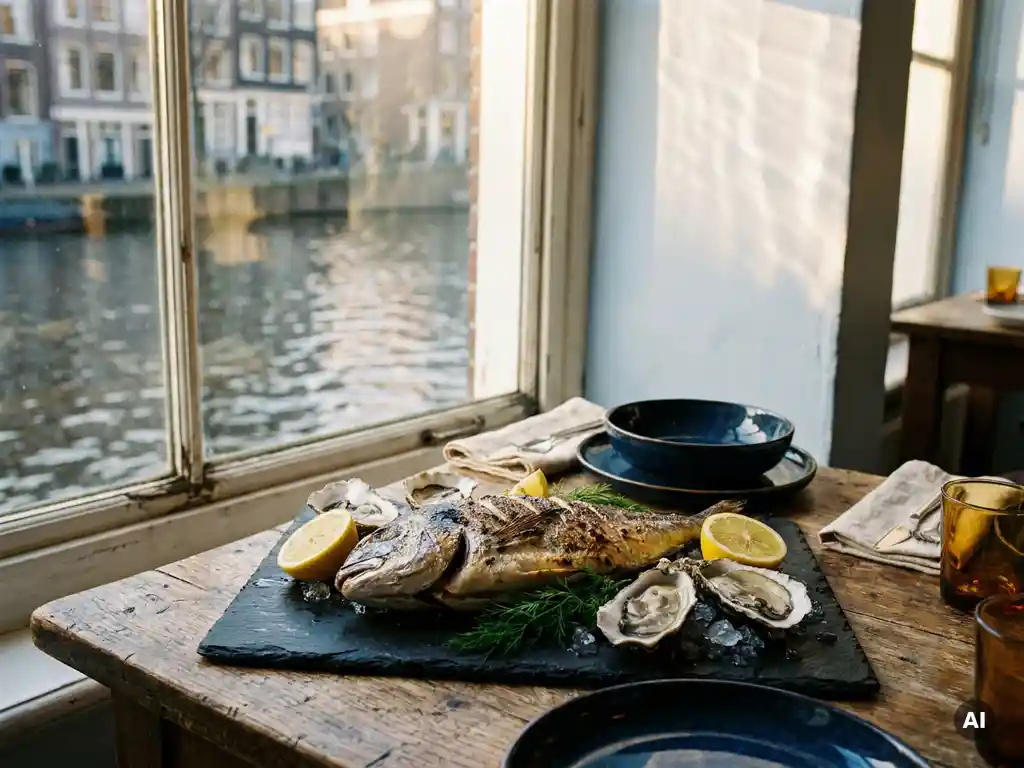
Amsterdam has dozens of restaurants with fish on the menu, but a truly great fish restaurant in Amsterdam is rarer than you might think. The difference lies in the details: the freshness of the fish, the knowledge of the staff, the atmosphere of the space, and the care shown to every guest. Whether you’re looking for a romantic dinner, a business lunch, or a celebratory night out, it pays to know what to look for. In this article, you’ll find eleven concrete qualities that set a fish restaurant apart from the mediocre.
What makes a fish restaurant in Amsterdam truly special?
Amsterdam has a rich culinary tradition when it comes to fish and seafood. The city is close to the sea, draws a cosmopolitan crowd, and has a growing community of food lovers who set high standards for what ends up on their plate. Yet not all fish restaurants are created equal. The best distinguish themselves on eleven points that together create a complete culinary experience.
1: Daily-fresh fish as an absolute baseline
Daily-fresh fish is not a luxury — it is the minimum requirement for any serious fish restaurant. Fish that isn’t purchased every day quickly loses its flavor, texture, and nutritional value. A good restaurant works directly with reliable suppliers and adjusts its offerings based on what is available that day.
You can recognize daily-fresh fish by its clear color, firm texture, and neutral smell. Restaurants that serve daily-fresh fish will also communicate that with pride, both on the menu and verbally through their staff.
For guests who eat mindfully and value quality, this is the first criterion by which you judge a fish restaurant. No compromises on freshness — ever.
2: A seasonal menu that genuinely changes
A seasonal menu shows that a restaurant takes its ingredients seriously. Fish and seafood have their own seasons: lobster tastes best in summer, oysters are at their peak during the colder months, and various flatfish species are only at their best at certain times of year.
Restaurants that consistently adapt their menu to the season not only serve better food — they also show respect for nature and for fish stocks. A monthly or seasonally rotating chef’s menu is a clear signal that the kitchen team is actively thinking about what it cooks.
For guests who enjoy returning, a changing menu is simply more exciting: there’s always something new to discover.
3: Knowledge and passion from the kitchen team
The kitchen of a fish restaurant requires specific expertise. Cooking fish demands precision: one minute too long and the texture is ruined. A skilled kitchen team understands this and has the technical ability to prepare every piece of fish to perfection.
But knowledge alone is not enough. Passion for the product makes the difference between a competent dish and a memorable one. Chefs who work with fresh fish every day and visibly enjoy doing so bring that enthusiasm to every plate that leaves the kitchen.
You can also sense this in the way the staff talks about the dishes. Can they explain where the fish comes from, how it was prepared, and which wine pairs well with it? If so, you’re in good hands.
4: A varied selection of oysters and fruits de mer
Oysters and fruits de mer are the classic benchmark of a fish restaurant. A strong offering means not just that they’re available, but that there is variety in origin, flavor profile, and presentation. Oysters from Zeeland taste different from those from Brittany or Ireland, and a connoisseur appreciates those nuances.
An elaborate fruits de mer platter — featuring shrimp, mussels, crab, and lobster, among others — is a celebratory highlight for many guests. The quality of such a platter immediately reveals the restaurant’s supplier relationships and the care it puts into its sourcing.
For special occasions or guests who love a leisurely table experience, a well-curated fruits de mer selection is an indispensable part of the evening.
5: An atmosphere that complements the culinary experience
The atmosphere of a restaurant is more than decoration. It is the context in which you eat, and that context influences how you experience the food. A fish restaurant with a maritime interior, warm lighting, and soothing background sound invites you to relax and savor the moment.
Details such as nautical elements, a blue-and-white color scheme, or fish-inspired design touches reinforce the feeling that you’re in the right place. What matters is that the atmosphere feels authentic — not like a superficial theme that’s been bolted on.
A great atmosphere turns a meal into an experience. Guests who feel at ease eat more slowly, drink more mindfully, and remember the evening long afterward.
6: Wine pairings that enhance the fish dishes
A thoughtfully composed wine list is inseparable from a serious fish restaurant. Fish and wine can complement or clash with each other depending on the combination. A good restaurant has a sommelier or experienced front-of-house staff who can guide guests through their choices.
Wine pairing with a multi-course menu adds an extra dimension to dinner. Each course gets its own companion, accentuating the flavors of the dishes and giving the evening a cohesive thread.
For guests who are less familiar with wine, an optional pairing is ideal: you learn something new and enjoy the meal more, without having to make the selection yourself.
7: A choice between à la carte and multi-course menus
Flexibility in menu structure is a sign of genuine hospitality. Not every guest wants a full multi-course menu, and not every guest wants to order solely à la carte. A good fish restaurant offers both options and lets the guest stay in control of their own experience.
The à la carte menu gives room to guests who have a specific dish in mind, while a multi-course menu is ideal for those who want to enjoy a curated culinary journey. A monthly rotating chef’s menu adds yet another layer: trust in the chef’s vision.
This freedom of choice makes a restaurant accessible for a wide range of occasions, from a quick lunch to an elaborate birthday dinner.
8: Consideration for guests with dietary requirements
A fish restaurant that only caters to fish lovers is missing out on a large group of potential guests. Vegetarian options, gluten-free alternatives, and dishes for meat lovers are not a concession to quality — they are a sign of culinary breadth and genuine hospitality.
Guests dining together often have varying preferences. A restaurant that can offer something delicious to everyone at the table ensures that no one feels like an afterthought. That raises the overall experience for the entire group.
Transparency about allergens and a willingness to make adjustments are also part of this consideration. Guests feel that they are being taken seriously.
9: A terrace or location that adds value
A restaurant’s location adds context to the overall experience. A terrace where you can dine outside on a summer evening, or a spot in a vibrant neighborhood with a distinct character, makes the visit feel more complete.
Proximity to major attractions such as a convention center or cultural institutions also makes a restaurant accessible to a broader audience, including business visitors and tourists. A great location increases a restaurant’s visibility and reach.
For guests traveling from outside Amsterdam, a clear address in a pleasant neighborhood is simply practical. The sense of arrival begins before you even open the door.
10: Loyal regulars as proof of quality
Regular guests are the most honest quality certificate a restaurant can have. They don’t come back because of a discount promotion or a trending hashtag, but because the quality and experience win them over every single time.
A restaurant with many loyal regulars typically offers consistent food, reliable service, and an atmosphere that makes people feel genuinely welcome. That kind of loyalty isn’t built in a month — it takes years of sustained quality.
If you hear that a restaurant is strongly recommended for advance reservations due to its popularity, that in itself is a telling sign.
11: Transparency about the origin of the fish
Knowing where your fish comes from is increasingly important to conscious diners. Sustainable fishing, fair trade, and traceability are no longer just marketing buzzwords — they are real criteria by which guests evaluate restaurants.
Restaurants that are open about their suppliers and the origin of their products show respect for their guests and for the environment. This can be as simple as a note on the menu or a verbal explanation from the staff.
For guests who live and eat mindfully, transparency about sourcing is a reason to return. It builds trust in the restaurant and gives the meal an added dimension.
How to choose the best fish restaurant in Amsterdam
The eleven qualities above give you a concrete framework for evaluating fish restaurants in Amsterdam. When making your choice, pay attention to how a restaurant communicates about its fish, whether the menu is seasonal, and how the staff responds to questions. A restaurant that is proud of its product will show that at every turn.
Whenever possible, book in advance — especially for a special occasion. A busy restaurant is often a good sign, but it also means you need to be prompt with your reservation.
How Visaandeschelde makes the difference
At Visaandeschelde, we have been committed for over 25 years to exactly the qualities that make a fish restaurant in Amsterdam truly special. Our approach is concrete and consistent:
- We work exclusively with daily-fresh fish and seasonal produce
- Our menu changes with the seasons, including a monthly rotating chef’s menu
- We offer an extensive selection of oysters and fruits de mer, complemented by our rotating Vis Exclusief dish
- Guests can choose between à la carte and multi-course menus with optional wine pairing
- We welcome guests with diverse dietary requirements, including vegetarians and meat lovers
- Our restaurant has a terrace and is ideally located opposite the RAI convention center
Ready to experience for yourself what sets a great fish restaurant in Amsterdam apart? Browse our full menu and reserve your table on our website. Due to our loyal regulars and the restaurant’s popularity, we recommend booking well in advance.
Veelgestelde vragen
How far in advance should I make a reservation at a popular fish restaurant in Amsterdam?
For a weekday lunch, booking one to two days ahead is generally sufficient, but for a weekend dinner or a special occasion such as a birthday or business dinner, most top fish restaurants recommend reserving at least one to two weeks in advance. At restaurants with many loyal regulars, such as Visaandeschelde, popular evenings can fill up quickly, so the earlier you book, the better.
What is the difference between a fruits de mer platter and a regular fish platter?
A fruits de mer platter is a cold, festive presentation of various raw and cooked shellfish and seafood — such as oysters, shrimp, crab, lobster, and mussels — traditionally served on ice. A fish platter typically consists of prepared fish dishes served warm. The fruits de mer is more of a shared table experience, ideal for special occasions, while a fish platter is more of an individual main course.
How can I tell whether the fish at a restaurant is truly fresh if I don't know much about it?
There are a few practical signals to look out for: simply ask the staff where the fish comes from and when it was purchased. A good restaurant will answer directly and with pride. Also pay attention to the menu: if it features daily changes or a ‘catch of the day,’ that’s a positive sign. If the restaurant smells strongly of fish, that is actually a warning sign — truly fresh fish has almost no odor.
Can I go to a fish restaurant if not everyone in my group likes fish?
Absolutely. A good fish restaurant caters to mixed groups and offers alternatives alongside the fish dishes, including options for meat lovers and vegetarians. It’s a good idea to check the menu in advance or contact the restaurant to ask about the possibilities. That way, you can be sure that everyone at the table finds something they enjoy and no one feels left out.
What exactly is wine pairing, and do I have to pay extra for it?
Wine pairing means that a carefully chosen wine is served with each course of your menu to enhance the flavors of the dish. It is curated by a sommelier or experienced staff member and adds an extra culinary dimension to your dinner. In most restaurants, wine pairing is an optional add-on to the multi-course menu, for which you do pay an additional fee. It’s an excellent choice if you have limited experience with wine or simply want to get the most out of your meal without having to choose yourself.
What are the best seasons to visit a fish restaurant in Amsterdam for specific delicacies?
Oysters are at their most flavorful during the colder months, roughly from September to April, while lobster reaches its peak in the summer months. Various flatfish species such as sole and turbot are best available in spring and summer. A restaurant with a truly seasonal menu adjusts its offerings accordingly, so it’s worth asking the restaurant which special products are currently in season.
Is a more expensive fish restaurant always better than a cheaper option?
Not necessarily, but at fish restaurants, price is more often an indicator of quality than in other types of cuisine. Daily-fresh fish, sustainable sourcing, and skilled staff inevitably come with higher costs. A restaurant that consistently charges lower prices is making a compromise somewhere — often on the freshness or origin of the fish. Use the eleven qualities from this article as your guide: a restaurant that scores well on all those points generally justifies a higher price point.
Gerelateerde artikelen
- Wat zijn de beste wijnen bij vis in een restaurant in Amsterdam?
- Welke vis staat er typisch op de kaart van een visrestaurant in Amsterdam?
- Is een visrestaurant in Amsterdam ook geschikt voor een verjaardagsdiner?
- Wat zijn de dresscode regels bij fine dining restaurants in Amsterdam?
- Hoe vind je fine dining restaurants met een terras in Amsterdam?