


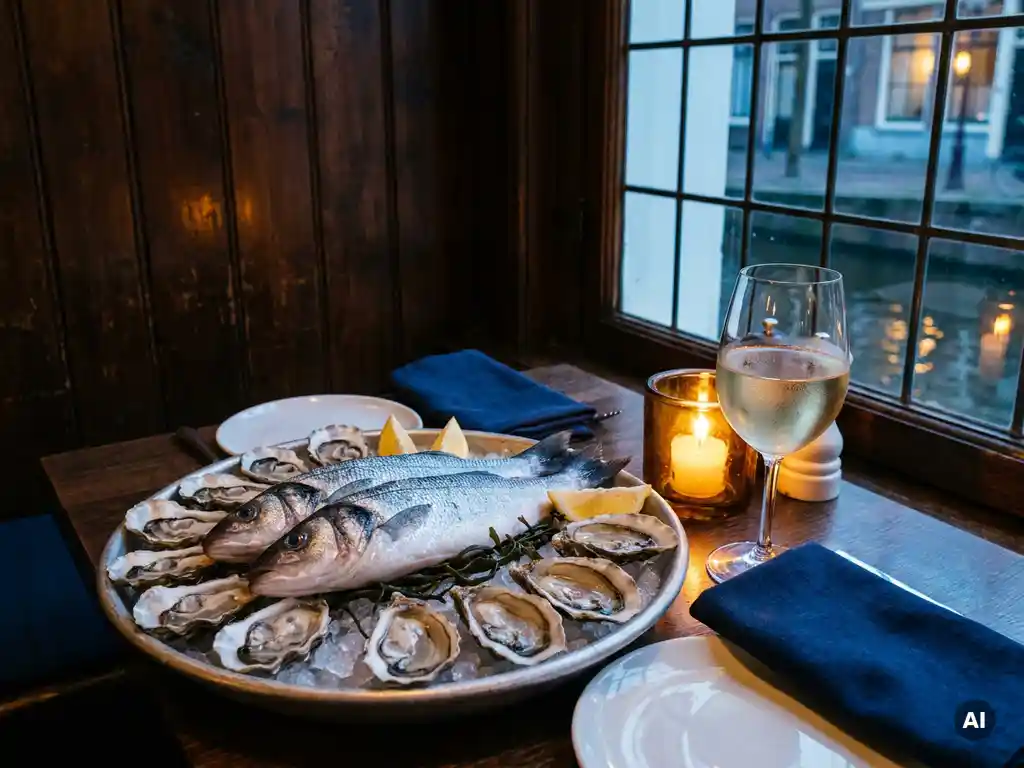
A night out with fresh fish in the capital sounds wonderful, but how do you know which restaurant is truly worth your time? Amsterdam is home to countless dining establishments that serve fish, but a great fish restaurant in Amsterdam sets itself apart in more ways than just the dish itself. By asking the right questions, you can make an informed choice and avoid disappointment. Learn more about what makes a fish restaurant a truly memorable experience on the about us page of Visaandeschelde.
How to choose the right fish restaurant in Amsterdam
Choosing a fish restaurant isn’t just about the menu. Atmosphere, freshness, location, and reputation all play a role. The nine questions below will help you quickly assess whether a restaurant matches what you’re looking for in a dining experience.
1: How fresh is the fish, really?
Freshness is the absolute foundation of a great fish restaurant. Fish that is sourced daily and prepared right away tastes fundamentally different from fish that has been sitting in a refrigerator for several days.
Ask yourself: does the restaurant communicate transparently about where its fish comes from? Good restaurants often mention this on the menu, or the staff are happy to talk about it. A daily special or a regularly changing selection is also a strong signal — it means the kitchen works with whatever is available and fresh that day.
Be cautious of restaurants that offer exactly the same fish varieties year-round. This can indicate frozen or long-stored stock rather than daily sourcing.
2: Does the menu change with the seasons?
A seasonal menu is proof that a restaurant takes quality and sustainability seriously. Certain types of fish are at their best during specific times of year, and a skilled kitchen makes a point of reflecting that.
Think of oysters in the colder months, or lobster as a seasonal highlight. Restaurants that refresh their menu several times a year show that they actively think about what is most delicious and most responsible to serve at any given time.
A static menu that never changes is rarely a good sign at a serious fish restaurant. Seasonal rotation isn’t a luxury — it’s a mark of quality.
3: Is there more than just fish on the menu?
Not everyone in a group is a fish lover, and a good fish restaurant takes that into account. A varied menu with options for vegetarians and meat lovers makes the restaurant accessible to a wider audience.
This is especially relevant when dining with a group where not everyone shares the same preference. A restaurant that offers quality alternatives alongside fish demonstrates hospitality and culinary expertise that extends beyond a single specialty.
Check the menu online in advance or ask about it when making a reservation, so everyone in your party can find something to their taste.
4: What does the atmosphere say about the restaurant?
The atmosphere of a restaurant reveals a great deal about the intention behind it. A fish restaurant with an authentic maritime ambiance, thoughtful décor, and attention to detail shows that real care and passion have gone into crafting the overall experience.
Pay attention to the details: is the interior consistent with the theme? Does the restaurant feel well-kept without being overly formal? A great atmosphere enhances the pleasure of dining and turns a meal into a genuine experience rather than just a meal.
Atmosphere is subjective, but reviews and photos on platforms like Google or TripAdvisor can give you a solid first impression before you even walk through the door.
5: Can you choose between à la carte and a set menu?
Flexibility in menu structure is a significant advantage. Some guests prefer to decide exactly what they eat and would rather order à la carte, while others enjoy leaving the choices to the kitchen and opting for a multi-course menu.
Restaurants that offer both options serve a broader audience and demonstrate confidence in their kitchen. A chef’s menu or tasting menu with an optional wine pairing elevates an evening out and is ideal for special occasions.
Also check whether the menu rotates monthly or seasonally. This gives regular guests a reason to return and ensures the experience feels fresh every time.
6: Where exactly is the restaurant located?
Location plays a significant role in how easy a restaurant is to reach and what kind of setting you’ll be dining in. A restaurant in a lively neighborhood with good public transport links or nearby parking scores higher from a practical standpoint.
Consider the surroundings as well: a quiet neighborhood with a terrace can be perfect for a relaxed summer evening, while a central location is convenient if you’re combining dinner with a nearby event or conference.
For business guests or visitors traveling from another city, proximity to a train station, hotel, or conference venue is a relevant factor in the decision.
7: What is its reputation, and how long has it been around?
Longevity in the hospitality industry is no small feat. A restaurant that has been around for years and built a loyal customer base has earned that standing for a reason. Consistency in quality and service is what keeps guests coming back.
Read recent reviews across multiple platforms and pay attention not just to the overall rating, but to what people specifically mention. If freshness, service, and atmosphere are repeatedly praised, that’s a reliable signal.
A long track record combined with consistently positive recent reviews is one of the strongest indicators that you’ve found a great fish restaurant in Amsterdam.
8: Is a reservation required or optional?
Popular restaurants are often fully booked, especially on weekends or during holidays. Always check whether reservations are possible — or even required — before heading out.
A restaurant that recommends booking in advance does so because demand exceeds availability. That in itself is a quality signal. Nothing is more frustrating than arriving with a group to find the restaurant full, or having to wait a long time for a table.
Book as far in advance as possible, especially if you’re celebrating a special occasion or dining with a larger group. Many restaurants offer online reservation options, which makes the process simple and straightforward.
9: What is the price-to-quality ratio?
Price alone says little about the value of a dining experience. The real question is whether what arrives on your plate — and the experience as a whole — is proportionate to what you pay.
A higher-priced restaurant that uses daily fresh fish, an experienced kitchen team, and thoughtful service generally offers more value than a cheaper option that cuts corners on quality. Look at what’s included in the price: is bread, an amuse-bouche, or an aperitif standard, or is everything charged separately?
Also read what other guests say about value for money in their reviews. That gives you a realistic picture of what to expect for your budget.
How Visaandeschelde helps make your fish restaurant visit in Amsterdam unforgettable
Now that you know what to look for, it’s time to make the right choice. At Visaandeschelde, we answer all of these questions with a resounding yes. Here’s why:
- Daily fresh fish: we work exclusively with the freshest ingredients, sourced on the day itself.
- Seasonal menu: our menu changes with the seasons and features rotating dishes such as oysters and lobster.
- Something for everyone: alongside fish, we offer dishes for vegetarians and meat lovers alike.
- Flexible menu options: guests can choose between à la carte and a monthly rotating chef’s menu with an optional wine pairing.
- Authentic atmosphere: our maritime brasserie ambiance in the Rivierenbuurt turns every dinner into a memorable experience.
- More than 25 years of experience: since 1999, we have been building a loyal customer base in Amsterdam South.
- Convenient location: situated on Scheldeplein, opposite the RAI convention center, with a terrace for outdoor dining.
Curious about our current offerings? View our full menu and reserve your table in time — we’re popular, and once we’re full, we’re full.
Veelgestelde vragen
How far in advance should I make a reservation at a popular fish restaurant in Amsterdam?
This depends on the restaurant and the occasion, but as a general rule: book at least a week ahead for a weekend visit, and two to three weeks in advance for special occasions or holidays. At top restaurants like Visaandeschelde, which have built a loyal following over many years, it’s wise to book even earlier. Most restaurants offer a straightforward online reservation system, making it quick and hassle-free to secure your table.
How can I tell whether a restaurant genuinely uses fresh fish rather than just claiming to?
Look for a few concrete signals: a daily changing selection or daily special is a strong indicator, as is transparency about the origin of the fish on the menu or from the staff. When you arrive, you can simply ask when the fish was sourced and how the restaurant selects its suppliers. A confident and detailed answer from the staff shows that freshness is a genuine priority — not just a marketing claim.
Is a fish restaurant a good choice for a business dinner?
Absolutely, as long as you pay attention to a few practical details. Choose a restaurant with a calm, well-presented atmosphere and good acoustics so that conversation flows comfortably. A restaurant offering both à la carte and set menu options gives business guests the flexibility to choose for themselves, which comes across as professional. A central location — such as near a conference center or train station — is an added bonus for guests traveling from out of town.
What are common mistakes when choosing a fish restaurant in Amsterdam?
One of the most frequent mistakes is basing the decision solely on price: cheap doesn’t always mean bad, but when it comes to fish, quality is heavily dependent on freshness and craftsmanship — and that comes at a cost. Another pitfall is failing to check the menu in advance, leaving some guests in your party without a suitable option. Finally, many people forget to read recent reviews; a restaurant that was excellent five years ago may have declined significantly in quality or service since then.
Are fish restaurants in Amsterdam suitable for people with a fish or shellfish allergy?
A good fish restaurant always offers alternatives for guests who don’t eat fish or have an allergy, such as dishes for vegetarians or meat lovers. That said, it’s always wise to explicitly mention any allergy at the time of reservation, so the kitchen team can take it into account and cross-contamination can be prevented. Serious restaurants take allergies seriously and adjust their preparation methods where necessary.
What is the difference between an à la carte dinner and a chef's menu, and which should I choose?
With à la carte, you compose your own meal from the full menu, giving you maximum freedom over courses, portions, and budget. A chef’s menu or tasting menu is a curated sequence of courses that showcases the kitchen at its best, often complemented by a wine pairing. Choose à la carte if you want full control or if the tastes in your group vary widely, and opt for a chef’s menu if you’re celebrating a special evening and want to be fully surprised by the creativity of the chef.
How do I know whether the price-to-quality ratio at a fish restaurant is fair?
Don’t just compare main courses — also look at what’s included as standard: are amuse-bouches, bread, or an aperitif offered, or is everything charged separately? Read reviews specifically for comments on value for money, as other guests often provide an honest and realistic picture. Keep in mind that daily fresh fish, an experienced kitchen team, and attentive service are legitimate cost factors that justify a higher price compared to restaurants that cut corners in these areas.