


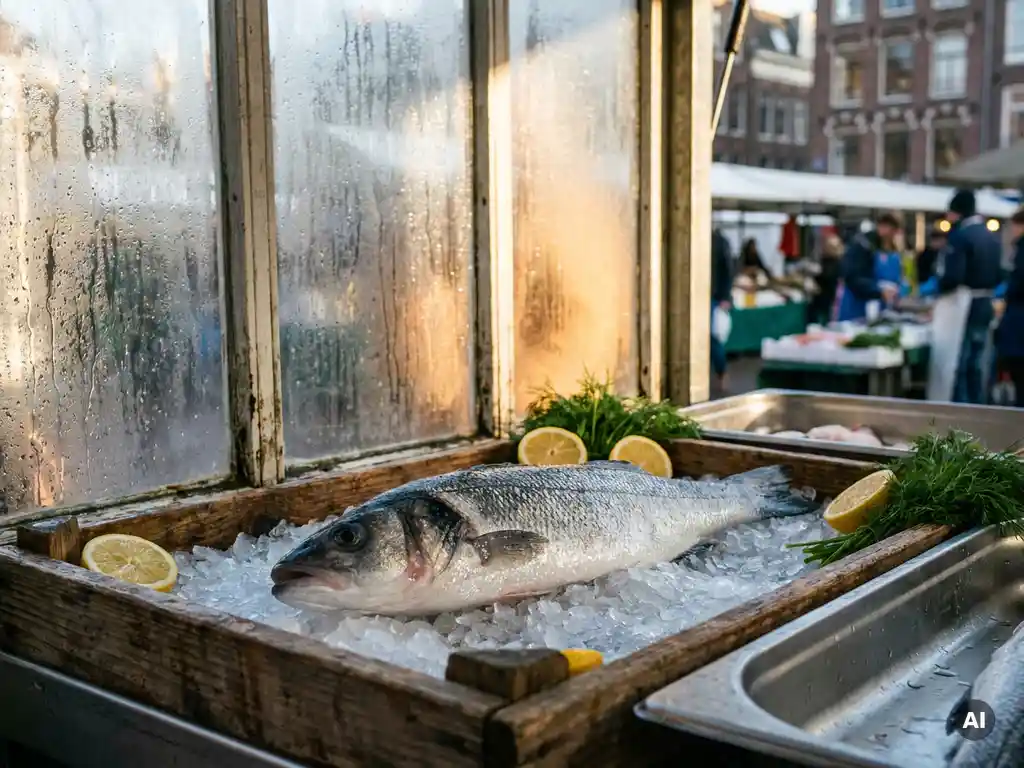
A serious fish restaurant in Amsterdam serves fresh fish every day by working directly with trusted suppliers, fish farmers, and auction houses that deliver early in the morning. The freshness is visible and tangible: in the menu, the presentation, the aroma, and the knowledge of the staff. Anyone who knows what to look for will recognize a genuinely fresh restaurant immediately. In this article, we answer the most frequently asked questions about freshness, sourcing, and seasonality at a fish restaurant in Amsterdam.
What signs reveal that fish is truly fresh every day?
You can recognize fresh fish by a number of concrete signals that are noticeable from the moment you walk in. The smell is neutral and clean — never overpowering or fishy. The presentation is simple and honest: good restaurants have nothing to hide behind heavy sauces or excessive garnishes. The staff can tell you without hesitation what came in that day.
Other reliable signs include:
- A limited and changing selection: a restaurant that offers the same extensive menu every day almost certainly works with frozen fish. Daily-fresh fish means the selection depends on what is available that day.
- Visible preparation: restaurants that take pride in their product often display the fish before cooking — for example, as fruits de mer on ice.
- Clear eyes and firm texture: if you can see the fish on display, clear eyes and firm, glossy skin are the classic signs of freshness.
- No excessive use of lemon juice or strong herbs: these are sometimes used to mask the taste of less-than-fresh fish.
How does the supply chain of a serious fish restaurant work?
A serious fish restaurant sources its fish through short, direct channels: from the fish auction or a specialized wholesaler straight to the kitchen, ideally on the same day. The shorter the chain, the fresher the product. Restaurants that want to serve daily-fresh fish plan their purchasing around the day’s incoming catch.
In practice, this means a chef checks every morning what is available at the auction or from their regular supplier, and adjusts the daily menu accordingly. This requires a flexible kitchen and a team willing to improvise every day. Restaurants that do this consistently build lasting relationships with suppliers who give them priority access to special catches or seasonal products.
A less serious restaurant works with large stocks of frozen fish or buys in bulk on a weekly basis. This is cheaper and easier to plan, but it comes at the expense of the flavor and texture of the final dish.
What does the menu reveal about the freshness of the fish?
A menu that changes regularly is one of the strongest signals that a restaurant works with daily-fresh fish. A restaurant that presents a different selection every week or every month depends on what is freshly available. A menu that has remained unchanged for years points more to a fixed inventory than to daily purchasing.
Look for the following menu characteristics:
- Daily specials or rotating dishes: a separate daily board or a dish like “Exclusive Fish” that changes every time shows that the kitchen responds to what is available that day.
- Seasonal ingredients: oysters in the winter months, sea bass in the summer, mackerel in the spring. Following the seasons means working with what is at its best at any given moment.
- No endless fish list: a menu featuring twenty varieties of fish year-round is a warning sign. Daily-fresh sourcing produces a more selective but qualitatively superior offering.
On our menu, you can see what a rotating selection looks like in practice: from a monthly Chef’s menu to the ever-changing Exclusive Fish dish.
What questions can you ask the staff about the fish?
In a restaurant that genuinely works with daily-fresh fish, the staff can give you direct and specific answers about the origin, fishing method, and preparation. Hesitation, vague answers, or being redirected to the menu are signals that knowledge is lacking — or that the fish is less fresh than suggested.
Feel free to ask the following questions:
- “What came in today?” A good restaurant knows this precisely and shares it with enthusiasm.
- “Where does this fish come from?” Origin says something about the freshness and sustainability of the sourcing.
- “How is this dish prepared?” Knowledge of preparation methods shows the team’s engagement with the product.
- “Is there a daily special today?” If the answer is no and the menu never changes, that speaks volumes.
- “Which fish would you recommend today?” An honest recommendation based on what is best that day is a sign of craftsmanship and integrity.
Why is seasonal fish a sign of reliability?
Seasonal fish is a sign of reliability because it shows that a restaurant aligns its sourcing with nature rather than with convenience or cost-cutting. Fish caught in the right season is not only fresher but also more flavorful, more sustainable, and often more affordable. Restaurants that follow this principle demonstrate a genuine understanding of what quality fish means.
Seasonality also means the menu is never entirely predictable. Oysters are at their best in the colder months, lobster peaks in summer, and certain flatfish are most flavorful in spring. A restaurant that follows this rhythm adjusts its offering to the best time of year for each product.
Moreover, seasonal sourcing is a sign of respect for the ecosystem. Fish caught out of season is often leaner, less firm, and less full in flavor. Serving it anyway means choosing availability over quality. Waiting for the right moment means choosing the best product.
How we handle daily-fresh fish at Visaandeschelde
At Visaandeschelde, we have worked for over 25 years on the basis of the same conviction: only the freshest ingredients deserve a place on the plate. In practice, this means:
- Daily sourcing of fresh fish from trusted suppliers
- A seasonal menu that moves with what is available at any given time
- A rotating dish like Exclusive Fish that is different every day
- A monthly Chef’s menu composed by our kitchen team
- Staff who can tell you with expert knowledge what came in that day
Would you like to experience for yourself what daily-fresh fish in a welcoming setting feels like? Be sure to reserve a table in good time, as our restaurant in the Rivierenbuurt in Amsterdam South is popular and fills up quickly. Browse our current menu for a preview of what our kitchen team is serving this month.
Veelgestelde vragen
How far in advance should I reserve a table at a popular fish restaurant in Amsterdam?
At popular fish restaurants like Visaandeschelde, it is strongly recommended to reserve at least a week in advance, and for weekends or public holidays, two to three weeks ahead. Because the menu changes daily based on the fresh catch, you cannot always know in advance exactly what will be served — but that is precisely the charm. Call or book online, and mention any dietary requirements or allergies right away so the kitchen can take them into account.
Is daily-fresh fish always more expensive than fish at a regular restaurant?
Not necessarily — but the value for money is generally significantly better. Daily-fresh, seasonal fish does not have to be more expensive, because fish caught at the right time of year is more abundantly available and can sometimes even be cheaper to source. What you are paying for is the quality, freshness, and craftsmanship behind the preparation. Think of it as an investment in a genuine culinary experience, rather than a compromise on your plate.
What if I have an allergy or intolerance to certain types of fish or shellfish?
Especially at restaurants that work with daily-fresh and rotating fish, it is particularly important to mention your allergy in advance — both at the time of reservation and again upon arrival. Well-trained staff at a serious fish restaurant know exactly which ingredients are in each dish and can advise you on safe choices. Because the menu can change daily, a fixed ‘allergy-free dish’ cannot always be guaranteed, but a flexible kitchen can usually find a suitable solution in most cases.
Can non-fish eaters still enjoy a fish restaurant in Amsterdam?
Many serious fish restaurants also offer one or more meat dishes or vegetarian options, though the selection is intentionally limited. The focus is, after all, on fish and seafood. If you are going with a group where not everyone eats fish, it is wise to inquire in advance about the alternatives. A restaurant that takes pride in its kitchen communicates openly about this and is happy to help you find a choice that works for everyone.
How can I tell the difference between 'daily-fresh' and 'previously frozen and thawed' fish on the plate?
The difference is noticeable in texture, flavor, and presentation. Thawed fish often has a slightly softer structure, loses moisture more quickly during cooking, and lacks the distinct, clean taste of daily-fresh fish. On the plate, this sometimes shows up as a watery base or a less firm bite. Daily-fresh fish has a compact, juicy texture, a clean flavor, and needs less sauce or herb coverage to impress.
Which seasons are best for visiting a fish restaurant in Amsterdam for the most varied selection?
Every season has its own highlights: autumn and winter are ideal for oysters, scallops, and wild sea bass, while spring and summer shine with lobster, mackerel, and various flatfish. For the most varied and flavorful experience, the transitional months — April/May and September/October — are particularly interesting, as the seasons overlap and the kitchen can be most creative in its variety. Follow the restaurant’s current menu to see what is at its best at any given time.
What is the difference between a fish restaurant and a restaurant that also serves fish?
A specialized fish restaurant builds its entire operation around fish: the sourcing, the menu, staff training, and kitchen setup are all geared toward preparing and serving fish and seafood to the highest standard. A general restaurant that also has fish on the menu treats fish as one of many options and invests less in freshness, knowledge, and specialization. The difference is immediately noticeable: in the variety of preparation methods, the quality of the ingredients, and the expertise with which the staff guides you in making your choice.
Gerelateerde artikelen
- Kun je zonnig borrelen en daarna dineren?
- Waar kunnen congresbezoekers terecht op een zonnig terras?
- 9 vragen die je jezelf stelt bij het kiezen van een visrestaurant in Amsterdam
- Is een visrestaurant in Amsterdam ook geschikt voor een verjaardagsdiner?
- Hoe weet je of een fine dining restaurant in Amsterdam betrouwbaar is?