


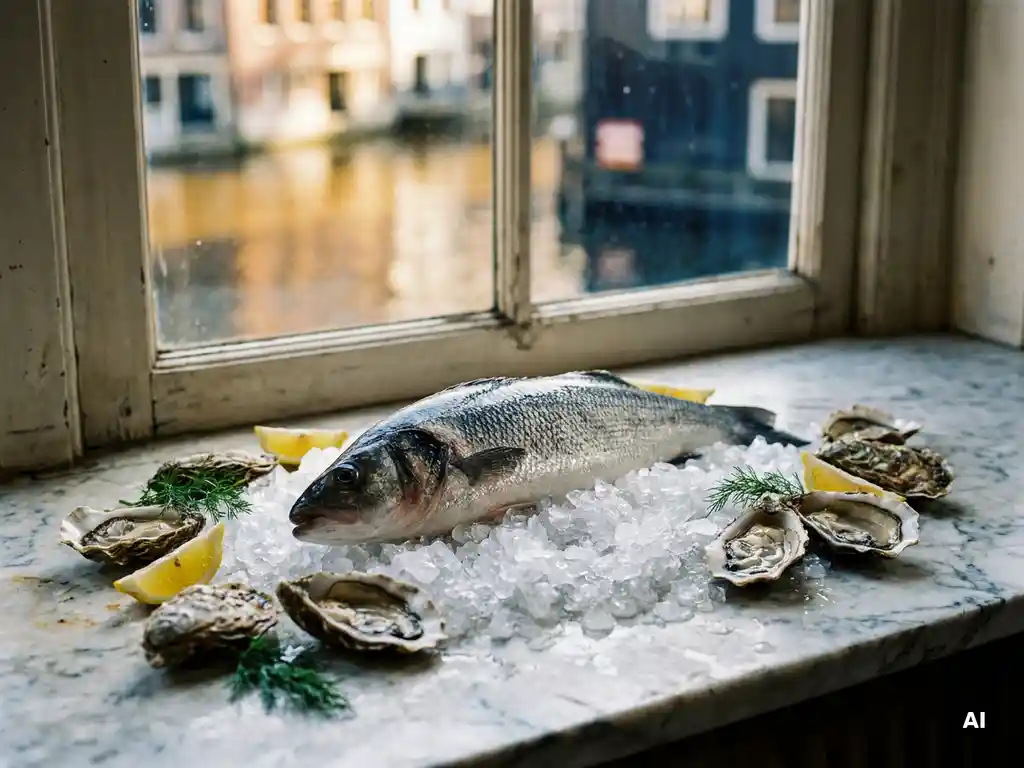
A brasserie-style fish restaurant sets itself apart from other dining establishments in Amsterdam through its combination of a relaxed, atmospheric ambiance with a distinct focus on daily fresh fish and seasonal seafood. While many restaurants offer broad, generic menus, a seafood restaurant with a brasserie character revolves entirely around craftsmanship, quality, and a maritime experience that is rarely found elsewhere in the city. In this article, we answer the most frequently asked questions about fish restaurants in Amsterdam, from style differences to the best times to make a reservation. Learn more about our background and philosophy on the about us page.
What makes a brasserie style different from a classic fish restaurant?
A brasserie style combines the accessibility and warmth of a traditional pub with the culinary depth of a full-service restaurant. A classic fish restaurant centers on formal service and a fixed, unchanging menu, while a brasserie invites relaxed enjoyment with a rotating, seasonally driven offering.
In practice, this means that at a brasserie-style fish restaurant you can drop in for a single dish or opt for an elaborate multi-course menu. The atmosphere is warm and personal, and the décor tells a story. Think maritime details such as anchors, fish drawings on tiles, and scale patterns on the windows that make the connection to the sea literally visible. That combination of character, quality, and flexibility is precisely what sets a brasserie fish restaurant apart from a formal fine-dining establishment or an ordinary fish restaurant.
Why do Amsterdammers choose a seafood restaurant over a general restaurant?
Amsterdammers choose a seafood restaurant because they are looking for a specific, distinctive dining experience that a general restaurant simply cannot offer. A restaurant entirely dedicated to fish and seafood provides deeper expertise, a more focused menu, and a higher level of freshness in its ingredients.
A general restaurant must divide its attention among meat, fish, vegetarian options, and more. A seafood restaurant invests all of its knowledge, supplier relationships, and culinary expertise into a single category. The result is noticeable: better flavor combinations, greater variety in preparation techniques, and a menu that moves with what the sea and the season have to offer at any given moment. For food lovers and fish enthusiasts, that difference is decisive when choosing a restaurant in Amsterdam.
How can you tell whether a restaurant’s fish is truly fresh every day?
You can recognize genuinely fresh daily fish by a number of concrete signals: a menu that changes regularly, a concise but high-quality selection, and a kitchen that is transparent about the origin of its ingredients. Restaurants that purchase fish daily cannot always offer exactly the same dishes — and that is actually a good sign.
Pay attention to presentation and smell as well. Fresh fish smells of the sea, not of fish. Dishes made with fresh produce have a bright, vibrant appearance. Additional practical indicators include:
- A daily special or a rotating “catch of the day” dish on the menu
- A seasonal menu structure that reflects what is currently available
- Staff who can specifically tell you where the fish comes from
- A relatively small fish menu that offers depth rather than breadth
Restaurants that claim to serve fresh fish daily but maintain an extensive, static menu featuring dozens of fish varieties year-round deserve a critical look.
What is the difference between à la carte and a multi-course menu at a fish restaurant?
With à la carte, you choose which dishes to order and in what order, without committing to a set package in advance. A multi-course menu is a curated arrangement in which the chef selects a series of dishes that together form a cohesive culinary journey, often with the option of a matching wine pairing.
À la carte offers maximum freedom: you can order just a starter, just a main course, or combine dishes however you like. This works well for a business lunch or a casual dinner. A multi-course menu requires a little more time and trust in the kitchen, but in return it delivers a complete culinary experience. The chef can harmonize dishes, build flavors progressively, and introduce surprises you might never have chosen for yourself à la carte.
At a fish restaurant, the multi-course menu is particularly compelling because the chef can fully translate the season and the day’s purchasing choices into a coherent story on the plate. View the current offering on the menu page for a sense of both options.
Which neighborhood in Amsterdam has the best fish restaurants?
Amsterdam South, and specifically the Rivierenbuurt area around Scheldeplein, is known as one of the strongest culinary neighborhoods for seafood lovers in the city. The combination of a quiet, atmospheric setting and proximity to the RAI convention center makes this area attractive to both locals and visitors.
The Rivierenbuurt is a mature dining neighborhood with a loyal clientele that sets high standards. Restaurants in this part of the city have built a stable customer base, which allows them to invest in quality and consistency. You can feel this in the ingredients, the service, and the overall atmosphere. Those looking for a fish restaurant in Amsterdam that has been a neighborhood institution for over 25 years will find exactly that in Amsterdam South.
When is the best time to visit a fish restaurant in Amsterdam?
The best time to visit a fish restaurant in Amsterdam depends on what you are looking for: autumn and winter are the peak season for oysters, while the summer months are the richest period for lobster. Those who want to experience the full range of seasonal offerings should plan multiple visits throughout the year.
From a practical standpoint, weekday evenings are quieter than weekends, giving the staff more time for personal attention and allowing the kitchen to perform at its best. Popular fish restaurants in Amsterdam are often fully booked weeks in advance on Friday and Saturday evenings. Always reserve ahead, especially if you are dining with a group or celebrating a special occasion.
In 2026, demand for quality dining in Amsterdam remains as strong as ever. Those who are flexible with time and day have the best chance of securing a table on short notice.
How Visaandeschelde makes a difference for seafood lovers in Amsterdam
We offer exactly the combination that makes a fish restaurant in Amsterdam stand out: daily fresh fish, a seasonal menu that moves with the finest available produce, and a warm brasserie atmosphere at Scheldeplein in Amsterdam South. With us, you will find:
- A rotating à la carte menu featuring the signature dish “Vis Exclusief”
- A monthly changing Chef’s menu with optional wine pairing
- Fresh oysters and seasonal seafood as Fruits de Mer
- Dishes for fish lovers, vegetarians, and meat lovers alike
- A terrace for outdoor dining and a location opposite the RAI convention center
Whether you come for a romantic dinner, a business lunch, or a festive outing, we deliver a complete culinary experience. Reservations are strongly recommended due to our popularity. View our full offering on the menu page or learn more about who we are on the about us page.
Veelgestelde vragen
How far in advance should I make a reservation at a popular fish restaurant in Amsterdam?
For a weekday lunch or an early dinner, a reservation two to three days in advance is usually sufficient. For Friday and Saturday evenings, public holidays, or special occasions such as birthdays or business dinners, it is advisable to plan at least two to three weeks ahead. Popular fish restaurants in Amsterdam South, such as Visaandeschelde, fill up quickly during peak times, so the earlier you reserve, the more choice you will have in terms of table and time slot.
What should I do if I have a fish or shellfish allergy but still want to dine at a fish restaurant?
Always clearly communicate your allergy when making your reservation and again upon arrival at the restaurant. A good brasserie-style fish restaurant typically also offers dishes for non-fish eaters, such as meat or vegetarian options, and the kitchen is accustomed to accommodating specific dietary requirements. Always ask the staff about the ingredients and preparation method of a dish so that cross-contamination can be avoided as much as possible.
Is a multi-course menu suitable for a business lunch, or is à la carte the better choice?
For a business lunch, à la carte is generally the more practical choice, as it gives you better control over timing and allows guests with different dietary preferences to each make their own selection. A multi-course menu is ideal for an extended business dinner where you deliberately want to take time to strengthen relationships and share a complete culinary experience. Discuss your preferences when making your reservation so the restaurant can advise you on the best option for your occasion.
How can a non-expert tell the difference between a high-quality and a mediocre fish restaurant?
When you arrive, pay attention to the atmosphere and the staff: can the servers tell you which fish came in fresh that day and where it was sourced? A rotating menu, a concise but thoughtfully curated selection, and a kitchen that is transparent about provenance are strong quality indicators. Avoid restaurants with an extensive, static menu packed with dozens of fish varieties year-round, as this is almost never a sign of daily freshness. Reviews that specifically address freshness, flavor, and service also provide a reliable picture.
Which wine pairs best with a fish meal at a brasserie-style fish restaurant?
As a general rule, crisp, dry white wines such as Muscadet, Chablis, or a dry Riesling pair excellently with most fish dishes and seafood. For richer preparations, such as fish in a butter sauce or a creamy bisque, a lightly oaked Chardonnay or even a light red wine such as a Pinot Noir can work surprisingly well. When in doubt, the best tip is to ask the sommelier or an experienced staff member for advice based on your specific order, especially if you are opting for a multi-course menu with wine pairing.
Can I visit a brasserie-style fish restaurant with a group, and are special arrangements available?
Most brasserie fish restaurants warmly welcome groups, but it is essential to reserve well in advance and clearly communicate your group size. Many restaurants offer special arrangements for larger parties, such as a shared Fruits de Mer platter, a group menu, or a private room for exclusive dinners. Contact the restaurant directly to discuss the options, so the evening can be perfectly tailored to your wishes and the kitchen can prepare accordingly.
What are the most common mistakes when ordering at a fish restaurant, and how do I avoid them?
A common mistake is reaching too quickly for familiar, well-known fish such as salmon or cod, while the daily special or seasonal offering actually contains the freshest and most exceptional options. Always ask the staff for their recommendation of the day and allow yourself to be surprised by what the season currently has to offer. It is also a shame to interrupt a multi-course menu with too much bread or side dishes beforehand, as this diminishes your ability to fully appreciate the later courses. Trust the structure the chef has crafted and enjoy the complete story on the plate.