


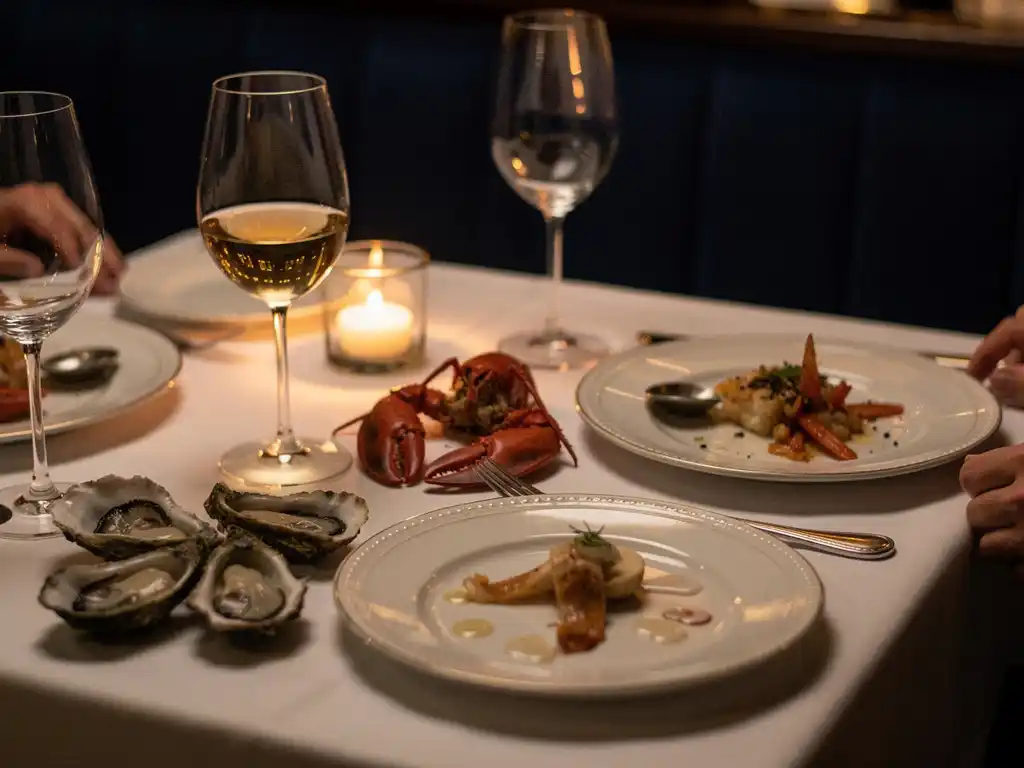
A night out at one of the fine dining restaurants in Amsterdam is more than just a meal. It is an experience that invites you to slow down, savor, and unwind. But how much time should you actually set aside? And what makes fine dining so different from an ordinary night out? In this article, we answer the most frequently asked questions so you can arrive at the table fully prepared.
What is fine dining and what sets it apart from a regular dinner out?
Fine dining is a complete culinary experience centered on quality, atmosphere, and service. It distinguishes itself from a regular restaurant visit through the combination of carefully prepared dishes made from premium ingredients, attentive and knowledgeable service, and an ambiance that invites you to relax and enjoy. Everything, from the tableware to the presentation, is a deliberate choice.
While a typical restaurant visit involves quickly ordering a dish and paying the bill, fine dining revolves around the rhythm of the evening. Courses are served in a carefully timed sequence, with attention to pacing and transitions. Service is personal, and familiarity with the menu, the provenance of ingredients, and the wine list is taken for granted. Together, these elements create an evening that stays with you long after.
How long does a fine dining experience typically last in Amsterdam?
A fine dining experience in Amsterdam typically lasts between two and three hours. With a more extensive menu of five courses or more, supplemented by amuse-bouches, intermezzo courses, and dessert, the evening can stretch to four hours or longer. The exact duration depends on the number of courses, the pace of service, and how long you linger after the meal.
Amsterdam offers a diverse range of fine dining restaurants, from contemporary bistros to classic seafood establishments. In most cases, you reserve a table for the entire evening, meaning you will never be rushed. Allow around two hours for a three-course menu, and at least two and a half to three hours for a chef’s menu with five or more courses. If you also plan to enjoy a wine pairing, add another half hour to your estimate.
How many courses does a typical fine dining menu include?
A typical fine dining menu consists of at least three courses: a starter, a main course, and a dessert. In most cases, fine dining restaurants in Amsterdam offer more extensive options of four to seven courses, sometimes accompanied by an amuse-bouche and a pre-dessert. The more courses, the longer and more immersive the experience.
The structure of the menu follows a logical progression of flavors. Light dishes open the evening, with flavors gradually deepening and becoming richer as the meal unfolds. At a seafood restaurant, this might mean beginning with a fresh oyster, followed by a delicate fish course, a richer intermediate dish, and finishing with a refined dessert. Each course serves its own purpose within the whole.
What is the difference between à la carte and a chef’s menu?
With à la carte, you choose which dishes to order and in what order. With a chef’s menu, the kitchen team composes the evening for you: a fixed sequence of courses that reflects the chef’s vision and craftsmanship. The chef’s menu offers a cohesive experience, while à la carte provides more freedom and flexibility.
Both options have their own appeal. À la carte is ideal if you want to try a specific dish or if guests at the table have varying preferences. The chef’s menu, on the other hand, invites you to surrender to the creativity of the kitchen. At many fine dining restaurants in Amsterdam, the chef’s menu changes monthly, ensuring it always reflects seasonal ingredients and current inspiration.
When is a fine dining evening most appropriate?
A fine dining evening is best suited to occasions when you have the time and attention to truly enjoy yourself. Think of a birthday, a romantic dinner, a business meal, or a special celebration. It is less suitable when you are pressed for time or want to keep the evening short.
Practically speaking, a weekday evening works well if you are looking for a quieter experience, while the weekend is ideal if you want to make a full night of it. Avoid busy periods such as public holidays if you prefer a calm, personal atmosphere — unless you book well in advance. Also make sure you have no commitments immediately after dinner, so you can end the evening at your own pace.
What should you look out for when booking a fine dining restaurant in Amsterdam?
When booking a fine dining restaurant in Amsterdam, pay attention to the following: the availability of your preferred menu, any dietary requirements or allergies, the dress code, and the cancellation policy. Always book well in advance, especially on weekends or around public holidays.
- Check whether the restaurant offers à la carte, a chef’s menu, or both, so you can choose what suits the occasion.
- Always communicate dietary requirements or allergies in advance so the kitchen can accommodate them.
- Ask about the expected duration of the evening so you can plan the rest of your schedule accordingly.
- Inquire about a possible dress code, as some fine dining restaurants in Amsterdam have specific expectations regarding attire.
- Read the cancellation policy carefully, as many restaurants have a deadline by which you can cancel free of charge.
Good preparation means you can fully relax the moment you sit down. The fewer surprises, the more room there is to enjoy the evening.
How Vis aan de Schelde makes your fine dining evening in Amsterdam complete
We understand that a fine dining evening is about more than just great food. At Vis aan de Schelde, we offer a complete experience that reflects everything you have read in this article:
- Daily fresh fish and seasonal ingredients as the foundation of every dish.
- A monthly changing chef’s menu, composed by our kitchen team, alongside à la carte options for greater flexibility.
- A warm maritime setting in the Rivierenbuurt in Amsterdam-Zuid, with a terrace for outdoor dining.
- An optional wine pairing with the multi-course menu for a full sensory experience.
- Thoughtful options for vegetarians and meat lovers, alongside our extensive fish selection.
Planning a special evening and want to know what we are currently serving? Browse our menu and reserve your table in good time — our tables fill up quickly. We look forward to welcoming you for an unforgettable fine dining experience in Amsterdam.
Veelgestelde vragen
Do I need to book a wine pairing in advance, or can I decide on the night?
At most fine dining restaurants in Amsterdam, including Vis aan de Schelde, you can request a wine pairing either in advance or on the evening itself. However, it is advisable to let us know ahead of time so the sommelier team can prepare the right wines and adjust quantities to the number of guests. This helps avoid any disappointment if a particular wine has run out or is not immediately available.
What is the proper etiquette at a fine dining restaurant — are there unwritten rules I should know?
Fine dining comes with a number of unwritten rules that make the evening more enjoyable for everyone. Arrive on time, as a late arrival disrupts the kitchen's timing and affects other guests. Put your phone away or switch it to silent, and allow the service team to guide the evening at the right pace without rushing the next course. If you have questions about a dish or an ingredient, feel free to ask — a good service team is always happy to share their knowledge.
How far in advance should I book a fine dining restaurant in Amsterdam?
For a weekday evening, booking one to two weeks ahead is usually sufficient. For weekends, public holidays, or special occasions such as Valentine's Day or Christmas, it is safer to book two to four weeks in advance. Popular fine dining restaurants in Amsterdam fill up quickly, especially for the most sought-after time slots such as 7:00 or 7:30 pm. If you are booking for a large group or a special celebration, mention this at the time of reservation so the restaurant can prepare accordingly.
Can I still fully enjoy a fine dining menu if I have dietary requirements or an allergy?
Absolutely, provided you communicate your dietary requirements or allergies at the time of booking. A professional fine dining kitchen team is experienced in accommodating adjustments for gluten intolerance, lactose intolerance, nut allergies, and vegetarian or vegan preferences. The earlier you let them know, the better the kitchen can prepare an alternative that seamlessly matches the rest of the menu in terms of flavor and presentation, ensuring you do not miss out on any part of the experience.
What is a reasonable budget for a fine dining evening in Amsterdam, including drinks?
For a fine dining evening in Amsterdam, expect to spend around €60 to €120 per person on food alone for a multi-course menu, depending on the number of courses and the restaurant. Adding a wine pairing can easily bring an additional €40 to €80 per person. Also factor in water, an aperitif or digestif, and any service charge that some restaurants include. A total budget of €100 to €200 per person is a realistic estimate for a full fine dining experience in Amsterdam.
Is fine dining suitable for children, or is it really an experience for adults?
Fine dining is in principle accessible to all ages, but the length of the evening and its formal character can make it less suitable for young children. Many fine dining restaurants in Amsterdam warmly welcome older children and teenagers, especially for family celebrations. Check with the restaurant in advance whether a children's menu or smaller portions are available, and whether the atmosphere and dress code are appropriate for a family dinner. That way, you can be sure the evening will be enjoyable for everyone at the table.
How can I tell whether a fine dining restaurant is of good quality before I book?
Reliable quality indicators include accolades such as a Michelin star or a listing in the Gault&Millau guide, but consistently positive reviews on platforms such as Google, TripAdvisor, or IENS also paint a clear picture. When reading reviews, pay particular attention to comments about the service, the freshness of the ingredients, and the overall experience — not just the taste of the dishes. A transparent website featuring an up-to-date menu, clear information about the chef, and professional photography are also signs of a serious restaurant that takes pride in what it does.
Gerelateerde artikelen
- Hoe kies je het juiste terras aan het water in Amsterdam voor een verjaardag?
- 9 terrassen aan het water in Amsterdam voor een bijzonder etentje
- Hoe duur is uit eten voor 2 personen?
- Welke terrassen aan het water in Amsterdam zijn geschikt voor een romantisch diner?
- Wat is het verschil tussen fine dining en gewoon dineren?