


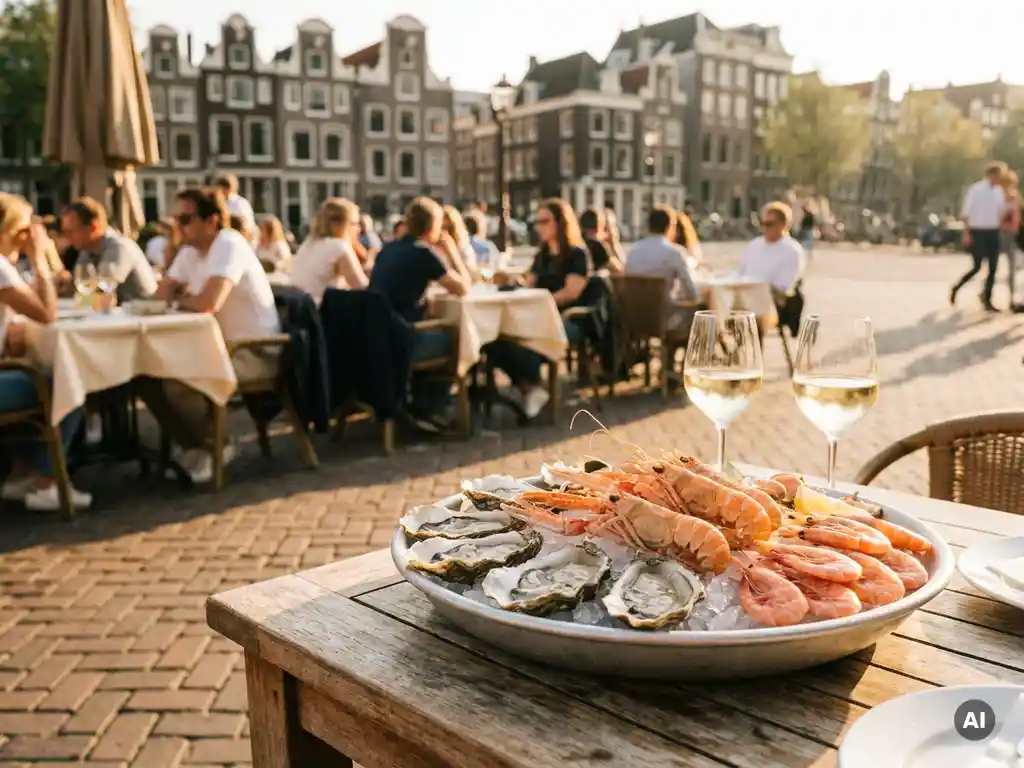
Enjoying seafood in the sun is absolutely possible, and it’s actually one of the most festive combinations there is. Shrimp, oysters, mussels, and lobster lend themselves perfectly to a relaxed drinks moment in the sun, especially when served well chilled and paired with the right drinks. In this article, we answer the most frequently asked questions about seafood at a drinks gathering, from the best choices to practical serving tips.
Which shellfish and seafood work well at a drinks gathering?
The best shellfish and seafood for a drinks gathering are oysters, shrimp, mussels, and langoustines. They are easy to eat, flavorful, and naturally feel festive. A classic seafood sharing board combines multiple varieties for variation in texture and flavor, and invites guests to taste and share.
When putting together a seafood sharing board, it’s smart to think in categories:
- Raw and pure: Oysters on ice are an absolute classic. They require little preparation and make an immediate impression.
- Warm and savory: Pan-fried shrimp with garlic or poached langoustines are ideal as a warmer element on the board.
- Easy to eat: Cooked shrimp with cocktail sauce or a simple mayonnaise are approachable and popular with everyone.
- Festive and impressive: Half a lobster or a small dish of fruits de mer takes the drinks moment to the next level.
The beauty of seafood at a drinks gathering is that you can tailor the board to your guests. Opt for smaller bites if you’re planning multiple courses, or go all-in on a lavish fruits-de-mer presentation if it’s the main attraction.
What drinks pair well with shellfish and seafood in summer?
A dry, crisp white wine is the classic choice with shellfish and seafood in summer. Think Muscadet, Picpoul de Pinet, or Chablis. The mineral, lightly acidic notes cut through the saltiness of seafood and refresh the palate. For those who prefer not to drink wine, a well-chilled glass of champagne or prosecco is an excellent alternative.
For sunny seafood drinks gatherings, these are the best drink options:
- Dry white wine: Muscadet, Albariño, or Chablis work fantastically with oysters and shrimp.
- Champagne or crémant: The bubbles and freshness complement the briny flavor of shellfish perfectly.
- Rosé: A dry Provençal rosé is a popular summer choice that pairs well with lobster and langoustines.
- Non-alcoholic alternatives: Sparkling water with lemon or a cucumber tonic are refreshing options that don’t overpower the flavors of the seafood.
Avoid sweet wines or heavy red wines, as these clash with the delicate flavors of seafood. The lighter and drier the drink, the better the pairing.
How do you serve shellfish and seafood in warm weather?
In warm weather, temperature control is key. Always serve shellfish and seafood chilled, preferably on a bed of crushed ice or in chilled bowls. This not only keeps the products fresh and safe, but also creates an attractive presentation on the terrace.
When serving oysters outdoors or hosting a drinks gathering on the terrace, keep the following in mind:
- Use ice: Place oysters, shrimp, and lobster on crushed ice in a wide dish. This keeps everything cold and instantly looks festive.
- Prepare just before serving: Shellfish and seafood are best prepared as close to serving time as possible. The fresher, the better the flavor.
- Keep sauces separately chilled: Aioli, cocktail sauce, or a mignonette for the oysters should stay in the refrigerator until the last moment.
- Protect from the sun: Don’t place the dish in direct sunlight. A shaded spot or a parasol keeps everything cold and safe for longer.
- Offer plenty of lemon wedges: Lemon is not only delicious with seafood, it also emphasizes the freshness of the products.
At a fruits-de-mer terrace, it’s all about the total experience: beautiful presentation, the right temperature, and a relaxed atmosphere. With a little preparation, this is easily achievable at home or on a terrace.
Can you eat oysters if you don’t like fish?
Yes, oysters are an excellent option for people who don’t like fish. Oysters don’t taste like fish, but like the sea itself: briny, fresh, and mineral. The flavor and texture are completely different from a piece of fried or cooked fish, which makes them a surprising discovery for many people.
Those who try an oyster for the first time often find that any association with a “fishy smell” or a strong fish flavor is completely absent. A fresh oyster tastes more like salty seawater, sometimes with a slightly sweet or nutty undertone, depending on the variety. Oysters are therefore popular with people who don’t normally eat seafood but are curious about the experience of enjoying shellfish at a drinks gathering.
A few tips for oyster beginners:
- Start with a milder variety, such as a creuse or a Zeeland oyster, rather than a strongly briny type.
- Add a drop of lemon or a little mignonette (vinegar with shallot) for extra freshness.
- Don’t just swallow the oyster whole, but chew it briefly to experience the full flavor.
When is the season for the best oysters and lobster?
Oysters are at their best in the months with an “r” in the name, so from September through April. During the summer months (May to August), oysters are less at their best because they are in their spawning season, which affects flavor and texture. Lobster, on the other hand, is a summer product and reaches its peak between May and September.
This means that in spring and early summer you see the transition: lobster takes over from oysters as the seasonal highlight. For a shellfish and seafood drinks gathering in summer, lobster is therefore the star of the show, supplemented by shrimp, langoustines, and mussels, which are readily available year-round.
A handy seasonal overview:
- Oysters: September through April, at their best in autumn and winter.
- Lobster: May through September, summery and full of flavor.
- Mussels: July through April, with the first mussels of the season in July as a culinary highlight.
- Shrimp: Available year-round, but Dutch shrimp are at their best in summer.
Those who eat seasonally always enjoy the best the sea has to offer. It pays to adapt your sharing board to what is in season at that moment.
How Visaandeschelde helps you enjoy seafood at its best
Would you like to experience for yourself how wonderful a seafood drinks gathering can be, without having to haul ice, shuck oysters, or prepare sauces yourself? At Visaandeschelde in Amsterdam-Zuid, all of that is perfectly taken care of. The restaurant serves fresh fish and seafood daily in a charming maritime setting, including a terrace where you can enjoy dining outside in summer.
This is what Visaandeschelde offers for seafood lovers:
- Fresh shellfish and seafood daily, tailored to the season
- A changing seasonal menu featuring oysters, lobster, and fruits de mer, among others
- An extensive wine list with expert advice on drink pairings with seafood
- A terrace at Scheldeplein, ideal for a sunny dinner or drinks moment
- Choice between à la carte and multi-course menus, also with wine pairing
- A warm welcome for guests with dietary requirements, including vegetarian options
Want to know more about the restaurant and the team behind the kitchen? Read more on the about us page. Reserve in advance, as Visaandeschelde is popular and a table is not always available at the last minute.
Veelgestelde vragen
How much shellfish and seafood should I count per person for a drinks gathering?
For a drinks gathering as part of a multi-course meal, count approximately 4–6 shrimp, 2–3 oysters, and a small piece of lobster per person. If it’s an extensive seafood drinks gathering as the main attraction, double the quantities. It’s always better to have a little too much than too little, especially with a festive group.
How do I safely shuck oysters at home without an oyster knife?
An oyster knife is strongly recommended and essentially indispensable for a safe result. Always use a thick tea towel to hold the oyster, insert the knife into the hinge at the back, and twist gently. If you don’t have an oyster knife, you can ask many fishmongers to shuck the oysters for you before you leave, so you only need to serve them at home.
Can I prepare a seafood sharing board in advance?
Partly, yes. Sauces such as aioli, mignonette, and cocktail sauce can easily be made a day in advance and stored chilled. The shellfish and seafood themselves should be prepared as late as possible, ideally no more than an hour before serving. Only place everything on ice just before serving, to ensure freshness and food safety.
What common mistakes should I avoid when serving seafood outdoors?
The biggest mistake is leaving shellfish and seafood out in the heat for too long without refrigeration. In warm weather, seafood should not sit at room temperature for more than two hours. Use plenty of crushed ice, refresh it regularly, and always place the dish in the shade. Also remember to keep lemon juice and sauces separately chilled until just before serving.
Are there good non-alcoholic drink pairings for a seafood drinks gathering?
Absolutely! In addition to sparkling water with lemon, cucumber tonic, a light ginger beer, and non-alcoholic sparkling wine are excellent choices that don’t overpower the delicate flavors of seafood. Avoid sweet soft drinks such as cola or fruit juice, as these clash with the briny and mineral flavors of shellfish and seafood. A well-chilled glass of tonic with a slice of lime is simple but surprisingly effective.
How do I know if shellfish and seafood are fresh enough to serve?
Fresh shellfish and seafood smell like the sea, not like fish or ammonia. Oysters should be firmly closed or close when tapped; discard open oysters that do not respond. Shrimp and lobster should have a clear color and feel firm. Buy from a reliable fishmonger and always ask for the delivery date.
What side dishes pair well with a shellfish and seafood drinks gathering?
Think thinly sliced sourdough bread or baguette, unsalted butter, and a selection of light dips such as aioli, mignonette, and a fresh salsa verde. Thin-cut fries or a small green salad with vinaigrette also work well as accompaniments. Avoid heavy or strongly spiced side dishes that could overpower the subtle flavors of the seafood.
Gerelateerde artikelen
- Welk visrestaurant is geschikt om zonnig te borrelen?
- Wat is het verschil tussen kreeft en andere schaaldieren op een menukaart?
- Hoe onderscheidt een brasserie-visrestaurant zich van andere eetgelegenheden in Amsterdam?
- Waarom is seizoensgebonden koken belangrijk bij fine dining in Amsterdam?
- Wat zijn de kosten van fine dining?