


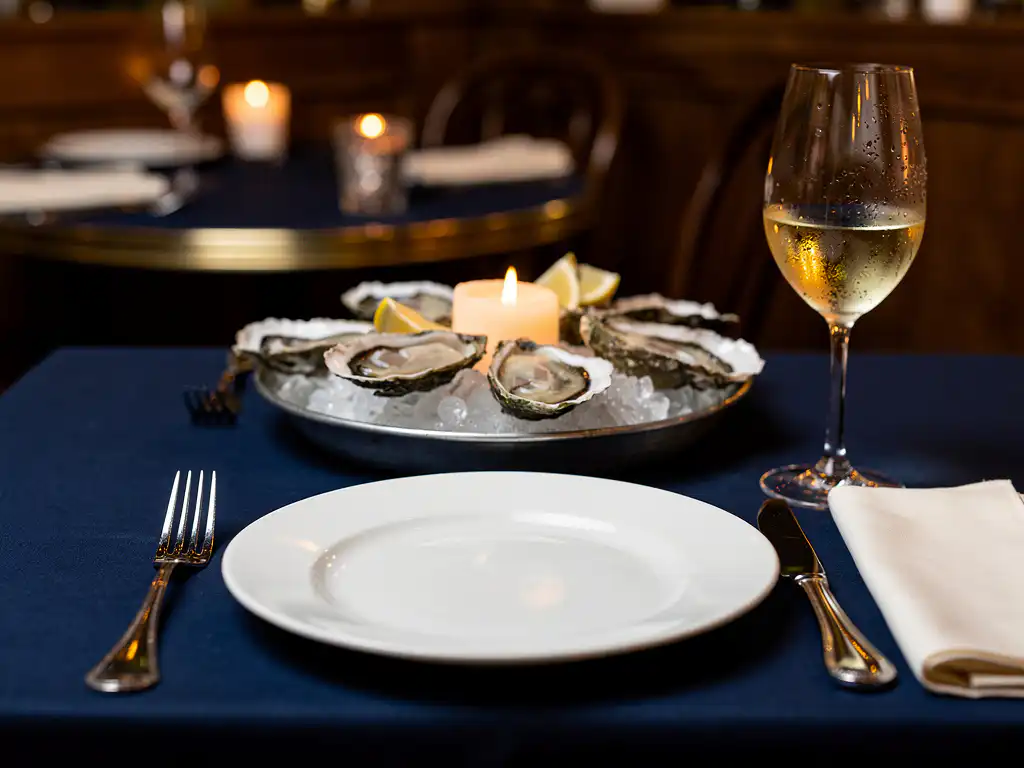
A night out at a fine dining restaurant in Amsterdam is about more than just great food. It’s a complete experience where atmosphere, service, and table manners come together. Whether you’re going for the first time or have already enjoyed a refined multi-course menu on previous occasions, it pays to know the unwritten rules of fine dining in Amsterdam. That way, you’ll feel confident at the table and can fully savor the moment. Want to know what to expect? Read more about who we are and what our restaurant has to offer.
In this article, we answer the most frequently asked questions about fine dining etiquette, from dress code to cutlery use and from wine selection to making a reservation. That way, you’ll be well prepared for your next special dinner.
What are the basic rules of fine dining etiquette?
The basic rules of fine dining etiquette revolve around respect: for the restaurant, the staff, and your fellow diners. Arrive on time, address the staff courteously, place your napkin on your lap as soon as you sit down, and wait to eat until everyone at the table has been served. Put your phone away and give the meal the attention it deserves.
Fine dining is a social experience where the tone at the table makes all the difference. Speak at a calm volume, don’t interrupt the service unnecessarily, and be patient between courses. The kitchen team works with precision and timing, and you honor that rhythm by not rushing. Small gestures, such as a friendly thank-you after each course, are always appreciated.
How should you dress for a fine dining restaurant in Amsterdam?
Fine dining restaurants in Amsterdam generally observe a smart casual or formal dress code. For men, that means neat trousers with a shirt or blazer; for women, a dress, a smart blouse, or elegant trousers. Sportswear, flip-flops, or overly casual outfits are not in keeping with the atmosphere of a refined restaurant.
Always check in advance whether the restaurant has specific dress requirements. Some establishments communicate this clearly on their website or at the time of booking. A good rule of thumb is: dress slightly smarter than you think you need to. That way, you’ll feel at ease and show respect for the effort the restaurant puts into the evening. In Amsterdam South, where refined restaurants are the norm, a polished appearance goes without saying.
How do you use cutlery correctly during a multi-course menu?
During a multi-course menu, you use your cutlery from the outside in. The cutlery farthest from your plate is used for the first course. Work your way inward as the courses progress. After each course, place your cutlery side by side on the plate to signal that you are finished, and at an angle on the plate if you are simply pausing.
Practical cutlery tips for the table
- Place your knife and fork parallel to each other on the plate when you have finished a course, with the handles pointing to the right.
- Never use your own cutlery for shared dishes — ask for a serving spoon or use the cutlery provided for that purpose.
- If you’re unsure which cutlery to use for which dish, look around or quietly ask your server.
- Oysters and shellfish are often served with specialized cutlery, such as an oyster fork. Use it as indicated.
A well-trained server at a fine dining restaurant will never leave you uncertain if you have a question about the cutlery. It is always better to ask politely than to remain unsure.
What are the rules for ordering wine at a fine dining restaurant?
At a fine dining restaurant in Amsterdam, you choose wine based on the dishes you order. The classic guideline applies: white wine with fish and lighter dishes, red wine with meat. Feel free to ask the sommelier for advice — that is exactly what they are there for. Many restaurants also offer a wine pairing with the multi-course menu, which is an excellent way to complement the flavors perfectly.
After the wine has been poured, wait a moment before drinking until everyone at the table has a glass. Taste the wine when the sommelier invites you to, and let them know whether it meets your expectations. This is a quality check, not a performance. Be honest, but polite. A good sommelier takes feedback seriously and is happy to suggest an alternative if the wine isn’t to your liking. Feel free to browse our menu for an impression of the dishes and wine pairings we offer.
Which table manners are considered rude at a fine dining dinner?
Rude table manners at a fine dining dinner include: placing your phone on the table and checking it frequently, talking or laughing loudly, ignoring the staff or speaking to them curtly, and pushing your plate away to signal you are finished. Asking for the bill too early or interrupting a server while they are attending to other guests is also considered impolite.
Other common mistakes include: talking with your mouth full, tapping cutlery on the plate, and arriving late without giving notice. Fine dining calls for mindful presence. Put your phone on silent, enjoy the conversation at the table, and let the evening unfold at its own pace. That is not only more considerate — it makes the experience far richer as well.
How do you make a reservation correctly at a fine dining restaurant?
Always book a fine dining restaurant in advance, ideally several days to a week before your visit. When making the reservation, clearly state the number of guests, any dietary requirements or allergies, and the occasion if relevant. Confirm your reservation when given the opportunity, and cancel promptly if your plans change.
Arrive on time, as a late arrival disrupts not only the restaurant’s schedule but also that of other guests. Do you have a special request, such as a table on the terrace or a surprise dinner for a birthday? Mention it at the time of booking so the team can prepare accordingly. Popular restaurants in Amsterdam fill up quickly, so don’t leave it too late to reserve.
How Visaandeschelde completes your fine dining experience in Amsterdam
At Visaandeschelde, we offer exactly the setting for a perfect fine dining evening in Amsterdam. Whether you’re joining us for a romantic dinner, a business lunch, or a celebratory meal with friends, we make sure everything is just right. Here is what you can expect from us:
- Fresh fish and seasonal ingredients every day, crafted into refined dishes.
- A rotating à-la-carte menu and a monthly Chef’s menu, curated by our kitchen team.
- An extensive wine list with an optional wine pairing for the multi-course menu.
- Attentive service for guests with specific dietary needs, including vegetarian options.
- An atmospheric brasserie setting in the Rivierenbuurt in Amsterdam South, with a terrace for outdoor dining.
We recommend booking in advance, as our tables fill up quickly. Discover more about our story and our philosophy and plan your evening at Visaandeschelde today.
Veelgestelde vragen
How far in advance should I make a reservation at a popular fine dining restaurant in Amsterdam?
For popular fine dining restaurants in Amsterdam, it is advisable to book at least one to two weeks in advance, especially for weekend evenings or special occasions such as Valentine’s Day or the holidays. Some top restaurants have waiting lists of several weeks. Booking for a large group or have a specific table request? Get in touch even earlier so the restaurant has enough time to prepare everything properly.
What should I do if I have an allergy or dietary requirement that I forgot to mention when booking?
Let the restaurant know about allergies or dietary requirements as early as possible, but if you forgot to mention them when booking, inform the restaurant as soon as you arrive — or give them a call beforehand. A professional fine dining restaurant will do everything it can to accommodate you. Never wait until the dishes are already being served, as the kitchen will have very little room to make adjustments at that point.
Is it appropriate to share dishes at a fine dining dinner?
Sharing dishes is less common at fine dining restaurants than at casual ones, as each dish is carefully composed as an individual portion and experience. If you do want to taste something from your dining companion’s plate, do so discreetly and always use separate cutlery or ask for an extra plate. You may also want to discuss this with your server in advance, so they can factor it into the timing and presentation.
How should I handle a dish I don't enjoy or that doesn't meet my expectations?
At a fine dining restaurant, it is perfectly acceptable to politely let your server know if a dish is not to your liking. Do so calmly and courteously, without making a scene. A professional team takes such feedback seriously and will work with you to find a solution, such as offering an alternative dish. Staying silent and leaving the dish untouched is less helpful, as it gives the restaurant no opportunity to address the situation.
What is the difference between an à-la-carte menu and a multi-course menu, and which should I choose?
With an à-la-carte menu, you choose which dishes to order and in what order, while a multi-course menu offers a set sequence of dishes composed by the chef. A multi-course menu gives you the full fine dining experience, including a thoughtfully structured progression of flavors and, optionally, a matching wine pairing. Choose à-la-carte if you prefer more flexibility or a lighter meal, and opt for the multi-course menu if you want to let the chef guide the entire evening.
Am I allowed to take photos of my dishes at a fine dining restaurant?
Taking photos of your dishes is now widely accepted, even at fine dining restaurants, as long as you don’t turn it into a disruptive production. Avoid using a flash, keep it quick and discreet, and make sure your fellow diners and neighboring guests are not inconvenienced. Some exclusive restaurants have a no-photography policy; check this in advance or quietly ask your server if you are unsure.
How does paying the bill work at a fine dining restaurant, and is tipping required?
At a fine dining restaurant, you request the bill at the end of the evening by making calm eye contact with your server or giving a polite gesture — calling out or snapping your fingers is considered rude. Tipping is not obligatory in the Netherlands, but it is a lovely way to show appreciation for excellent service; an amount of 10 to 15 percent of the bill is customary. Payment by card or cash is generally both possible, but if in doubt, check in advance whether the restaurant has a preferred payment method.