


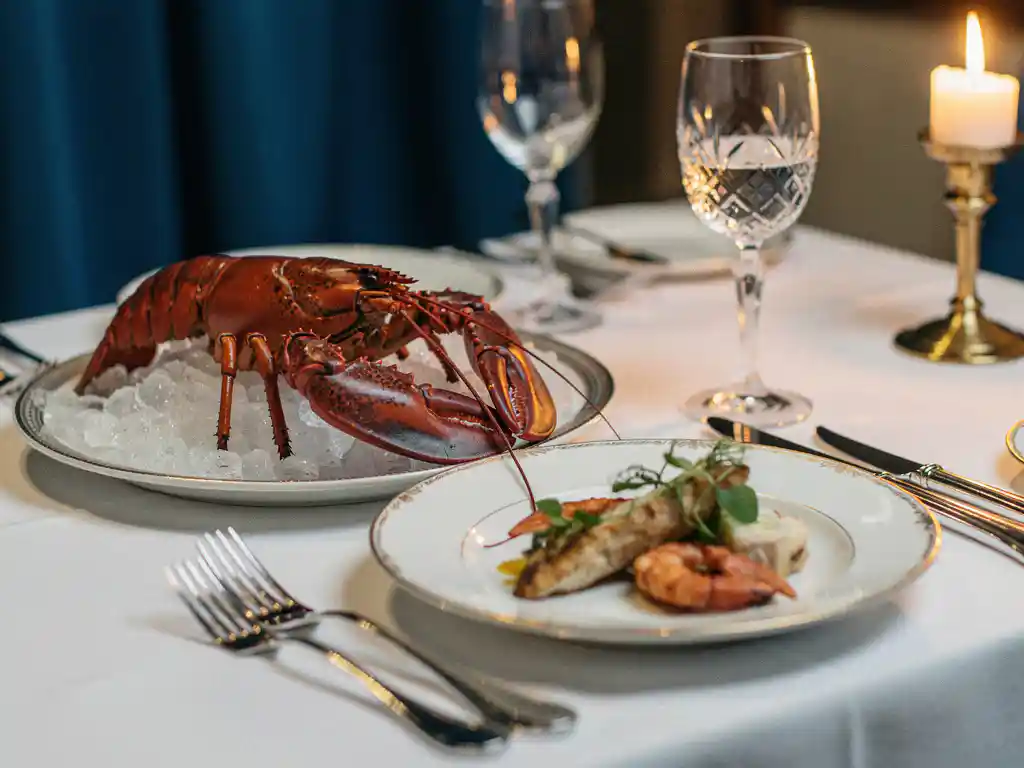
A night out in Amsterdam can take many forms, but a fine dining experience in Amsterdam is in a class of its own. It’s about more than just great food: it’s a complete experience in which the kitchen, the service, the atmosphere, and the wine selection come together to create one unforgettable whole. Whether you’re celebrating a special occasion or simply want to enjoy the very best the city has to offer culinarily, it pays to know what to expect. In this article, we answer the most frequently asked questions about fine dining in Amsterdam, so you can sit down at the table fully prepared. Also read more about our approach and philosophy if you’d like to get a feel for what a true seafood fine dining experience entails.
What exactly is fine dining, and what sets it apart?
Fine dining is a restaurant experience in which everything is executed at the highest level: from the quality of the ingredients and the precision of the preparation to the personal service and the elegant surroundings. It distinguishes itself from ordinary restaurants through its attention to every detail, from the tableware to the presentation of each dish.
What makes fine dining in Amsterdam special is the combination of international culinary influences with local, seasonal produce. Chefs work closely with suppliers to source the freshest ingredients on a daily basis. The service is typically more extensive and personal: staff know the menu inside and out and can guide you through every choice, from the starter to the dessert wines. In short, fine dining is about savoring every moment, without any rush.
What is typically on a fine dining menu in Amsterdam?
A fine dining menu in Amsterdam generally consists of multiple courses that reflect the season. Think refined starters, mains, and desserts in which fresh, local, and seasonal produce take center stage. At seafood restaurants, daily-fresh fish, oysters, lobster, and fruits de mer are staples on the menu.
Beyond the classic menu structure, many fine dining restaurants in Amsterdam also offer a Chef’s Menu: a carefully curated multi-course menu that changes weekly or monthly based on what the seasons have to offer. This gives the kitchen the freedom to experiment and to let guests discover something new every time. Vegetarian and meat options are also available at most reputable restaurants, ensuring there’s something for everyone.
Another hallmark of fine dining menus is the so-called signature dish: a dish that defines the restaurant and brings regular guests back specifically for it. These dishes combine technique with flavor in a way that home cooking cannot easily replicate.
How formal is the dress code at a fine dining restaurant?
The dress code at fine dining restaurants in Amsterdam varies by establishment, but the general expectation is smart casual to formal. That means neat clothing, such as a shirt or blouse, smart trousers or a skirt, and polished shoes. A tie or blazer is not required at most Amsterdam fine dining restaurants, but it is appreciated.
It’s always a good idea to check the restaurant’s website in advance or ask about any dress requirements when making your reservation. Especially if you’re celebrating a special occasion, you don’t want any surprises. A good rule of thumb: dress just a little smarter than you think is necessary. It not only enhances your own experience, but also shows respect for the effort the restaurant puts into making everything perfect.
What is the difference between à la carte and a multi-course menu?
With à la carte, you choose which dishes to order from a fixed menu, with no required sequence or combination. With a multi-course menu, the chef selects a fixed sequence of dishes for you — often three to seven courses — that together form a culinary journey. The multi-course menu generally offers a deeper experience, while à la carte gives you more freedom of choice.
When should you choose à la carte?
À la carte is ideal if you have a specific dish in mind, or if you’re dining with guests who have varying tastes. You only pay for what you order, and you can set the pace of the meal yourself. This makes it a flexible choice for business lunches or more informal dinners.
When should you choose a multi-course menu?
A multi-course menu is the best choice when you want to experience the full creativity of the kitchen. The chef determines the sequence and balance of the dishes, resulting in a cohesive flavor experience. Many fine dining restaurants also offer a wine pairing with the multi-course menu, where each course is accompanied by a carefully selected wine. Take a look at our current menu to get a sense of how we approach this.
How far in advance should you reserve at a fine dining restaurant?
For a fine dining restaurant in Amsterdam, it’s best to reserve at least one to two weeks in advance, and for popular restaurants or special dates — such as public holidays or weekends — even three to four weeks ahead. Good restaurants fill up quickly, especially in a city like Amsterdam where demand for quality dining is high.
The earlier you reserve, the more choice you have in terms of time and table placement. Would you like a specific spot, such as a table on the terrace or a quiet corner for a romantic dinner? Let them know when you make your reservation. Don’t forget to mention any dietary requirements or allergies as well, so the kitchen can prepare accordingly.
For last-minute reservations, it’s always worth calling directly. Cancellations do happen, and a phone call gives you a better chance than an online request, which may not be reviewed until later.
Which wines pair best with a seafood fine dining menu?
Dry white wines pair best with a seafood fine dining menu. Think of a crisp Chablis, a mineral-driven Sancerre, an elegant white Burgundy, or an aromatic Albariño from Galicia. These wines complement the delicate flavors of fish, oysters, and shellfish without overpowering them.
For dishes with richer sauces or prepared lobster, a lightly oaked Chardonnay or even a light red wine such as a Pinot Noir can be a surprisingly good choice. The guiding principle is always: the wine should support the flavor of the dish, not dominate it.
With a wine pairing, the sommelier or service team suggests an appropriate wine for each course. This is the most accessible way to enjoy the combinations without needing extensive wine knowledge. Trust the expertise of the restaurant and stay open to unexpected pairings — those are often the ones that create the most memorable moments.
How we make your fine dining experience in Amsterdam unforgettable
At Visaandeschelde, we bring together everything that makes a fine dining experience in Amsterdam truly special. For more than 25 years, we have been welcoming guests to our seafood restaurant in the Rivierenbuurt, where daily-fresh fish and seasonal produce form the foundation of every dish. Here’s what you can expect from us:
- A daily-changing selection of the freshest fish, oysters, lobster, and fruits de mer
- A monthly-changing Chef’s Menu, crafted by our kitchen team
- À la carte options, including our signature dish “Vis Exclusief”
- A multi-course menu with an optional wine pairing, guided by our service team
- Dishes for fish lovers, vegetarians, and meat lovers alike
- An atmospheric brasserie with maritime details and a terrace opposite the RAI
We recommend reserving well in advance, as our tables fill up quickly. Looking to celebrate a special evening, enjoy a business dinner, or simply experience the best Amsterdam has to offer in seafood? Browse our menu and reserve your table through our website. We look forward to welcoming you at Scheldeplein.
Veelgestelde vragen
Can I come to Visaandeschelde for a business dinner or group reservation?
Yes, Visaandeschelde is perfectly suited for business dinners and group reservations. For larger parties, it’s advisable to get in touch well in advance so the restaurant can tailor the table arrangement and menu to your needs. When making your reservation, please provide the number of guests, any dietary requirements, and the desired atmosphere (formal or informal), so that everything can be arranged to perfection.
What if I or one of my dining companions has an allergy or dietary requirement?
Fine dining restaurants in Amsterdam, including Visaandeschelde, are well equipped to accommodate allergies and dietary requirements such as gluten intolerance, lactose intolerance, or a vegetarian diet. It is essential to communicate this at the time of reservation so the kitchen can prepare in advance rather than having to improvise on the spot. Be sure to mention less obvious allergies as well, such as shellfish or nuts, to eliminate any risk.
Is a wine pairing mandatory with the multi-course menu, or can I choose something else?
A wine pairing is almost never mandatory with a multi-course menu; it is an option that gives you the freedom to fully enjoy the flavor combinations. Guests who prefer not to drink alcohol can, at most fine dining restaurants, opt for a non-alcoholic pairing featuring juices, teas, or mocktails specifically matched to each course. Feel free to ask about the options when making your reservation or at the start of your dinner.
What is a reasonable budget for a fine dining evening in Amsterdam?
For a full fine dining experience in Amsterdam, you can expect to spend on average between €60 and €150 per person for the food, depending on the number of courses and the restaurant. Add a wine pairing, and the total can rise to €100–€200 or more per person. It’s a good idea to check the menu and prices on the restaurant’s website in advance, so there are no surprises and you can enjoy the evening without any worries.
What is the best time to reserve for a fine dining dinner, and how long does an evening typically last?
A popular time for fine dining in Amsterdam is between 7:00 and 8:00 PM, which gives you enough time to build the evening at a relaxed pace. For a multi-course menu, plan for a duration of two to three hours, depending on the number of courses and the pace you and your party prefer. Avoid scheduling any commitments immediately after dinner, so you can fully round off the experience without any time pressure.
Is fine dining suitable for children, or is it purely an experience for adults?
Fine dining is in principle for everyone, but the atmosphere and pace are generally best suited to adults or older children who already have some experience with dining out. Some fine dining restaurants offer a separate children’s menu or smaller portions; inquire about this in advance if you’re bringing children. Keep in mind that a multi-course menu can take several hours, which may be a long time for young children.
What are common mistakes on a first fine dining visit, and how can I avoid them?
One of the most common mistakes is reserving too late, meaning you can’t get your preferred date or table. First-timers also sometimes forget to communicate dietary requirements in advance, or feel uncertain about etiquette and hesitate to ask the staff questions. Rest assured: the team at a fine dining restaurant is there precisely to guide you, so don’t hesitate to ask for explanations about dishes, wines, or the structure of the menu — that is exactly what the fine dining experience is all about.
Gerelateerde artikelen
- Hoe weet je of een visrestaurant in Amsterdam echt dagelijks verse vis serveert?
- 9 vragen die je jezelf stelt bij het kiezen van een visrestaurant in Amsterdam
- Wat is een visrestaurant in Amsterdam precies?
- Welke vis staat er typisch op de kaart van een visrestaurant in Amsterdam?
- Wat zijn de dresscode regels bij fine dining restaurants in Amsterdam?