


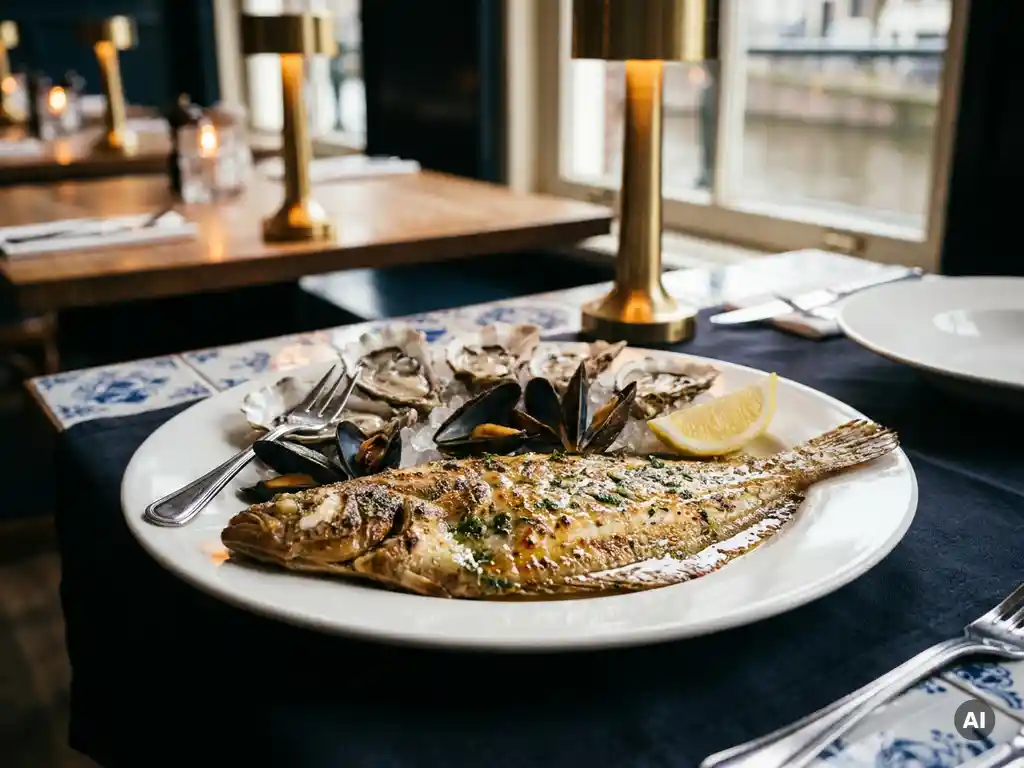
A good fish restaurant in Amsterdam typically offers a varied menu featuring both classic and seasonal fish varieties. Think sole, sea bass, halibut, scallops, and a range of crustaceans and shellfish. The exact composition of the menu depends largely on what is available fresh that day and what season it is. In this article, we answer the most frequently asked questions about what you can expect on the menu at a fish restaurant in Amsterdam.
Which fish varieties are most popular in Amsterdam restaurants?
The most popular fish varieties in Amsterdam fish restaurants are sole, sea bass, halibut, salmon, and tuna. Scallops, oysters, and lobster are also firm favorites on refined seafood menus. These varieties combine a recognizable flavor with versatile preparation options, making them popular with both newcomers and seasoned seafood lovers alike.
Sole has been a classic in Dutch cuisine for decades and is often pan-fried in butter or prepared with capers and lemon. Sea bass has a slightly more delicate flavor and lends itself beautifully to light sauces and Mediterranean preparations. Halibut is a firm, meaty fish that pairs well with richer flavors such as truffle or beurre blanc.
Alongside these classics, lesser-known varieties are appearing on menus more frequently, such as turbot, red mullet, and scallops. Good fish restaurants deliberately respond to what the sea has to offer at any given moment, keeping the menu lively and full of surprises.
What is fruits de mer, and is it always on the menu?
Fruits de mer is a French term that literally means “fruits of the sea” and refers to a platter of various raw and cooked crustaceans and shellfish. Think oysters, shrimp, mussels, lobster, crab, and whelks. Whether fruits de mer is always on the menu varies by restaurant and by season.
In specialized seafood restaurants, a fruits de mer platter is often a permanent fixture, but its composition regularly changes to reflect the availability of fresh produce. In the winter months, oysters are at their best, while lobster and certain shrimp are at their finest during other times of year.
A fruits de mer platter is ideal for sharing among a group and gives a wonderful impression of what the sea has to offer. It is therefore a popular choice for celebratory occasions or when you want to enjoy an extensive culinary experience together.
Which fish is seasonal, and when does it appear on the menu?
Many fish varieties are seasonal, meaning they are not available on the menu year-round. Herring is the most well-known example: Dutch new herring is only available from June onward. Oysters are at their best during the colder months, from September through April. Lobster peaks in summer, while turbot and sole are available year-round but are at their finest in spring and summer.
Seasonal fish not only tastes better at the right time — it is also a more sustainable choice. Fish caught at the right moment has had the time to fully mature and carries more flavor. Restaurants that take quality seriously actively adjust their menus to reflect what the season has to offer.
Other examples of seasonal fish and seafood include scallops (autumn and winter), mackerel (summer), and sea bass (spring and summer). By consciously choosing what the season provides, you also support sustainable fishing practices and enjoy the very best flavors.
What is the difference between fresh daily fish and frozen fish in a restaurant?
Fresh daily fish is fish that was caught and delivered the same day or the day before, without having been frozen in the interim. Frozen fish is flash-frozen immediately after the catch and thawed later for use. The key difference lies in flavor, texture, and freshness: fresh fish has a more subtle, cleaner taste and a firmer texture.
That is not to say that frozen fish is inherently inferior. Modern freezing processes have improved significantly, and some varieties — such as tuna or shrimp — are sometimes frozen at sea immediately after the catch to preserve freshness. Nevertheless, for most species there is a noticeable difference when you compare fresh and frozen side by side.
In a quality fish restaurant, fresh daily fish is the standard. This requires close collaboration with reliable suppliers and a flexible kitchen that is willing to adjust the menu based on what is available that day. As a guest, you are always welcome to ask whether the fish was delivered fresh that day. A good restaurant will always answer that question openly.
Are there options for non-seafood lovers in a seafood restaurant?
Yes, most seafood restaurants also offer dishes for guests who do not eat fish. Think vegetarian options, meat dishes such as sirloin steak or duck breast, and sometimes chicken dishes as well. A good seafood restaurant ensures that non-seafood lovers can also fully enjoy a complete dining experience.
This matters because people rarely dine out alone. A group of friends, a romantic dinner, or a business lunch often includes people with a wide range of tastes and dietary preferences. A restaurant that serves only fish risks leaving part of its guests underserved.
Vegetarian dishes in a seafood restaurant are often just as thoughtfully crafted as the fish dishes: seasonal vegetables, refined sauces, and creative combinations take center stage. Guests with specific dietary requirements, such as a gluten-free diet, can in most cases count on a suitable option if they mention it in advance.
How Visaandeschelde makes your seafood evening unforgettable
At our restaurant, we have been putting into practice everything described in this article for over 25 years. We work with the freshest fish every day, adapt our menu to the season, and make sure that every guest — seafood lover or not — finds something on the menu that appeals to them. Here is what you can expect from us:
- A daily changing selection of fresh fish and shellfish, sourced directly from trusted suppliers
- Seasonal dishes, including oysters, lobster, and the rotating “Vis Exclusief” as our à-la-carte showpiece
- A monthly changing Chef’s menu with optional wine pairing, curated by our kitchen team
- Dishes for vegetarians and meat lovers, so everyone at the table can enjoy the evening to the fullest
- A welcoming brasserie setting in the Rivierenbuurt neighborhood, with a terrace for outdoor dining
Curious to see more? Take a look at our menu and reserve your table in good time — our regulars know how to find us.
Veelgestelde vragen
How far in advance should I reserve a table at a good fish restaurant in Amsterdam?
For a popular fish restaurant in Amsterdam, it is wise to book at least a week in advance, especially on weekends or during public holidays. During busy periods such as Christmas or Valentine’s Day, a reservation several weeks ahead may be necessary. Call or book online and mention any dietary requirements or allergies right away, so the kitchen can take them into account.
How can I tell whether the fish at a restaurant is truly fresh and not frozen?
The simplest way is to ask the staff directly — a good fish restaurant is always transparent about this. Other signs include a daily changing menu, a focused but well-considered selection, and a willingness from the staff to explain where the fish comes from. A fixed, extensive menu that never changes can be an indication that frozen products are used more frequently.
What is a good choice if I'm dining at a fish restaurant for the first time and don't know what to order?
Feel free to ask the staff for a recommendation — they know exactly what is freshest and most delicious that day. A classic choice for first-timers is sole or sea bass, both approachable in flavor and versatile in preparation. If you’re feeling more adventurous, ask about the dish of the day or the chef’s menu, which offers a great introduction to what the restaurant has to offer.
Can I still visit a seafood restaurant if I have a fish or shellfish allergy?
Yes, but it is essential to mention this well in advance — ideally at the time of booking. A professional fish restaurant takes allergies seriously and can in many cases prepare a safe alternative. Do bear in mind that in a specialized seafood restaurant, cross-contamination can never be entirely ruled out, so always communicate your allergy clearly to both the front-of-house staff and the kitchen.
What is the difference between an à-la-carte menu and a chef's menu at a fish restaurant?
With an à-la-carte menu, you choose each course yourself, giving you maximum freedom. A chef’s menu is a curated multi-course menu in which the chef has mapped out a culinary journey, often featuring seasonal ingredients and surprising combinations. The chef’s menu is ideal if you want to experience the restaurant at its fullest and enjoy being surprised, while à-la-carte is a better fit if you have specific preferences or requests.
Is a wine pairing at a fish restaurant really worth it?
Absolutely, especially at a restaurant that takes it seriously. A well-chosen wine pairing enhances the flavors of each dish and brings out nuances you might otherwise miss. Dry white wines such as Chablis, Sancerre, or a Burgundy are classic companions to fish, but a sommelier can also surprise you with unexpected pairings, such as a light red wine alongside heartier fish varieties. Don’t hesitate to ask for advice if you’d like to choose a bottle yourself.
What is a reasonable price for dinner at a quality fish restaurant in Amsterdam?
For a full dinner with a starter and main course at a quality Amsterdam fish restaurant, you can expect to pay an average of €50 to €90 per person, excluding drinks. A multi-course menu or chef’s menu with wine pairing can run to €100 or more per person. The higher price generally reflects the quality of fresh daily ingredients, culinary craftsmanship, and the overall experience — for a special evening, it is certainly worth the investment.
Gerelateerde artikelen
- 7 visgerechten die je minstens één keer moet eten in Amsterdam
- 9 redenen om vanavond te reserveren bij een visrestaurant in Amsterdam
- Hoe herken je een echt goed visrestaurant in Amsterdam?
- Hoe onderscheidt een brasserie-visrestaurant zich van andere eetgelegenheden in Amsterdam?
- Wat maakt een restaurant fine dining in Amsterdam?