


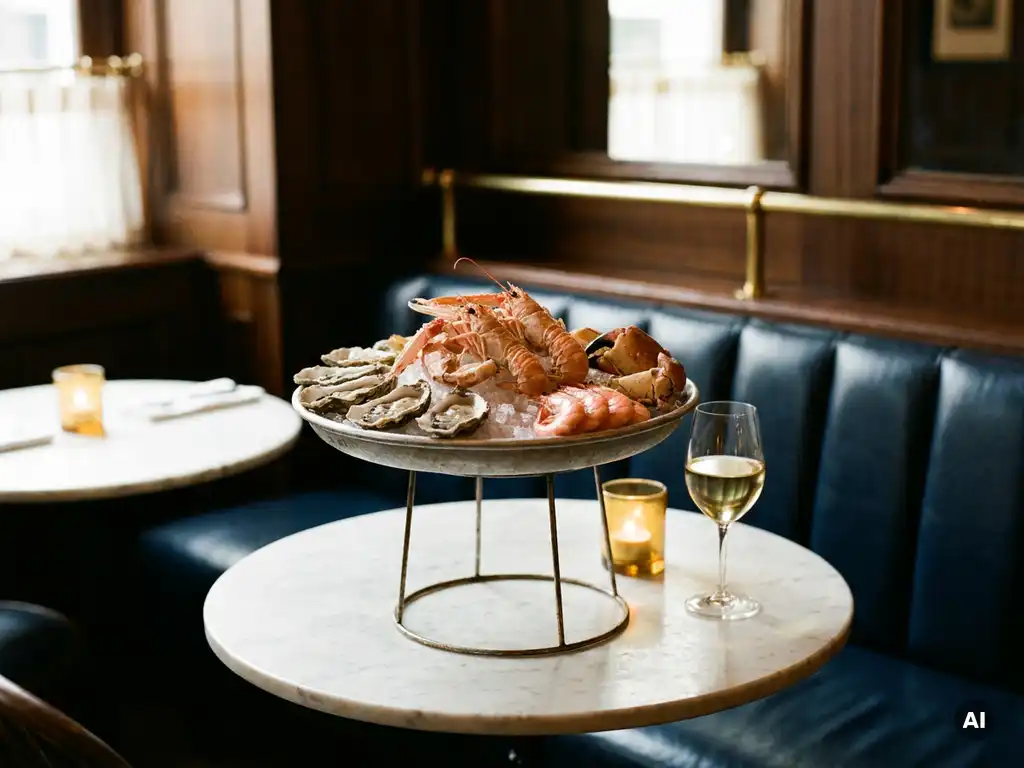
Fruits de Mer is a classic seafood platter featuring a generous selection of fresh shellfish and mollusks, including oysters, shrimp, lobster, mussels, crab, and scallops. It is a festive and lavish dish rooted in French coastal tradition, perfect for those who want to enjoy the very best the sea has to offer. In this article, we answer the most frequently asked questions about Fruits de Mer — from its contents and origins to the best wine pairings and where to order it in Amsterdam at a renowned fish restaurant in Amsterdam.
What is typically included in a Fruits de Mer?
A classic Fruits de Mer consists of an assortment of fresh, mostly raw or lightly prepared seafood, served on a bed of crushed ice. Expect oysters, brown shrimp, pink shrimp, mussels, cockles, crab, lobster, and sometimes scallops or langoustines. The exact composition varies by restaurant and season.
What makes a Fruits de Mer so special is the variety of textures and flavors on a single platter. You taste the brininess of fresh oysters, the tenderness of cooked lobster, and the nuttiness of shrimp — all at once. It is typically served with accompaniments such as bread and butter, aioli, horseradish, lemon, and sometimes a light vinaigrette. The whole experience is both a visual spectacle and a culinary event.
Where does the Fruits de Mer tradition come from?
The Fruits de Mer tradition originates from the coastal regions of France, particularly Brittany and Normandy, where fishing communities have lived off the bounty of the Atlantic Ocean for centuries. In French brasserie culture, the platter evolved into a festive centerpiece of the dining experience, especially around the holidays.
In the nineteenth and early twentieth centuries, the dish became popular in Parisian brasseries, which had fresh seafood brought in from the coastal provinces. The presentation on an iced platter became a symbol of luxury and hospitality. From Paris, the tradition spread to other European cities, including Amsterdam, where a love of fish and seafood is deeply embedded in the culture.
How does Fruits de Mer differ from an ordinary fish dish?
The key difference is that Fruits de Mer consists exclusively of shellfish and mollusks, whereas an ordinary fish dish may also include fillets of fish such as salmon, cod, or sole. Furthermore, the components of a Fruits de Mer are typically served raw or minimally prepared, in order to preserve their natural flavors.
A fish dish is often served warm and prepared with sauces, herbs, or garnishes. Fruits de Mer, by contrast, is cold, pure, and focused entirely on the freshness of the ingredients themselves. It is a dish where the product takes center stage and preparation is kept to an absolute minimum. This makes Fruits de Mer particularly demanding in terms of ingredient quality — there is nothing to hide behind a sauce.
When is the best time to eat Fruits de Mer?
Fruits de Mer is at its best during the months containing the letter “r” — that is, from September through April. This is the traditional oyster season rule: during the summer months without an “r,” oysters spawn, giving them a milky, less appealing texture. For other types of seafood, quality is generally better during the colder months as well.
That said, a good restaurant can put together an excellent Fruits de Mer year-round by working with whatever is in season. In summer, lobster may be at its finest, while mussels tend to shine in autumn. A seasonally focused restaurant adjusts the composition of the platter to reflect what the sea has to offer at any given time, ensuring you always receive the freshest and most flavorful selection.
Where can you order Fruits de Mer in Amsterdam?
For an authentic and fresh Fruits de Mer in Amsterdam, your best bet is a specialist fish restaurant that sources fresh products daily and adjusts its offerings to the season. The Rivierenbuurt neighborhood and the area around Scheldeplein in Amsterdam-Zuid are well-known destinations for seafood lovers.
When choosing a restaurant, keep the following in mind:
- Does the restaurant work with fresh fish and seafood sourced daily?
- Does the menu change with the seasons?
- Can you also order other courses, such as a starter or dessert?
- Is there a wine list suited to seafood?
- Is a reservation recommended? That is often a good sign of popularity.
At most good fish restaurants in Amsterdam, a reservation is strongly recommended — especially on weekends and during holidays, when demand for Fruits de Mer is at its highest.
What wine pairs best with Fruits de Mer?
A dry, crisp white wine is the ideal match for Fruits de Mer. The briny, iodine-rich flavors of oysters and other shellfish call for a wine with sufficient acidity and minerality to balance and enhance those flavors. Think Muscadet, Chablis, a dry Riesling, or a Picpoul de Pinet.
Champagne and crémant are also excellent choices: their fine bubbles and dry finish make a classic pairing with oysters and lobster. For those who prefer rosé, a dry Provençal rosé is a fine option. Avoid heavy, oak-aged wines or red wines, as these will overpower the delicate flavors of the seafood and can make the iodine notes unpleasantly pronounced.
How we help you enjoy the best Fruits de Mer in Amsterdam
At Visaandeschelde, we have been serving fresh Fruits de Mer at the table for over 25 years, assembled from the finest seasonal products sourced daily. We are the fish restaurant in Amsterdam where quality, freshness, and atmosphere come together in the vibrant Rivierenbuurt. Here is what you can expect from us:
- Fresh seafood every day, carefully selected for quality and seasonality
- A seasonal menu featuring oysters, lobster, and the rotating Vis Exclusief dish
- An extensive wine list with recommendations perfectly suited to Fruits de Mer
- The choice between à la carte dining and a multi-course menu with optional wine pairing
- A warm, maritime atmosphere at Scheldeplein, opposite the RAI convention center
- A terrace for outdoor dining during the warmer months
Curious about our full offering? Browse our menu and reserve your table. Due to our loyal regulars, booking in advance is strongly recommended.
Veelgestelde vragen
Can Fruits de Mer be made suitable for someone with a shellfish allergy?
Unfortunately, a classic Fruits de Mer is not suitable for people with a shellfish or mollusk allergy, as the dish consists entirely of these ingredients. If you are dining in a group where one person has an allergy, it is advisable to inform the restaurant in advance. A good fish restaurant will be able to suggest alternative dishes, such as a fish fillet or a customized plate free from the allergens.
What is the correct way to eat Fruits de Mer?
There is no strict order required, but traditionally you begin with the most delicate flavors — such as oysters and brown shrimp — and work your way up to the more robust flavors of crab and lobster. Use the tools provided, such as an oyster fork, lobster crackers, and picks, to handle each item properly. Take your time, pair each bite with a sip of wine, and enjoy the social nature of the dish — Fruits de Mer is as much an experience as it is a meal.
Is Fruits de Mer suitable as a main course, or do I need additional courses?
A full Fruits de Mer is generally substantial enough to serve as a main course, especially the larger versions designed for two people. Many restaurants offer the option of pairing it with a light starter, such as a bisque or a salad, and a dessert to finish. If you plan to have multiple courses, it is best to opt for a smaller portion of Fruits de Mer or to discuss this with your server beforehand.
What is the difference between a small and a large Fruits de Mer, and how many people is it intended for?
Fruits de Mer is offered in most restaurants in various sizes: a small version is typically intended for one person as a main course, while the large version is classically designed for two and includes a wider assortment, including a half or whole lobster. Some restaurants also offer a luxurious grand plateau for larger groups, ideal for a special occasion. Always ask at the time of booking about the available sizes and exact contents, so you can make the right choice for your party.
How do I know whether the seafood at a restaurant is truly fresh?
Fresh seafood is odorless or smells faintly of the sea — never strong or fishy. Oysters should be tightly closed or snap shut when touched, and mussels that remain open after cooking are no longer safe to eat. A reliable sign of quality is that the restaurant sources its products daily, adjusts its menu to the season, and is transparent about the origin of its ingredients. Do not hesitate to ask the staff where the seafood comes from — a good restaurant will answer that question with pride.
Can I take Fruits de Mer away or have it delivered?
While some fishmongers and restaurants do offer assembled seafood platters for takeaway, Fruits de Mer is best enjoyed on-site due to the importance of freshness and the chilled presentation on ice. Transportation can quickly compromise the quality of oysters and other raw shellfish in particular. If you want to serve it at home, your best option is to purchase individual ingredients from a specialist fishmonger and assemble the platter yourself — or visit a restaurant for the full experience.
What are the most common mistakes when ordering Fruits de Mer at a restaurant?
One of the most common mistakes is failing to make a reservation, which means missing out on busy evenings or during the holidays. Many people also underestimate the portion size and over-order, or they forget to ask for wine recommendations specifically suited to the platter. Finally, we advise not waiting to start eating once the platter has been served: seafood is at its best immediately upon arrival, while it is still cold and fresh on the ice.
Gerelateerde artikelen
- 9 tekenen dat je te maken hebt met een echt goed visrestaurant in Amsterdam
- Wat is het verschil tussen kreeft en andere schaaldieren op een menukaart?
- Wat is de beste wijk in Amsterdam voor fine dining?
- Wat zijn de ongeschreven regels bij fine dining restaurants in Amsterdam?
- Hoe beoordeel je de kwaliteit van een fine dining restaurant in Amsterdam?