


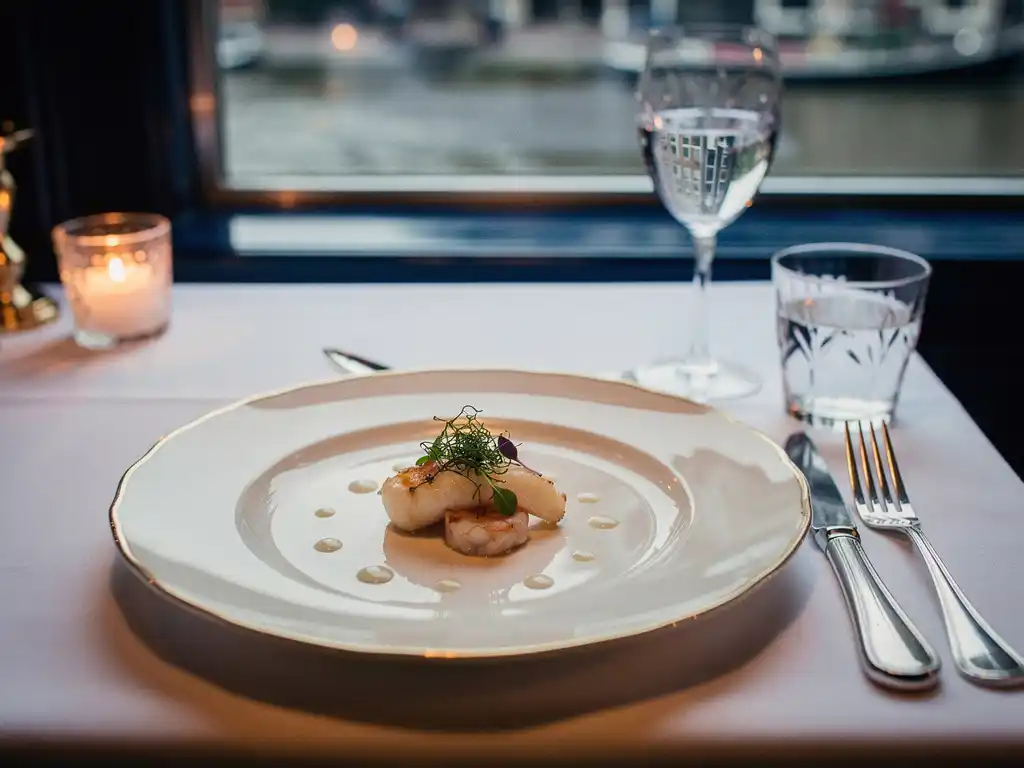
Amsterdam is renowned for its vibrant culinary scene, but not everyone knows exactly what sets fine dining in Amsterdam apart from a Michelin-starred restaurant. The terms are often used interchangeably, yet in practice they can mean something quite different. Whether you’re planning a special dinner for a memorable occasion or simply curious about the world of gastronomic cuisine, this article gives you a clear overview of the key concepts and the choices that come with them. Want to learn more about our own culinary philosophy? Read about us and discover what drives us.
From the meaning of fine dining to the Michelin system and the question of when each type of restaurant suits you best — we answer the most frequently asked questions in a practical and accessible way.
What exactly is fine dining and what does it stand for?
Fine dining is a complete dining experience that goes beyond the food itself. It encompasses premium ingredients, expertly prepared dishes, refined service, and a carefully crafted atmosphere. The emphasis is on attention to every detail, from the presentation on the plate to the quality of the tableware and the knowledge of the staff.
Fine dining represents a conscious choice to turn a meal into an experience. That doesn’t automatically mean the restaurant holds a Michelin star or that the dress code is formal. It’s about everything coming together: the quality of the ingredients, the creativity of the kitchen, the hospitality of the team, and the setting in which you dine. Fine dining can take place in a sleek, modern interior, but equally in a warm brasserie with a maritime character.
What is a Michelin-starred restaurant and how does the Michelin system work?
A Michelin-starred restaurant is one that has been assessed by the Michelin Guide and awarded one or more stars. The Michelin Guide has three levels: one star for an excellent restaurant worth a visit, two stars for exceptional cuisine worth a detour, and three stars for a unique culinary experience worth a special journey.
Anonymous Michelin inspectors visit restaurants multiple times a year and evaluate them on five criteria: the quality of the ingredients, mastery of cooking techniques, harmony of flavors, the personality of the chef, and consistency over time. A star is therefore not a permanent title, but an annual recognition that can also be withdrawn. The system is the most authoritative quality mark in gastronomy worldwide.
What is the difference between fine dining and a Michelin-starred restaurant?
The key difference is that fine dining is a concept, while a Michelin-starred restaurant is an official distinction. Not every fine dining restaurant holds a Michelin star, and conversely, all starred restaurants by definition meet the criteria of fine dining. Fine dining is broader and more subjective; a Michelin star is a specific, externally awarded quality mark.
In practice, this means that in Amsterdam you can enjoy an exceptional fine dining dinner without the restaurant appearing in the Michelin Guide. Many restaurants that place a strong emphasis on seasonal produce, fresh daily ingredients, and personal service offer a fine dining experience that can effortlessly hold its own against that of a starred restaurant. The choice therefore depends not only on the presence of a star, but also on what you personally seek from an evening out.
What types of restaurants fall under fine dining in Amsterdam?
In Amsterdam, a wide range of restaurants fall under the fine dining umbrella. Think gastronomic restaurants with extensive tasting menus, but also specialist seafood restaurants, modern brasseries with a strongly seasonal menu, and restaurants that focus on a specific culinary tradition with a high standard of execution.
What these restaurants have in common is their commitment to quality. They work with carefully selected suppliers, update their menus regularly based on the season, and offer a guest experience that goes beyond the standard restaurant visit. In Amsterdam South, for example, you’ll find a concentration of this type of restaurant, thanks in part to the affluent and culinarily discerning residents of neighborhoods such as the Rivierenbuurt and the Apollobuurt.
- Gastronomic restaurants with tasting menus and wine pairings
- Specialist seafood restaurants with fresh daily fish and fruits de mer
- Modern brasseries with seasonal à la carte menus
- Bistros with a strong emphasis on artisanal preparation
- Restaurants with a chef’s menu that changes monthly
When should you choose fine dining and when a Michelin-starred restaurant?
Choose fine dining when you’re looking for a special dining experience with an emphasis on quality, atmosphere, and service, without the restaurant’s formal status being the deciding factor. Choose a Michelin-starred restaurant when you’re specifically seeking an internationally recognized culinary highlight, or want to celebrate a special occasion at the very highest gastronomic level.
For a romantic dinner, a business lunch, a birthday, or a festive outing with friends, a high-quality fine dining restaurant is often the most fitting choice. The atmosphere is generally more relaxed and the experience more personal. A Michelin-starred restaurant sometimes demands more of the guest in terms of time, budget, and expectations. Both options have their own appeal, and the right choice depends greatly on the moment and the occasion.
How do you recognize a high-quality fish restaurant in Amsterdam?
A high-quality fish restaurant in Amsterdam can be identified by a number of concrete characteristics: daily-fresh fish and seafood deliveries, a menu that moves with the seasons, skilled preparation, and a team with genuine knowledge of what’s on the plate. Transparency about the origin of ingredients is a strong sign of quality.
Other indicators include a carefully curated wine list that complements the dishes, attention to guests with specific dietary requirements, and a reservation system that signals the restaurant is popular. A terrace, a warm atmosphere, and personal attention from the restaurateur or team complete the experience. In short, it’s about the combination of product, craftsmanship, and hospitality.
How Visaandeschelde completes your fine dining experience in Amsterdam
At Visaandeschelde, we offer exactly what a true fine dining experience in Amsterdam calls for: fresh fish every day, a menu that changes with the seasons, and a warm, maritime atmosphere in the heart of Amsterdam South. Whether you opt for an à la carte dinner or our monthly chef’s menu with optional wine pairing, every meal is crafted with care and passion.
Here is what we offer:
- Daily-fresh fish and seafood, carefully selected
- A seasonal menu featuring dishes such as Vis Exclusief and Fruits de Mer
- A chef’s menu that changes monthly, composed by our kitchen team
- A choice of à la carte or a multi-course menu with wine pairing
- An approachable fine dining atmosphere, suited to every special occasion
- Options for vegetarians and meat lovers alongside our fish specialties
Curious about what’s on the menu? View the menu and plan your visit. Reservations are strongly recommended given the popularity of our restaurant.
Veelgestelde vragen
Do I need to dress up for a fine dining restaurant in Amsterdam?
A strict dress code is not required at most fine dining restaurants in Amsterdam, but smart, neat attire is appreciated. Smart casual — think tailored trousers, a blouse, or a button-down shirt — is a safe choice in most cases. If you want to be sure what’s appropriate, feel free to check with the restaurant when making your reservation; they’ll be happy to help.
How far in advance should I book a fine dining restaurant in Amsterdam?
For popular fine dining restaurants in Amsterdam, it’s advisable to book at least one to two weeks ahead, especially for weekends or public holidays. At Michelin-starred restaurants, waiting times can stretch to several weeks or even months. Booking for a special occasion such as a birthday or anniversary? Plan well ahead to avoid disappointment.
What is the difference between a tasting menu and an à la carte menu in fine dining?
A tasting menu consists of several small courses composed by the chef, taking you as a guest on a culinary journey through the kitchen’s vision — often with an optional wine pairing per course. An à la carte menu, on the other hand, gives you the freedom to choose your own starter, main course, and dessert based on your personal taste and appetite. Both options offer a full fine dining experience; the choice depends on how much control you want over your own evening.
Is fine dining in Amsterdam suitable for people with allergies or dietary requirements?
Yes, most quality fine dining restaurants in Amsterdam take allergies and dietary requirements seriously. It is important to mention these in advance when making your reservation, so the kitchen has enough time to prepare alternatives. Good restaurants adapt their menu without compromising on the quality or presentation of the dish.
How do I know whether a restaurant in Amsterdam truly serves fresh fish daily?
A reliable sign is that the menu changes regularly or features daily specials that depend on what has come in — that is a clear indicator of fresh sourcing. Feel free to ask the staff where the fish comes from and when it was delivered; a well-informed team will always be able to answer that question. Transparency about origin and seasonality are the strongest signals that a restaurant places quality at the forefront.
Can I visit a fine dining restaurant in Amsterdam for a business lunch?
Absolutely — fine dining restaurants are an excellent choice for business lunches, thanks to their professional service, calm atmosphere, and high-quality menu options. Many restaurants offer a separate lunch menu that is more compact and accessible than dinner, without sacrificing quality. When reserving, ask about corporate arrangements or the possibility of a private room if you’re coming with a larger group.
What makes Amsterdam South a special location for fine dining?
Amsterdam South, and in particular neighborhoods such as the Rivierenbuurt and the Apollobuurt, has developed over recent years into one of the most culinarily conscious areas of the city. The combination of an affluent and internationally oriented clientele, quiet streets, and a rich concentration of quality restaurants creates an environment in which fine dining can truly thrive. It gives dining out in this part of the city an added dimension: you eat well and enjoy the atmosphere of one of Amsterdam’s most beautiful neighborhoods.
Gerelateerde artikelen
- Waar kun je zonnig borrelen met goede wijn?
- Is een visrestaurant in Amsterdam geschikt voor een zakelijke lunch?
- 9 tekenen dat je te maken hebt met een echt goed visrestaurant in Amsterdam
- Hoe vers is de vis in een visrestaurant in Amsterdam?
- Hoe herken je verse vis bij een fine dining restaurant in Amsterdam?