


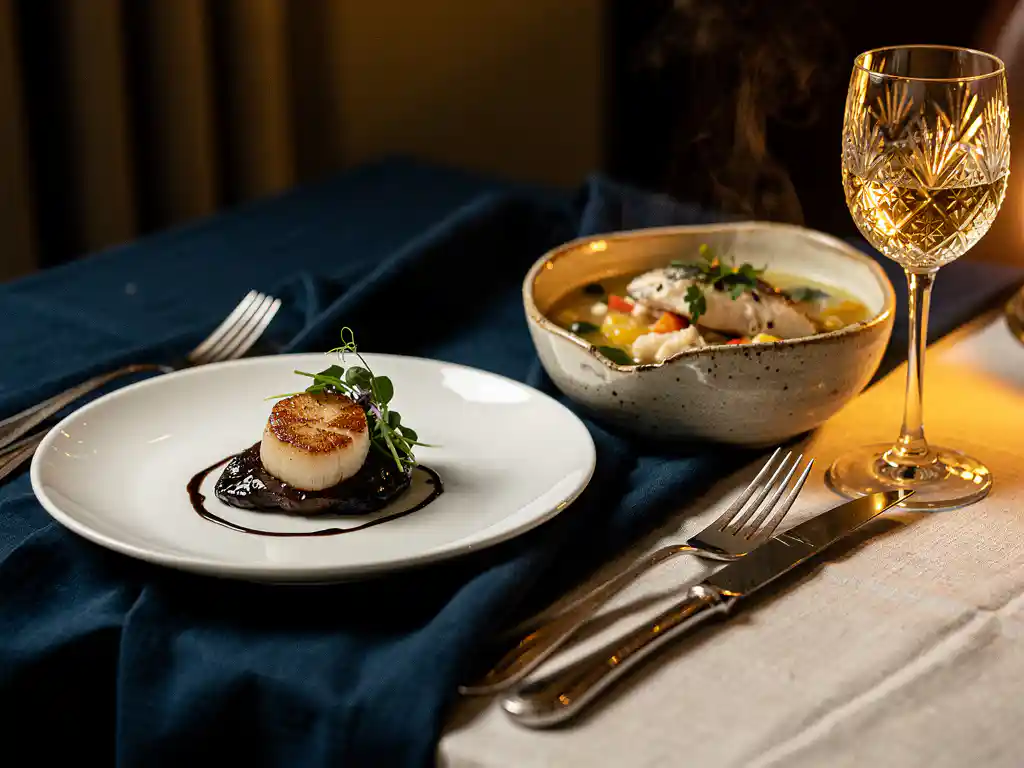
More and more people are deliberately seeking out a special dining experience and come across the term fine dining. But what does it actually mean, and when should you choose it over a regular dinner out? Whether you’re planning a romantic dinner, celebrating a birthday, or simply curious about what a seafood restaurant like ours has to offer — this article gives you a clear picture of the differences.
Fine dining in Amsterdam has grown significantly in recent years. The city is home to numerous restaurants that offer guests a refined culinary experience, far beyond the average meal out. Yet many people aren’t quite sure what to expect when they book a fine dining restaurant. In this article, we answer the most frequently asked questions.
What exactly is fine dining?
Fine dining is a restaurant concept centered on delivering a complete, high-quality dining experience. This means carefully curated menus featuring seasonal ingredients, refined presentations, a thoughtfully designed interior, and attentive personal service. It’s not just about the food itself — it’s about everything that surrounds it.
In fine dining, every detail is in service of the guest. Dishes are prepared by skilled chefs who work with the freshest ingredients, meticulously balancing flavor, texture, and presentation. A fine dining menu typically consists of multiple courses, with each dish telling its own story. Wine pairing — matching each course with a complementary glass of wine — is a common feature of the experience.
What does casual dining actually involve?
Casual dining refers to a more informal restaurant experience where convenience, accessibility, and a relaxed atmosphere take center stage. Think of a neighborhood restaurant, a bistro, or a pub-style eatery where you can order a good meal without any fuss. The focus is on enjoyable food at a reasonable price, without elaborate ceremony.
That doesn’t mean casual dining is any less worthwhile. For a midweek dinner, a quick lunch, or a laid-back evening with friends, an informal setting is often perfectly suited. The menu is typically more straightforward, the service friendly but less formal, and the atmosphere more relaxed and approachable. Casual dining is the default for most people, while fine dining is a deliberate choice for a special occasion.
What are the key differences between fine dining and casual dining?
The core difference between fine dining and casual dining lies in the level of attention given to every aspect of the experience. In fine dining, everything — from the cutlery to the overall atmosphere — is carefully considered. In casual dining, functionality and accessibility come first.
The key differences at a glance:
- Menu: Fine dining features multi-course menus with seasonal dishes; casual dining offers a set menu of familiar classics.
- Ingredients: Fine dining restaurants deliberately source top-quality, daily-fresh produce; casual dining places less emphasis on provenance and quality.
- Presentation: Every dish in fine dining is a visual work of art; in casual dining, flavor takes precedence over aesthetics.
- Service: Fine dining offers personal, expert service; casual dining is friendly but less extensive.
- Price: Fine dining requires a greater investment, but delivers a complete experience in return.
- Atmosphere: Fine dining restaurants create a thoughtfully crafted ambiance; casual dining has a more informal and relaxed feel.
The distinction goes well beyond price alone. It’s a difference in intention and experience.
What does a fine dining menu typically look like?
A fine dining menu typically consists of five to seven courses, sometimes more. It begins with amuse-bouches — small bites that set the tone for the evening — followed by a starter, an intermediate course, a main course, and a dessert. Each dish reflects the season and the chef’s culinary vision.
Alongside the set menu, many fine dining restaurants also offer an à la carte option, allowing guests to choose which courses they’d like to have. An optional wine pairing rounds out the experience: the sommelier or kitchen team selects a wine for each course that enhances and complements the flavors. Some restaurants change their menu monthly or even weekly, ensuring guests always have something new to discover.
When should you choose fine dining over casual dining?
Fine dining is the right choice when you’re intentionally investing in an exceptional culinary experience. That might be for a special occasion, or simply because you love great food and want to enjoy the full experience.
Typical occasions when people opt for fine dining:
- A romantic dinner or wedding anniversary
- A birthday or milestone celebration
- A business lunch or dinner where making an impression matters
- A festive outing with friends or family
- A culinary evening for food lovers who want to savor new flavors
Fine dining is less suited to those looking for a quick, informal bite. But if you’re ready to take your time and want to be surprised by what arrives on your plate, it’s an experience that stays with you long after the evening ends.
What can you expect from the service at a fine dining restaurant?
In fine dining, service is an integral part of the overall experience. Guests can expect personal, attentive care from a team with in-depth knowledge of every dish, the origins of the ingredients, and the wine list. The staff anticipates your needs without being intrusive.
In practice, this means glasses are refilled before they run dry, dishes are explained with care, and the team remains available without disrupting the atmosphere at the table. A skilled fine dining team reads the room and adapts its service to suit each guest’s needs. Whether you want to talk at length about the menu or prefer to simply sit back and enjoy — the service follows your pace.
How Visaandeschelde brings the fine dining experience to life
We bring the essence of fine dining together in a warm, maritime setting on Scheldeplein in Amsterdam South. Everything we do revolves around daily-fresh fish and seasonal ingredients, crafted into dishes that surprise and delight. What we offer:
- A monthly rotating Chef’s menu with optional wine pairing
- The à la carte showcase “Vis Exclusief,” which changes with the seasons
- Fresh fruits de mer and an extensive selection of oysters and lobster
- Dishes for fish lovers, vegetarians, and meat lovers alike
- Personal, attentive service in a welcoming brasserie setting
- A terrace for outdoor dining, opposite the RAI Convention Centre
Whether you’re joining us for a romantic dinner, a business lunch, or a celebratory outing, we’ll make sure you leave with a complete dining experience you won’t forget. Browse our menu for a taste of what to expect, and be sure to book ahead — our tables are in high demand. Due to the restaurant’s popularity, we strongly recommend reserving a table in advance through our website.
Veelgestelde vragen
Do I need to dress up for a fine dining restaurant?
Most fine dining restaurants recommend smart casual or formal attire. Think neat clothing such as a button-down shirt, blouse, or dress — sportswear and flip-flops are generally not appropriate. If you’re unsure, you can always check the restaurant’s website or call ahead to ask about the dress code, so you feel completely comfortable from the moment you arrive.
How far in advance should I book a table at a fine dining restaurant?
For popular fine dining restaurants, it’s wise to reserve at least one to two weeks ahead, and for special occasions such as Valentine’s Day, Christmas, or New Year’s Eve, a month or more in advance. The earlier you book, the better your chances of securing your preferred date and time. At restaurants like Visaandeschelde, booking in advance through the website is the recommended approach.
What if I have dietary requirements or allergies — can I still dine at a fine dining restaurant?
Absolutely. Fine dining restaurants are well accustomed to taking personal preferences and dietary needs seriously. Always mention your allergies or preferences — such as gluten intolerance, vegetarian, or vegan — when making your reservation, so the kitchen can plan accordingly. A good fine dining team will adapt the menu as needed without compromising the quality or enjoyment of your meal.
Is a wine pairing required at fine dining, or can I choose something else to drink?
A wine pairing is almost always optional and certainly not required. You can also choose individual wines by the glass or bottle, non-alcoholic alternatives, water, or other beverages. Many fine dining restaurants now offer a non-alcoholic pairing featuring interesting juices, teas, or kombucha, so non-drinkers can enjoy a fully curated accompaniment to their meal as well.
How long does a fine dining dinner typically take?
Plan for an evening of around two to three hours on average, depending on the number of courses and the pace at which you and your party prefer to eat. Fine dining is intentionally unhurried: the time between courses is meant for savoring, conversation, and letting each flavor fully unfold. Plan your evening generously and embrace the time at the table as part of the experience itself.
What is the difference between a chef's menu and à la carte in fine dining?
With a chef’s menu, the chef selects a set sequence of courses for you, often based on the season and the restaurant’s culinary philosophy — this delivers the most complete and cohesive dining experience. With à la carte, you build your own meal by choosing individual dishes from the menu, which offers more freedom but less of the narrative quality of a fully composed menu. Many fine dining restaurants, including Visaandeschelde, offer both options.
Is fine dining suitable for children or larger groups?
Fine dining can absolutely be a wonderful experience for children or larger groups, provided you coordinate the details with the restaurant in advance. For children, it’s worth asking whether an adapted menu or smaller portions are available. For larger groups, most fine dining restaurants recommend a private dining room or a dedicated group menu, ensuring the quality and service remain consistent for everyone. When in doubt, always contact the restaurant ahead of your visit.
Gerelateerde artikelen
- Hoe weet je of een visrestaurant in Amsterdam echt dagelijks verse vis serveert?
- Waarom is een visrestaurant in Amsterdam populair bij foodies?
- Wat moet je weten over oesters bestellen in een restaurant in Amsterdam?
- Hoe vers is de vis in een visrestaurant in Amsterdam?
- Welk zonnig terras serveert verse vis?