


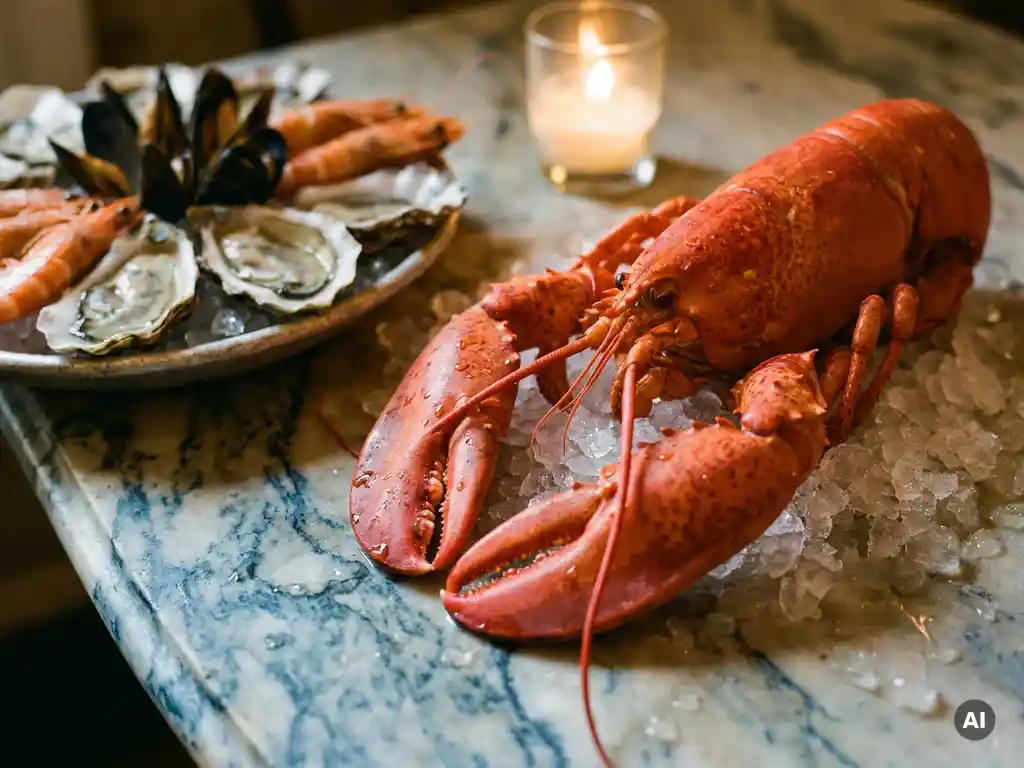
The biggest difference between lobster and other shellfish on a menu is the combination of rarity, preparation time, and depth of flavor. Lobster is considered the most exclusive shellfish due to its complex, full-bodied taste and the labor required to catch and prepare it. On a menu, lobster is almost always listed as a premium dish, while shrimp, crab, and mussels more often fall into the mid-range category. In this article, we answer the most frequently asked questions about lobster and other shellfish, so you can read the menu with greater confidence.
Why is lobster so much more expensive than other shellfish?
Lobster is more expensive than other shellfish because the combination of slow growth, labor-intensive harvesting, and limited availability drives up the cost significantly. Lobsters grow slowly and live in specific, often remote ocean areas, making large-scale farming difficult and supply unpredictable.
Catching lobster also requires specialized work with traps and small boats, which keeps harvesting costs high. Compared to shrimp, which are caught or farmed in large quantities, lobster is simply scarcer. That scarcity, combined with high demand in the fine dining world, results in a considerable price difference on the menu.
Transportation is another factor: lobster is ideally shipped live to guarantee freshness, which brings additional costs and logistical challenges. All of this adds up to the price you ultimately see on your plate.
What types of lobster appear on a menu?
A menu typically features two main types of lobster: European lobster and Canadian or American lobster. The European lobster, also known as Homarus gammarus, is considered the most prized variety due to its intense flavor and firm flesh. Canadian lobster has a milder taste and is somewhat more accessible in price.
Beyond these two, you may occasionally see spiny lobster on the menu. Technically, spiny lobster is not a true lobster, but it belongs to the same family of shellfish. Unlike a lobster, it has no large claws, but makes up for this with its juicy tail meat. In Mediterranean cuisine, spiny lobster is particularly popular.
Finally, during the summer months, crayfish sometimes appear on the menu as well. These are smaller freshwater shellfish with a more delicate flavor, often served as an amuse-bouche or incorporated into a sauce. They should not be confused with the large sea lobster served as a main course.
How does the taste of lobster differ from shrimp or crab?
Lobster has a richer, fuller, and slightly sweeter flavor than both shrimp and crab. The meat is firm yet tender, with a pronounced character that holds up well against rich sauces and preparations. Shrimp are more subtle and lighter in flavor, while crab has a softer, slightly sweeter taste with a fibrous texture.
Shrimp are neutral enough to pair with almost anything, from a light salad to a spicy stir-fry. They quickly take on the flavors of whatever they’re cooked with, making them versatile but also less dominant. Crab — particularly claw or leg meat — has a delicate sweetness that works beautifully in lighter dishes such as crab salad or crab soup.
Lobster, on the other hand, calls for a preparation that respects and enhances its own flavor. Classic combinations with butter, tarragon, or a light bisque allow the richness of the lobster meat to shine at its best. It is precisely that bold flavor that gives lobster its status as the ultimate shellfish.
What does “Fruits de Mer” mean on a menu?
Fruits de Mer, French for “fruits of the sea,” is a classic platter or dish featuring an assortment of raw and cooked seafood. Think oysters, mussels, shrimp, crab, lobster, whelks, and sea snails, typically served on a bed of crushed ice with lemon and dipping sauces.
It is not a dish in the traditional sense, but rather a culinary experience centered on freshness and variety. A Fruits de Mer platter gives you the opportunity to sample multiple types of shellfish and mollusks in a single meal, making it ideally suited for those who want to enjoy the full breadth of what the sea has to offer.
The composition varies by restaurant and season. At a quality seafood restaurant, the platter is assembled based on what is freshest and finest that day. This makes ordering a Fruits de Mer always something of a pleasant surprise — and at the same time, a guarantee of quality.
When is the best time to order lobster at a restaurant?
Lobster is at its best during the summer months, roughly from May through September. During this period, European lobster is fully in season, meaning the supply is fresh and consistent and the flavor is at its peak. Outside of the season, lobster is still available, but often frozen or sourced from farther away.
Eating seasonally is especially important with shellfish, as quality is directly tied to fishing conditions and sea water temperature. In summer, lobster meat is firmer and more flavorful, partly because the lobster is more active and has been feeding more.
A good rule of thumb: always ask the restaurant whether the lobster is fresh that day or was previously frozen. An honest restaurant will give you a straight answer. The fresher it is, the better it tastes — and the more value you get for your money.
How we help you enjoy the finest lobster in Amsterdam
At Visaandeschelde, we work every day with the freshest catch and seasonal shellfish. Lobster features proudly on our menu, and we adjust our offerings based on what the sea has to offer at any given time. In practical terms, this means you as a guest can expect:
- Fresh lobster in season, prepared by an experienced kitchen team
- A rotating Fruits de Mer platter featuring the best of the day
- The signature dish “Vis Exclusief,” which changes weekly based on availability
- A chef’s menu with optional wine pairing for a complete dining experience
- Attention to dietary requirements, including vegetarians and guests eating gluten-free
Whether you’re coming for a romantic dinner, a business lunch, or a celebratory outing, we make sure every dish is packed with flavor. Read more about us and who we are, or take a look at what’s currently on the menu. Due to our popularity, we recommend booking a table in advance.
Veelgestelde vragen
How do I choose the best lobster preparation at a restaurant?
The preparation depends largely on your taste preferences and experience with lobster. For beginners, a classic boiled or grilled lobster with melted butter is an excellent starting point, as it lets the natural flavor speak for itself. More experienced lobster lovers may opt for a preparation with bisque, tarragon, or a richer sauce, which deepens the complexity of the meat. Feel free to ask the sommelier or server for advice — at a good seafood restaurant, they are always happy to help you make the right choice.
What is the difference between a half and a whole lobster on the menu?
A half lobster is typically the tail or the front section of the lobster and offers a lighter, more approachable portion — ideal as a starter or intermediate course. A whole lobster gives you access to both the tail meat and the claw meat, which has a slightly different texture and flavor, making it the most complete eating experience. The claws contain juicy, tender meat that many connoisseurs consider the finest part. If you’re ordering lobster at a restaurant for the first time, a whole lobster is well worth it to truly discover the full flavor profile.
Are there shellfish on the menu that work as alternatives to lobster on a lower budget?
Yes, absolutely. Crab — particularly claw or leg meat — is an excellent alternative that comes close to lobster in terms of flavor experience, but is generally considerably more affordable. Spiny lobster is also a flavorful alternative with a similar elegance, though it can sometimes be just as pricey as lobster itself. For an even more accessible option, a Fruits de Mer platter is a wonderful way to sample multiple shellfish without paying the full price of a lobster as a main course.
How do I recognize fresh lobster or fresh shellfish on the plate?
Fresh lobster has firm, juicy meat that doesn’t dry out or feel rubbery, and a clean, sweet aroma without an overpowering fishy smell. After cooking, the meat is white to light pink in color, and the shell has a vibrant red hue. For other shellfish such as shrimp, the signs of freshness are: a fresh smell, a non-sticky surface, and a firm texture. Not sure? Don’t hesitate to ask the restaurant about the origin and delivery date — a transparent restaurant will always give you an honest answer.
Which wine pairs best with lobster or a Fruits de Mer platter?
Lobster pairs beautifully with a full-bodied, dry white wine with sufficient body, such as a white Burgundy (Chardonnay), a ripe Viognier, or a fine Alsatian Pinot Gris. The creaminess and subtle sweetness of lobster call for a wine that provides balance without overpowering the flavor. For a Fruits de Mer platter, with its wide variety of flavors, a crisp Muscadet, Chablis, or dry Champagne is the classic choice. When in doubt, always ask the sommelier for a pairing recommendation — that’s exactly what they’re there for.
Can non-seafood eaters still enjoy a dinner at a seafood restaurant?
Absolutely. Most good seafood restaurants today also offer vegetarian dishes or meat-based options, so everyone at the table can eat according to their preference. It’s a good idea to mention when making your reservation that you don’t eat fish or shellfish, so the restaurant can accommodate you accordingly. That way, everyone at the table can enjoy a complete and pleasant dining experience, regardless of their preferences.
Is eating lobster safe for people with shellfish allergies to other shellfish?
No, unfortunately not. Lobster belongs to the same family of shellfish (crustaceans) as shrimp, crab, and spiny lobster, and contains the same allergens — in particular the protein tropomyosin — that can trigger allergic reactions. People with a known shellfish allergy should avoid lobster and all other shellfish. Always inform the restaurant of your allergy when making a reservation, so they can also take cross-contamination in the kitchen into account.
Gerelateerde artikelen
- 11 dingen die een goed visrestaurant in Amsterdam onderscheidt
- Wat is het verschil tussen een visrestaurant en een seafoodrestaurant in Amsterdam?
- Wat zijn de dresscode regels bij fine dining restaurants in Amsterdam?
- Wat zijn de regels voor fine dining?
- Hoe kies je de juiste wijn bij een fine dining menu in Amsterdam?