


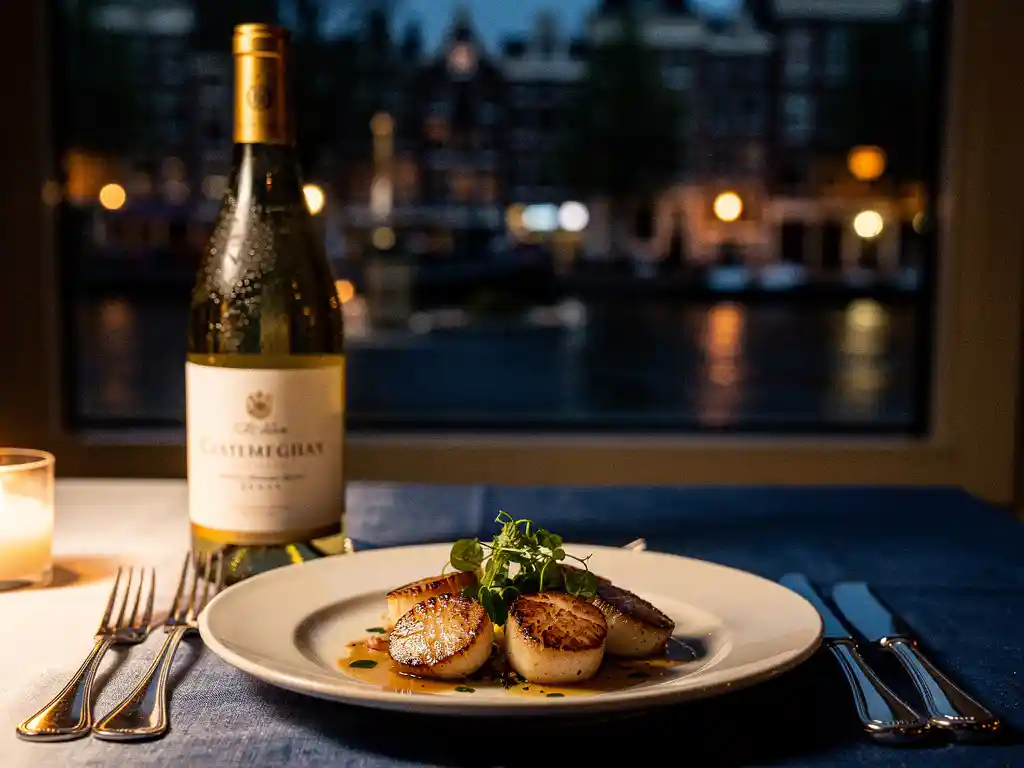
A chef’s menu is one of the finest ways to spend an evening full of culinary surprises. Especially at fine dining restaurants in Amsterdam, the experience is about more than just the food — it’s also about the perfect pairing with wine. The right wine pairing elevates every dish and ensures that flavors complement rather than overpower each other.
But how do you choose the right wine for a multi-course menu? And what are the guidelines when the focus is primarily on fish and seafood? In this article, we answer the most frequently asked questions about wine pairing with a chef’s menu, so you can get the most out of your next dining experience.
What is a chef’s menu and how does wine pairing work with it?
A chef’s menu is a multi-course menu composed entirely by the kitchen, with the chef determining the order and combination of dishes. Wine pairing with a chef’s menu means selecting a wine for each course that supports or complements the flavors of that specific dish, rather than choosing a single wine for the entire meal.
With a chef’s menu, guests typically have less control over what arrives at the table — but that’s precisely what makes the wine pairing so interesting. The sommeliers or kitchen staff know the dishes inside and out and can recommend exactly the right wine for each course. This creates a cohesive experience where the wine and food feel like a unified whole.
The pairing can shift in style from course to course: a crisp white wine with a light fish soup, a richer Chardonnay alongside a creamy main course, and a dessert wine to finish. That variety is what makes a multi-course menu with wine pairing a truly complete culinary experience.
Which wines pair best with fish and seafood?
Dry white wines pair best with fish and seafood, as their crisp acidity supports the delicate flavors of fish without overpowering them. Classic choices include Muscadet, Chablis, Pinot Grigio, Vermentino, and dry Riesling. Rosé can also work well, but red wine is generally not recommended with most fish dishes.
The reason red wine often pairs poorly with fish comes down to tannins. These compounds in red wine can react with the fatty acids in fish and leave a metallic taste. This isn’t always the case, but with delicate white fish or raw preparations, it’s a risk best avoided.
With fattier fish such as salmon or tuna, you have a bit more flexibility. A light red wine with low tannins, such as Pinot Noir, can be a surprisingly good match. The key is always to use the fat content and preparation method of the dish as your starting point.
Which wine pairs with oysters and lobster?
A dry, mineral white wine pairs best with oysters — such as Chablis or a dry Champagne. With lobster, a richer white wine is the classic choice, such as a white Burgundy or a full-bodied Chardonnay, as the buttery flavor of lobster calls for a wine with body and depth.
Oysters have a pronounced briny, iodine-rich flavor. A wine with too much fruit or sweetness would overwhelm that taste. The lean minerality of Chablis or the dry bubbles of a Brut Champagne allow the oyster to shine fully.
Lobster calls for something more substantial. The rich, slightly sweet flavor of lobster meat pairs beautifully with an oak-aged Chardonnay with notes of butter and vanilla. A white Burgundy from a good vintage is an excellent choice for this. If you prefer something fresher, Viognier or a ripe Pinot Gris are also well worth considering.
Do you need to choose a different wine for every course?
No, you don’t need to choose a different wine for every course. A single well-chosen wine can sometimes accompany multiple courses, as long as the dishes share a compatible flavor profile. That said, switching wines per course is the most common approach with a multi-course menu, as it optimizes the tasting experience for each dish.
In practice, many restaurants offer a wine pairing in which two to four wines are served across five or more courses. Lighter, crisper wines come first, followed by richer, more complex bottles. This principle — moving from light to full-bodied — ensures that your palate doesn’t become overwhelmed.
If you’re making your own selection without a pairing, it’s smart to identify which course is the most intense or boldest in flavor and choose a wine to match that dish. That wine will then pair reasonably well with the other courses too, as long as the flavor profiles don’t diverge too sharply.
What are the most common mistakes when choosing wine with fish?
The most common mistakes when choosing wine with fish are: selecting a red wine that’s too heavy, choosing a wine that’s too sweet with delicate preparations, and overlooking the cooking method. The strength of the sauce is also frequently underestimated, even though it’s often the deciding factor in which wine pairs best.
Another frequent mistake is assuming that all white wines automatically pair well with fish. A full-bodied, oak-aged Chardonnay can completely overpower a delicate sole fillet. Conversely, a wine that’s too light may be no match for a robust lobster bisque. The intensity of the wine and the dish must be in balance.
Finally, people sometimes forget that the garnishes and side dishes also play a role. A bright lemon butter sauce calls for a different wine than a rich cream sauce, even when the main ingredient is the same. So don’t focus solely on the fish — consider the entire plate.
How do you choose a wine pairing at a seafood restaurant in Amsterdam?
At a seafood restaurant in Amsterdam, the best way to choose a wine pairing is to ask the sommelier or serving staff for their recommendation, review the menu in advance, and make your selection based on your personal taste preferences: crisp and light, or rich and complex. Most restaurants offer a pairing that has been specially curated to accompany the chef’s menu.
Amsterdam has a rich restaurant culture with deep expertise in both wine and seafood. Staff at specialized fish restaurants know exactly which bottles complement the seasonal ingredients on the menu. Don’t hesitate to ask questions or share your personal preferences — whether you tend to favor something crisp and mineral or prefer a creamy, full-bodied style.
Also take a look at where the wines on the list come from. Many fish restaurants deliberately select wines from coastal regions — such as the Loire Valley, Galicia, or Alsace — because these wines naturally align with the flavors of the sea. That’s no coincidence; it’s centuries of accumulated culinary wisdom.
How Visaandeschelde helps you find the perfect wine pairing for your dinner
At our restaurant, everything revolves around the combination of daily fresh fish, seasonal ingredients, and attentive service at the table. We offer a monthly changing chef’s menu crafted by our kitchen team, with the option of an accompanying wine pairing. So you don’t have to figure it out yourself — we take care of the perfect combination.
What we can offer you:
- A chef’s menu that changes every month and reflects the season
- An optional wine pairing tailored to each individual course
- Personal recommendations from our team on wines that suit your taste
- An extensive menu featuring fish, seafood, oysters, and lobster, complemented by vegetarian and meat options
- A welcoming location in Amsterdam South, opposite the RAI Convention Centre, with a terrace for outdoor dining
Want to experience for yourself what a perfectly composed chef’s menu with wine pairing tastes like? Browse our menu and reserve your table. We look forward to welcoming you to Visaandeschelde on Scheldeplein.
Veelgestelde vragen
Can I choose non-alcoholic alternatives with a wine pairing?
Yes, more and more fine dining restaurants in Amsterdam offer a non-alcoholic pairing as an alternative to a classic wine pairing. This involves carefully selected juices, mocktails, or fermented drinks such as kombucha paired with each course. Feel free to ask the restaurant whether this option is available — a skilled sommelier can offer you a complete tasting experience without alcohol as well.
How far in advance should I reserve a table for a chef's menu with wine pairing?
For a chef’s menu at a popular seafood restaurant in Amsterdam, it’s advisable to book at least one to two weeks in advance, especially on weekends or around public holidays. During busy periods — such as the holiday season or major events at the RAI — demand can be even higher. Reserve early to avoid disappointment, and mention at the time of booking that you’re interested in the wine pairing so the restaurant can prepare accordingly.
What if I have an allergy or intolerance — can I still enjoy a wine pairing?
Absolutely. Allergies or intolerances have very little impact on the wine pairing itself, but it’s important to inform the restaurant in advance. Good restaurants will adapt the chef’s menu to accommodate your dietary needs and adjust the wine pairing accordingly. Communicate your requirements both when making your reservation and again upon arrival, so the team can provide you with the best possible experience.
Is a wine pairing always worth it, or can I just order a bottle?
It depends on your preference and the composition of the menu. A wine pairing is especially valuable with a multi-course menu where flavors vary significantly — such as moving from delicate oysters to rich lobster — because each wine is specifically matched to that course. Ordering a bottle is a perfectly good choice if you have a favorite or if the courses share a similar flavor profile. Not sure? Ask the sommelier for advice — they’ll help you make the best decision based on the menu and your budget.
Which wine regions are best suited to a seafood menu, and why?
Coastal regions have traditionally produced the best wines to accompany seafood, because the local cuisine and winemaking have been shaped by each other over centuries. Think of the Loire Valley (Muscadet, Sancerre), Galicia in Spain (Albariño), Alsace (Riesling, Pinot Gris), and Burgundy (Chablis, white Burgundy). What these wines have in common is a crisp acidity and mineral character that naturally complements the briny, delicate flavors of fish and seafood.
How do I know if a wine is too heavy or too light for my dish?
A good rule of thumb is to match the intensity of the wine to the intensity of the dish. A light, delicate dish — such as a sole tartare or raw oysters — calls for a light, crisp wine with little oak influence or alcohol. A richer dish, such as lobster in a creamy sauce, can handle a fuller-bodied wine with more weight. When in doubt, check the alcohol percentage: wines above 14% are generally richer and fuller, while wines below 12.5% tend to be fresher and lighter.
Is it appropriate for a guest to make suggestions about the wine pairing, or is that rude?
Not rude at all — quite the opposite. A good sommelier genuinely appreciates it when you share your preferences, budget, or favorite wines. Feel free to mention whether you prefer something crisp and mineral or lean toward a richer, creamier style, or whether you’d like to explore a particular region or grape variety. The more the sommelier knows about your taste, the better they can tailor the pairing to your personal experience.