


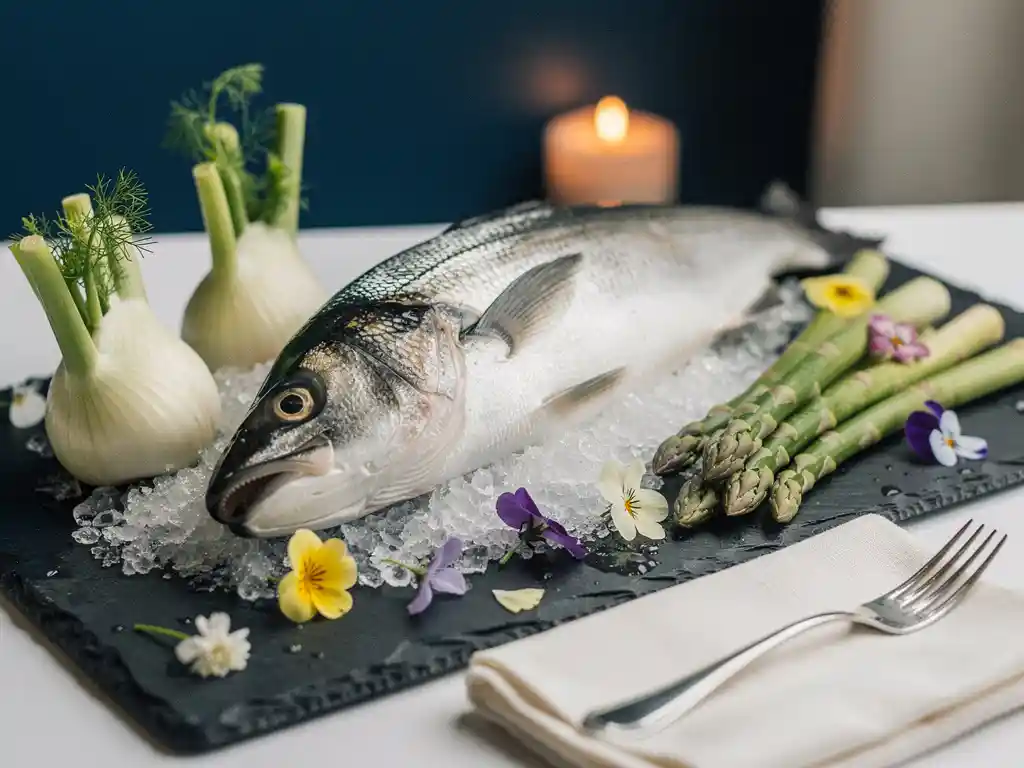
Seasonal cooking has been the foundation of great culinary traditions for centuries, but in the world of fine dining in Amsterdam, it is more than a trend. It is a philosophy that determines the quality of every plate. Understanding why the seasons play such a significant role in the kitchen transforms the dining experience entirely. On our page about our story, you can read how we have put this philosophy into practice for over 25 years.
In this article, we answer the most frequently asked questions about seasonal cooking, its impact on flavor and freshness, and why the best fine dining restaurants in Amsterdam deliberately choose a menu that moves with nature.
What is seasonal cooking and why does it matter?
Seasonal cooking means a kitchen works exclusively with ingredients that are at their best at that time of year. Rather than serving the same products year-round, the menu adapts to the rhythm of nature. This produces dishes that are more flavorful, fresher, and more honest than anything a static menu can offer.
The importance of seasonal cooking goes beyond flavor alone. Produce harvested in season doesn’t need to travel as far and requires no artificial ripening. That means more nutrients, better texture, and a more intense taste. For fine dining restaurants, this isn’t a luxury — it’s a requirement. A chef who works with what nature currently offers shows respect for the ingredient and for the guest.
What seasonal ingredients are typical in fine dining?
Typical seasonal ingredients in fine dining change each quarter and include fish, shellfish, vegetables, and herbs that are at their peak quality. In seafood-focused cuisine, these include oysters in autumn and winter, lobster in the summer months, and a rotating selection of fish varieties that taste their best depending on the season.
Here are some examples of seasonal products that fine dining kitchens typically use:
- Spring: young asparagus, sea purslane, eel, scallops
- Summer: lobster, sea bass, fresh herbs, zucchini
- Autumn: oysters, squid, pumpkin, wild mushrooms
- Winter: king scallops, turbot, celeriac, truffle
A well-composed seasonal menu combines these ingredients in a way that highlights the character of each product. In seafood cuisine, the pairing of fish with seasonal vegetables and sauces based on fresh stocks plays a central role.
How does seasonal cooking affect the flavor of dishes?
Seasonal cooking directly improves the flavor of dishes because produce harvested in season contains a higher concentration of natural sugars, acids, and aromas. A tomato in August tastes fundamentally different from the same tomato in January. The same applies to fish: a sole caught at the right time of year has an entirely different texture and depth of flavor.
Freshness also expands the chef’s technical possibilities. When working with an ingredient at its best, you need to do less to make an impression — less sauce, less preparation, more purity. That is precisely the essence of modern fine dining: let the ingredient speak. A seasonal menu also pushes the kitchen toward creativity, as every transition into a new season calls for new combinations and techniques.
What is the difference between an à la carte menu and a seasonal menu?
The difference between an à la carte menu and a seasonal menu lies in structure and philosophy. With à la carte, the guest selects from a fixed menu. A seasonal menu — also known as a chef’s menu or tasting menu — is a curated sequence of dishes designed by the chef around the finest products of the moment.
Both options have their merits:
- À la carte: maximum freedom of choice, ideal for guests with specific preferences or dietary requirements
- Seasonal menu: a fully curated experience in which the chef tells the story of the season across multiple courses
In the fine dining world, a seasonal menu often delivers the most cohesive dining experience, since all courses are designed to complement one another. Wine pairing fits seamlessly into this, as the sommelier can select wines that best support the seasonal ingredients. Many restaurants offer both options, giving guests the freedom to choose.
Why do fine dining restaurants choose daily-fresh produce?
Fine dining restaurants choose daily-fresh produce because quality cannot be stored. Fish caught in the morning and served that evening has a texture, aroma, and flavor that no refrigerated or frozen alternative can match. Daily sourcing is therefore a deliberate investment in the guest’s experience.
Fresh produce also demands greater skill in the kitchen. A chef who works with different fish every day, depending on what the market offers, must be both flexible and technically accomplished. This raises the standard of the entire team. Daily sourcing also fosters honest relationships with suppliers and fishermen, which benefits the traceability and sustainability of the kitchen.
For guests, the difference is noticeable. Fresh fish has a different bite, a cleaner flavor, and a better presentation. It is precisely this level of care that sets fine dining apart from an ordinary restaurant experience.
Where can you find the best seasonal fine dining in Amsterdam?
The best seasonal fine dining in Amsterdam can be found at restaurants that actively update their menu with the seasons, source fresh produce daily, and work with a chef who puts the ingredient first. Amsterdam South, and the Rivierenbuurt neighborhood in particular, is known for its refined food culture and accessible fine dining destinations.
When choosing a fine dining restaurant in Amsterdam, these are the qualities to look for:
- A menu that changes regularly, preferably monthly or by season
- Clear communication about the origin of ingredients
- The option of wine pairing with tasting menus
- An atmosphere and service that complete the culinary experience
- Flexibility for dietary requirements, so every guest feels welcome
Reservations are strongly recommended at popular fine dining restaurants in Amsterdam, especially on weekends and during events near conference centers.
How Visaandeschelde gets the best out of every season
At Visaandeschelde, we put the principles of seasonal cooking into practice every day. Our menu is built around daily-fresh fish and shellfish, complemented by seasonal vegetables and produce that are at their best at that moment. Here is how we do it in practice:
- Our rotating dish Vis Exclusief changes in line with what the sea and the season have to offer
- The monthly changing chef’s menu is composed by our kitchen team based on the finest seasonal products
- We serve fresh fruits de mer, oysters, and lobster when they are at their peak quality
- Guests can choose between à la carte and a tasting menu with optional wine pairing
- We also offer options for vegetarians and meat lovers, so every group is welcome
Would you like to experience for yourself what seasonal fine dining in Amsterdam means? View our current menu and reserve your table at Visaandeschelde on Scheldeplein in Amsterdam South. We look forward to welcoming you.
Veelgestelde vragen
How far in advance should I make a reservation at a fine dining restaurant in Amsterdam?
For popular fine dining restaurants in Amsterdam, such as Visaandeschelde, it is advisable to reserve at least one week in advance, and for weekends or special occasions, two to three weeks ahead. During busy periods such as the holidays or events in Amsterdam South, tables can fill up even faster. Booking online through the restaurant’s website is generally the quickest and easiest way to secure your spot.
What if I have an allergy or dietary requirement — can I still enjoy a seasonal menu?
Absolutely. Most serious fine dining restaurants take allergies and dietary requirements into account when composing a seasonal menu, provided you communicate them in advance when making your reservation. A skilled kitchen team will adapt dishes without compromising the culinary experience. Always share your requirements as specifically as possible so the chef has enough time to prepare a suitable alternative.
Is fine dining with a seasonal menu more expensive than dining à la carte?
Not necessarily. A tasting menu has a fixed price, but that covers multiple courses and often represents better value for money than ordering dishes individually. You also know exactly what you will spend beforehand, which makes budgeting straightforward. Optional wine pairing is an additional investment, but it significantly enhances the culinary experience.
How do I know whether a restaurant truly cooks seasonally and isn't just using it as a marketing term?
A reliable sign is a menu that changes regularly — preferably monthly or by season — and that communicates the origin of its ingredients transparently. Restaurants that genuinely work seasonally can tell you where their fish comes from, who their suppliers are, and why certain dishes are on the menu right now. Feel free to ask your server for more information about the ingredients; a well-trained team will give you a clear and immediate answer.
Can I also order à la carte if I prefer to choose my own dishes?
Yes, many fine dining restaurants in Amsterdam, including Visaandeschelde, offer an à la carte option alongside the seasonal menu. This is ideal if your group has varying preferences or if you specifically want to try a particular dish. The à la carte selection is also typically composed with seasonal ingredients, so you benefit from the finest produce of the moment even when ordering individual dishes.
What makes seafood-focused fine dining different from a regular fish restaurant?
The difference lies in the depth of the offering and the way the ingredient is treated. In fine dining, the chef’s technique takes center stage: preparation methods, sauces, and presentation are carefully tailored to the character of the fish or shellfish. Furthermore, in fine dining the entire experience — from service and interior design to wine pairing — is presented as a unified whole, whereas a regular fish restaurant is generally more focused on accessibility and volume.
Is wine pairing with a tasting menu really worth it, or can I just choose a bottle of wine?
Wine pairing adds an extra dimension to a seasonal menu, because the sommelier selects each wine specifically to enhance or complement the flavors of a particular course — something you cannot achieve with a single bottle across multiple courses. That said, a bottle of wine is an excellent choice if you have a favorite grape variety or if your group prefers to stay with one style. Not sure? Ask the sommelier for advice — they are happy to help you make the best choice for your taste preferences and budget.
Gerelateerde artikelen
- Waarom reserveren bij een visrestaurant in Amsterdam zo belangrijk is?
- Wanneer is het beste seizoen om een visrestaurant in Amsterdam te bezoeken?
- Kan je bij een visrestaurant in Amsterdam ook vegetarisch eten?
- Welk zonnig terras serveert verse vis?
- Hoe ver van tevoren moet je reserveren bij fine dining in Amsterdam?